
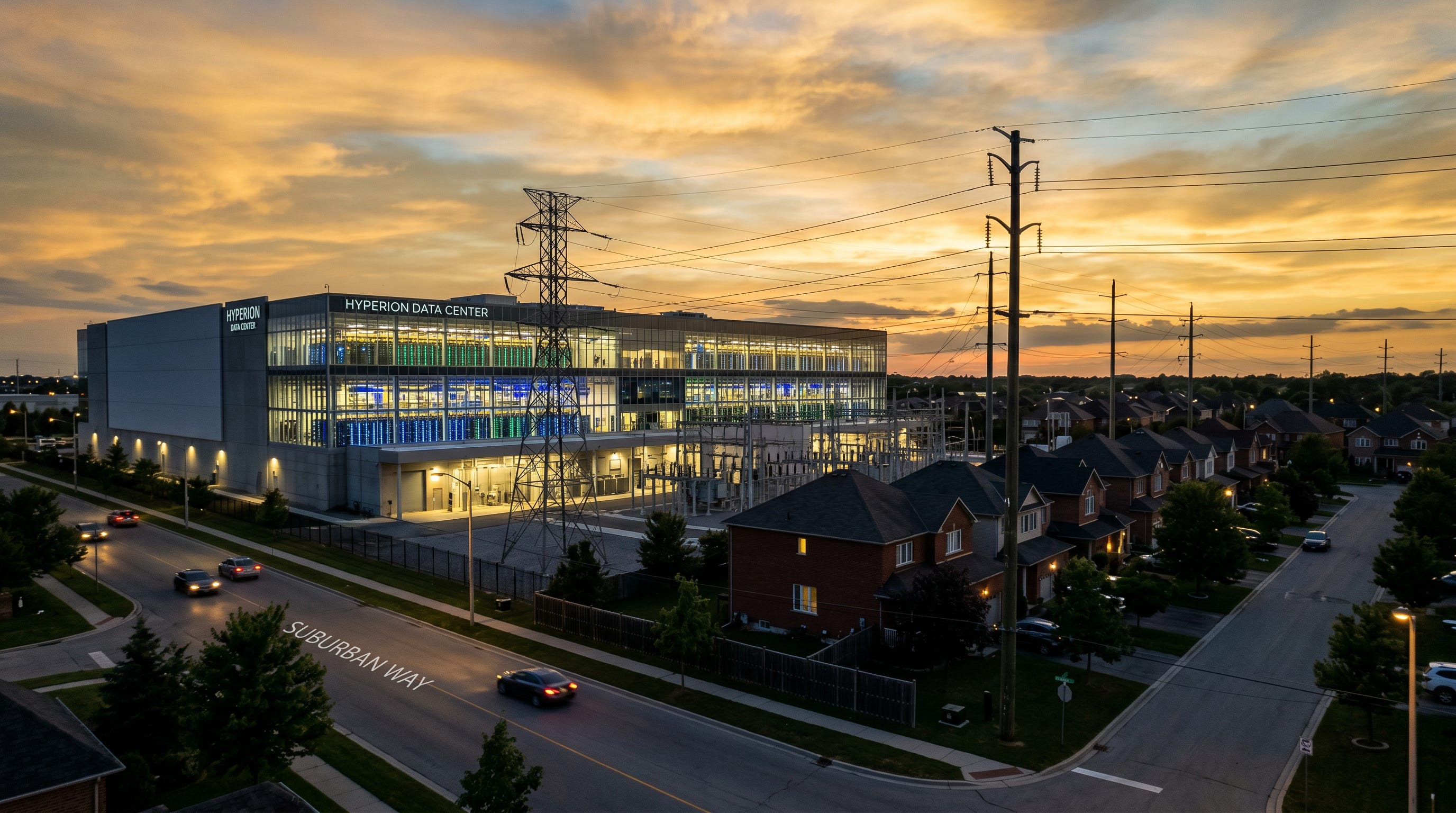
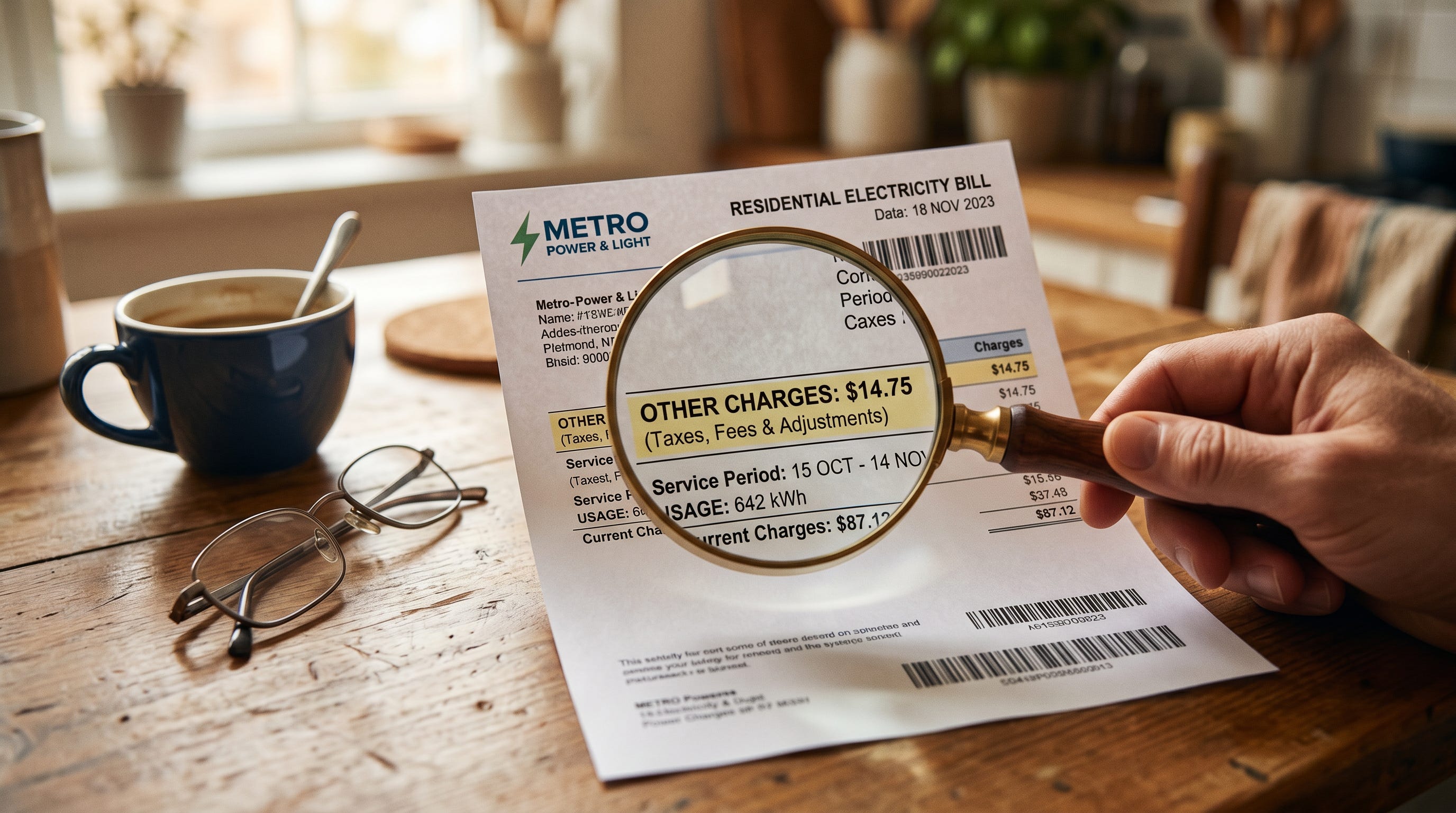
Let me start with a personal snippet. When my last electricity bill landed, I did the thing I suspect most of us do — I glanced at the number, winced, muttered something unkind about the weather, and paid it. I did not study it. I did not ask why it had crept up again. I treated it the way you treat the rumble of a plane overhead: an annoyance, not a mystery.
Then I read a stray statistic that made me go back and actually look. And the look turned into an afternoon, and the afternoon turned into this piece — because once you understand what’s quietly loading onto that bill, you can’t quite un-see it.
Here is the thing that snagged me. The artificial intelligence we keep being told is “free,” or nearly so — the chatbots, the image generators, the agents that book your trips — is not free at all. It runs on electricity, vast oceans of it, drawn through buildings the size of shopping malls. And the cost of feeding those buildings is increasingly showing up not on the tech companies’ ledgers, but on yours and mine. The AI you may never even use is finding its way onto the one bill you can’t avoid.
So this is a piece about a magic trick — the kind where the cost disappears from one place and reappears, smaller and harder to notice, somewhere else. Specifically, on line items most of us never read. Let’s read them together.
First, the part that isn’t really in dispute
Let’s establish the facts before we argue about blame, because the facts alone are startling enough.
A data center is, in plain terms, a warehouse full of computers — thousands upon thousands of servers humming in cooled rows, the physical body of everything we call “the cloud.” Training and running modern AI takes a staggering number of them, and they are hungry in a way older internet infrastructure never was. How hungry? According to one widely cited tally, data centers now account for roughly half of all new US electricity use — about 50 percent of all the growth in American power demand last year ran into these buildings. Not half of all electricity (we’re not there), but half of the new electricity. The entire rest of the country — every new house, every new factory, every electric car plugged in for the first time — split the other half.
When demand surges like that, somebody has to build more — more power plants, more high-voltage lines, more substations — and that construction is expensive. Traditionally, the way American utilities recover the cost of building is by adding it to everyone’s rates. Which is why, as The American Prospect put it bluntly, “those exploding costs are traditionally passed along to residential ratepayers.” Read that again. The default setting of the system is that you pay for the wires, even when the wires were strung for someone else’s server farm.
And the numbers on your end have already been moving. As a Fortune analysis of what’s driving bills notes, power bills have climbed nearly 40 percent since 2021 — the fastest stretch of electricity-price growth on record. (Hold that “since 2021” in your head; we’ll come back to it, because the why turns out to be genuinely contested, and I want to be fair about that.) Meanwhile, the rate hikes keep coming: the consumer group PowerLines reports that utilities filed 9.4 billion in rate−increase requests in just the first quarter of 2026—and that′s after a record 31 billion requested across all of 2025. No wonder the same survey found that 80 percent of Americans say they feel “helpless to control how much they are charged” for power.
Helpless is the operative word. And helplessness, I’d argue, is mostly a function of not knowing where to look. So let’s keep looking.
How the cost quietly hops from their balance sheet to your bill
Here is where it gets interesting — and a little maddening — because the mechanism is almost invisible by design.
When a tech giant wants to build a data center, it needs an enormous, reliable supply of power, often gigawatts of it (a single large facility can draw as much electricity as a small city). Getting that power means new infrastructure. The question — the whole question, really — is who pays for that infrastructure. And the answer, far too often, is a quiet “everybody.”
The Brookings Institution, no one’s idea of a fringe outfit, lays out the trick plainly: “The cost of this new infrastructure is passed on to consumers through changing rate designs and deferred from data center operators through special contracts or incentive packages.” Translate that from policy-ese and it says something stark: the cost is shifted toward you (through how rates are structured) and shifted away from them (through sweetheart deals). The data center gets a discount to move to town; the grid upgrades to serve it get spread across the whole customer base. You are, in effect, chipping in for a neighbor’s driveway and being told it’s just “the cost of roads.”
It gets subtler still. Utilities don’t only bill for power used — they bill to recover the cost of capacity they prepare for. So when a developer announces a giant facility and the utility builds ahead to serve it, ratepayers can end up covering assets that sit half-used if that demand arrives late, or smaller than promised, or never. You pay for the expectation of the data center, not just the data center.
How much does this actually add to a household? Here I want to be careful, because the honest answer is “it depends wildly on where you live,” and inflating the number would make me no better than the people inflating the hype. The cleanest estimate I found comes from a Carnegie Mellon study compiled by the Pew Research Center: data centers and crypto could lift the average American’s electricity bill by about 8 percent by 2030 — and “potentially exceeding 25% in the highest-demand markets of central and northern Virginia.” Eight percent nationally is real money over a year. Twenty-five percent if you live in the wrong county is a genuine household crisis. And notice who decides which county you’re in: not you.
That same Pew tally shows why the geography matters so much. Nationally, data centers drank 183 terawatt-hours of electricity in 2024 — already more than 4 percent of everything the country used. But the national average hides the real story, because the warehouses cluster. In Virginia, data centers consumed about a quarter of all the state’s electricity; in North Dakota, Nebraska, Iowa, and Oregon, double-digit shares. When a single industry is eating a fourth of a state’s power, “who pays for the next power plant” stops being a thought experiment and becomes the central question of that state’s economy. The averages soothe; the map alarms. Wherever the servers pile up, so does the bill — and the people standing under it didn’t choose the location.
“But it’s not really the data centers” — the strongest version of the other side
To be fair — and I mean genuinely fair, not strawman-and-knock-down fair — there is a serious case that I’m pointing my finger in too convenient a direction. Let me make that case as well as the people who believe it would.
Start with that “since 2021” figure I asked you to hold. That same Fortune analysis makes the uncomfortable point directly: “The scapegoat has been data centers, because that’s the most visible new entrant on the scene... but that’s not the biggest reason why bills have been going up over the last five years.” The bigger reasons, by this account, are extreme weather, wildfires, and hurricanes that forced expensive grid rebuilds — plus a massive, overdue modernization of aging infrastructure. (Utility capital-spending plans through 2030 have jumped 27 percent in a single year, to $1.4 trillion. That bill is coming whether or not a single new server ever spins up.)
The same point comes from someone with no axe to grind for Big Tech. On NPR, Michael Thomas of the energy-research firm Cleanview explained that the main reason bills have climbed isn’t data centers but “the rising cost of building the grid and maintaining it, wildfires and hurricanes.” Data centers are spiking bills in particular hotspots like the mid-Atlantic, he allowed — but “in most parts of the country, a data center is not the reason that your power bill rose by as much as 25 or 30% over the last couple years.”
And then there’s the techno-optimist case, which deserves a real hearing. The Information Technology and Innovation Foundation argues that data centers are a long way down the list of what’s driving prices up — and, more provocatively, that with the right rules data centers could even help. Adjusted for inflation, ITIF notes, electricity prices are actually lower than they were in 2010. Their key argument is one I think everyone in this debate should sit with: “Utility contracts with data centers can be structured to protect existing ratepayers via ‘large load tariffs.’” In other words, the cost-shifting isn’t a law of physics. It’s a choice about how we write the contracts — and we could choose differently.
So let me concede the strong form of the counter-argument honestly: data centers are not the sole reason your bill is up, the 40-percent climb has many fathers, and it is entirely possible to build data centers that pay their own way. Good. I accept all of it.
But notice what survives the concession. Even ITIF’s optimism is conditional — if the contracts are structured right. Even Brookings’ diagnosis is that, right now, they usually aren’t. The fight was never “are data centers literally the only thing on the bill.” The fight is who gets stuck with the new costs they unambiguously do create — and on that narrower, sharper question, the default answer is still you. Conceding that data centers aren’t the whole problem doesn’t get the tech companies off the hook for the part that is theirs. It just means we have to be precise about which part. So let’s be precise.
Meanwhile, look at who’s deciding to do it differently
Here is where things get genuinely interesting, because — true to the pattern I find in almost every one of these stories — the policy is not the same everywhere, and the differences are a live experiment in who-pays. The United States isn’t one answer to this question. It’s fifty.
Start in California, where the official Little Hoover Commission concluded that data centers, not families, should pay the grid costs they impose. The chair didn’t hedge: “The costs that data centers impose on the electrical grid should be paid by the centers themselves, not by average California families already struggling with high utility bills.” That’s not a vibe; it’s a recommendation to build a special, higher rate class for enormous power users — to make the people who broke the budget pay for it.
And California is far from alone — in fact, it’s late to a stampede. The policy-tracking firm MultiState found that more than 300 data-center bills were filed across more than 30 states in a matter of weeks in 2026, “marking a shift from incentive-focused policies to regulatory oversight.” Read the arc of that: for years, states competed to bribe data centers in with tax breaks. Now they’re racing to fence them in with cost rules. The mood has flipped, hard.
Some states have already moved from talking to doing. A growing cluster — Alabama, Tennessee, South Dakota, Nebraska, Florida — now require data centers to fully fund their own grid buildout, each drawing the line at a different size of facility (from a modest 10 megawatts in South Dakota up to 150 in Alabama). Different thresholds, same instinct: if you’re big enough to strain the grid, you’re big enough to pay for the strain. (It’s worth sitting with the politics of that list for a second — these are not states anyone files under “anti-business.” When South Dakota and California land in the same place, you’re watching something cross the aisle.)
Two philosophies, then, sharing one underlying conviction: the cost of the boom should land on the people booming, not on the family three towns over who just wanted the lights to stay on. The question every state is now answering, out loud, is the one your own bill has been answering silently all along — who pays? — except the states are at least giving you a vote.
Now imagine the next five years
Let me get a little speculative — because the technology is sprinting in one obvious direction, and it’s worth picturing where it lands if nobody changes the rules.
Picture 2031. The AI buildout hasn’t slowed; if anything, it’s compounded, because every new model is hungrier than the last and every company is terrified of falling behind. Data centers no longer take “half of new demand” — in your region they’re most of it. Your utility, dutifully building ahead of the giants, has filed its fourth rate case in five years. And because the cost is socialized across the whole base, your bill has quietly absorbed a slice of a hyperscaler’s power plant — a plant you will never see, serving models you will never run, in a town you’ve never visited.
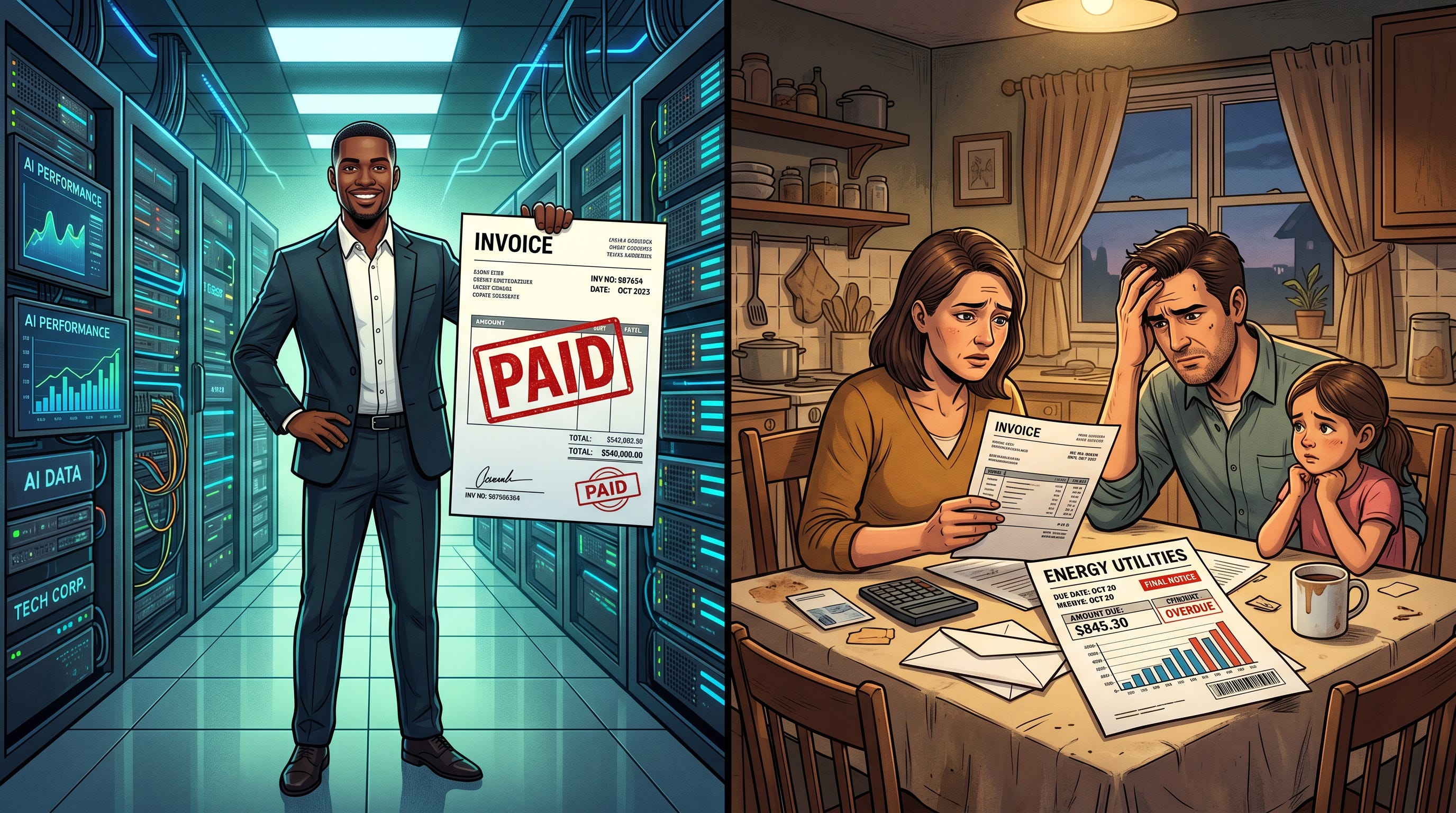
Now layer on the cruel asymmetry. The wealthy household down the road shrugs at a 25-percent bill increase and installs solar and a battery, effectively opting out of the grid you’re now overpaying to maintain. The family across town can’t — so they carry an even larger share of the fixed costs, because there are fewer of you left to spread them across. The bill becomes regressive almost by accident: a tax on everyone who can’t afford to escape it, levied to power a technology sold to all of us as a great equalizer. That’s not a dystopia of killer robots. It’s something duller and more plausible — a slow, quiet transfer of wealth, hidden inside a utility statement, justified at every step as “just the cost of progress.”
And here’s the twist that makes it stick. By 2031, the AI built on all that power has become genuinely useful — it drafts your appeals, tracks your spending, maybe even helps you find a cheaper energy plan. So the very tool that quietly raised your bill becomes the tool you reach for to cope with the higher bill. The dependency and the cost grow together, each making the other harder to question. That’s the trap I want us to see coming: not a future where AI turns against us, but one where it becomes so woven into daily life that nobody’s left with the standing — or the spare attention — to ask the boring, decisive question of who paid for the privilege. The time to ask it is now, while it still sounds like a fair question instead of an ungrateful one.
I don’t think that future is inevitable. But I’m certain it’s the default — the thing that happens if we keep glancing at the number, wincing, and paying. Defaults win unless somebody changes them. So let’s talk about who’s trying.
What the smart people are saying — and they don’t all agree
The encouraging news is that this has stopped being a fringe worry and become a genuine debate among serious people across the spectrum — which is exactly when problems start getting fixed.
On one side, the optimists. The engineers themselves are part of the answer: researchers at Carnegie Mellon are racing to make the machines themselves far less hungry — one professor designing “carbon-efficient servers,” another building a chip his team says is “10 times more energy efficient than the best low-power general purpose computers on the market today.” If AI’s appetite can be cut tenfold at the silicon level, a lot of this problem shrinks on its own. And the market-minded ITIF, as we saw, insists the grid can absorb all this if we write the contracts right — that data centers might even improve how efficiently the grid is used.
On another side, the watchdogs. PowerLines is sounding the alarm about runaway rate cases; the Little Hoover Commission wants families ring-fenced from the cost; the Brookings analysts want cost allocation rewritten so “large-load customers” finance the upgrades they trigger. Different vocabularies, one shared verdict: the current default — socialize the cost, privatize the benefit — is indefensible, and fixable.
And here’s the part I find most telling. Even the companies have started to flinch. Microsoft announced a “Community-First” model and promised to “pay our way” so its data centers don’t raise residents’ electricity prices — with its president declaring it “both unfair and politically unrealistic for our industry to ask the public to shoulder added electricity costs for AI.” (Note the word unrealistic, right next to unfair. They can feel the politics turning.) Even more striking, Anthropic pledged to cover the electricity price increases its data centers cause outright — to “pay for 100% of the grid upgrades needed to interconnect our data centers” and bring “net-new power generation online” to match what it consumes — on the explicit principle that “AI companies shouldn’t leave American ratepayers to pick up the tab.”
Now, I’m not naïve about corporate pledges (I’ve watched too many evaporate). A press release is not a tariff, and “we’ll pay our way” means little until a regulator can audit it. But the fact that the biggest builders now feel compelled to say it tells you which way the wind is blowing. The principle is winning. The job is to make it binding before the enthusiasm fades.
What does this mean for you?
You can’t personally negotiate the national grid. But you have more leverage over your own bill than the word “helpless” suggests. A few concrete moves:
Actually read the bill — once. Find your utility’s name, then search “[your utility] rate case data center.” If your provider has a pending request tied to large-load or data-center growth, you’ll likely find it. Knowing it exists is more than most ratepayers ever do.
Show up to the boring meeting. Utility rate increases get approved by a state public utilities commission (sometimes called a public service commission) — and those hearings take public comment. A roomful of citizens is the single thing utilities and regulators are not expecting. Your two minutes count more than you’d think precisely because almost no one shows up.
Ask the one question that matters: who pays? When a data center is proposed near you, the question isn’t “jobs or no jobs.” It’s whether the developer is funding its own grid costs — the way states from Alabama to Nebraska now require — or whether the bill is being quietly socialized onto you. Make your representatives answer it on the record.
Watch for the “special deal.” The tax abatements and discounted rates that lure data centers in are usually public. If your town is offering one, ask what the community gets in return — and whether your power bill is part of the price.
Don’t let “AI is the future” end the conversation. It probably is the future. That’s not an argument for letting it run on your dime. You can be pro-technology and pro-paying-your-own-way at the same time; in fact, that combination is the only honest one.
The lesson, as I see it
We are living through a genuine marvel — machines that can write, reason, design, and converse — and like every marvel before it, it runs on something physical, and something physical always has a cost. The question was never whether to pay that cost. Electricity isn’t free and never pretended to be. The question is the quiet one underneath: whose bill does it land on, and did anyone ask them first?
For most of this boom, the answer has been “yours, and no.” The genius of the arrangement is its invisibility — a few extra dollars folded into a statement you were never going to read, justified by a future you were never asked to vote on. That’s the part I refuse to shrug at. Not the technology — the sleight of hand.
So here’s my vote. Build the data centers; I want the AI too. But make the people building them pay for the power they burn — fully, transparently, and before the meter starts running, not after. The states already proving it can be done have handed the rest of us the argument. All we have to do is stop glancing, start reading, and show up where the decision actually gets made. The cheapest insurance against paying for someone else’s boom is simply refusing to do it quietly.
Check your bill. Then check who decided what’s on it. That’s where the real story is — and, for once, where you actually get a say.
The HAIA Foundation digs into the unglamorous machinery behind the AI age — the contracts, the grids, the line items — because that’s usually where the costs hide. If this made you want to read your next bill a little more closely, subscribe over on our Substack, and learn more about the work at the HAIA Foundation.