
And the answer looks an awful lot like the same hundred billion dollars circling a handful of companies. Here’s how the money loop works, why 2026 is the year it gets tested, and what it means for your savings.
I should confess my bias up front, because it shapes everything that follows. I am not a markets person. I have never day-traded, never read an earnings call for pleasure, and I once held a tech stock through an entire boom-and-bust cycle for the worst possible reason — I‘d stopped looking, because looking made me anxious. So when the smartest people in finance start using a phrase as strange as “circular economy,“ my instinct is not to nod along. It‘s to slow down and ask the dumb question out loud: wait — whose money is this, exactly?
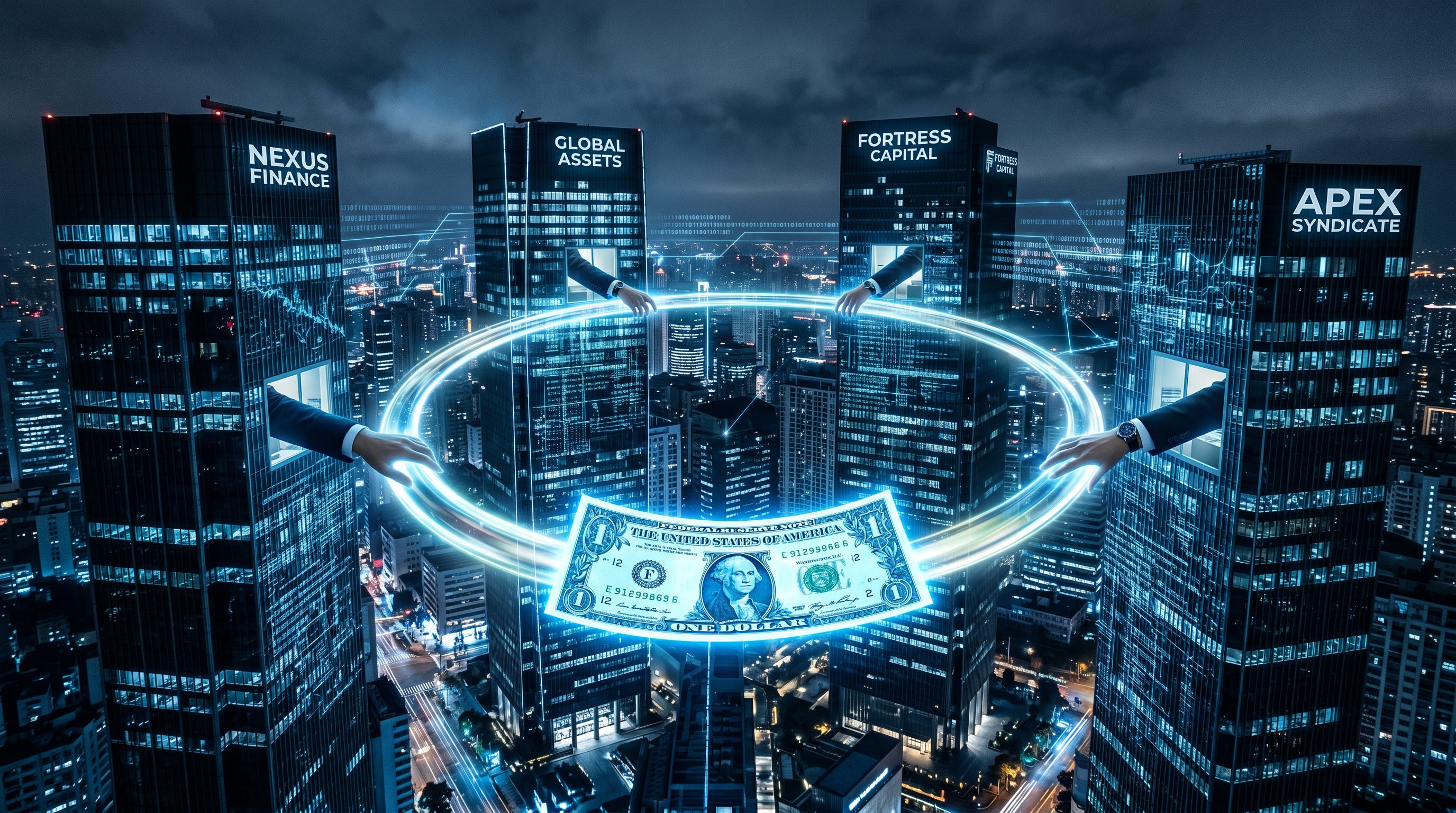
That turns out to be the right dumb question. Because the thing being sold to the public as the largest industrial build-out in history — the data centers, the chips, the trillion-dollar valuations — rests on a financial structure that, once you trace it, starts to look less like a hundred separate bets and more like one very large dollar bill being passed in a circle and counted fresh at every stop.
Let me show you the circle. Then let me show you the last time we watched a circle exactly like it.
First, the part nobody actually disputes
Start with the fact that even the bulls concede. In September 2025, Nvidia — the company that makes the chips every AI lab is desperate to buy — announced it would invest up to $100 billion into OpenAI, the maker of ChatGPT. That sounds like a vote of confidence, and in part it is. But read how Wikipedia‘s own editors, drawing on the financial press, describe the mechanics: the deal was made “on the expectation that OpenAI would power additional data centres using the GPUs that it had been buying from Nvidia,“ establishing a circular flow of money.
Sit with that sentence. Nvidia gives OpenAI money. OpenAI uses the money to buy Nvidia‘s chips. The cash leaves Nvidia‘s left pocket and returns to its right — and along the way, it shows up as investment on one ledger and revenue on the other. The same dollars, counted twice, both times as growth.
This isn‘t a one-off, and it isn‘t a conspiracy theory I‘m importing from a message board. Fortune reported the $100 billion bet as the largest of a series of “circular” deals in which the chipmaker, in their words, “invests in, or lends money to, its own customers.“ The Israeli business outlet Calcalist put it even more bluntly, calling Nvidia “both the root and the main engine“ of what is now openly described as the “circular economy of AI” — investing hundreds of billions in companies that turn around and spend it on more Nvidia chips. (That “root and main engine“ framing is Calcalist‘s, not mine — I want to be precise about who is saying what, because precision is the whole point here.)
And it‘s not just OpenAI. Two more nodes complete the loop, both worth knowing by name:
In September 2025, Nvidia struck a $6.3 billion agreement to buy the unsold data-center capacity of AI cloud-computing provider CoreWeave — a company that exists to rent out, you guessed it, Nvidia chips. So Nvidia is now backstopping the demand for the very racks built to house its own product.
Nvidia’s rival AMD did its own version, handing OpenAI warrants that could make OpenAI a roughly 10% shareholder. As the investor Paul Kedrosky put it, that makes OpenAI “part customer, part financier” — a chip buyer that’s also been handed a stake in the chipmaker, so that everyone’s valuation lifts everyone else’s.
CNN‘s “Nightcap“ column delivered the punchline I keep coming back to. If the AI industry looks like a small handful of large companies “just trading money and services back and forth,” the column wrote, then congratulations — you finally understand the AI financing machine.
It‘s worth pausing on why this structure makes people nervous, because the concern is more specific than “big numbers, scary.“ When a chipmaker invests in the customers who then buy its chips, two things happen at once that a normal arms-length sale would keep separate. The supplier‘s revenue grows — but it grows partly because the supplier itself funded the purchase. And the customer‘s spending looks like a market signal — demand! — when some of it is really just the supplier‘s own capital making a round trip. Stack enough of these arrangements and you can manufacture the appearance of a booming, broadly-demanded market out of what is, at its core, a few balance sheets passing the same money around. That‘s precisely the worry Wikipedia‘s editors flag when they note the concern that leading AI firms were using circular financing and investment to artificially boost their valuations — and why Calcalist warns that the result is a situation in which the value of many tech giants now depends heavily on contracts with OpenAI, contracts whose financing remains uncertain.
To be scrupulously fair — and I want to be, because this is where lazy writing turns a structure into an accusation — none of that is illegal, and “circular“ is a description of plumbing, not a verdict of fraud. Companies invest in their ecosystems all the time; Intel funded chip buyers for decades. The question is never is the circle there (it plainly is) but how much of the demand is real versus recycled — and that question only gets answered when someone is finally forced to settle up in cash.
So far, so unsettling. But “unsettling“ is not the same as “doomed.“ A circle of money can be perfectly healthy if, somewhere along its circumference, real customers are paying real bills that exceed what it all cost to build. So the honest next question is: can they?
The trillion-dollar question: does the money come back?
Here is where the bull case has to confront an arithmetic problem.
In late November 2025, analysts at HSBC ran the numbers on OpenAI's stated ambitions — the data centers it has promised to build, the compute it has promised to buy — and the headline that came back was brutal. The Register summarized it as "HSBC spies $207B crater in OpenAI's expansion goals": the bank estimated OpenAI needs to secure roughly $207 billion in new financing by 2030 just to deliver on what it has already announced. Fortune reported the more sobering half of the same analysis — that even with all that money, HSBC projects OpenAI still won't be profitable by 2030, and "will need at least another $207 billion of compute to keep up with its growth plans."
Let me translate that out of analyst-speak. The single company at the center of the loop — the one whose chip orders make Nvidia‘s revenue, whose contracts prop up the valuations of half of Big Tech — is, by a major bank‘s estimate, more than two hundred billion dollars short of the cash it needs, and not expected to turn a profit by the end of the decade. The Register noted the obvious knock-on: a gap that size threatens Oracle, Microsoft, and Amazon too, because they‘ve all signed reported infrastructure commitments betting that OpenAI will be good for the money.
Now — fairness demands a caveat, and I‘ll plant a flag here so the bulls don‘t accuse me of cherry-picking. “Not profitable by 2030“ is not the same as “will collapse.“ Amazon wasn‘t profitable for years and turned out fine. A company that loses money while it builds something genuinely valuable is the entire history of frontier technology. The bears and the bulls are looking at the same loop and the same funding gap and drawing opposite conclusions — and I promise to give the bulls their full say before this is over.
But before we get to the optimists, I want to do the thing I find most clarifying when a market starts speaking in brand-new vocabulary: ask whether the vocabulary is actually new.
We have watched this exact movie before
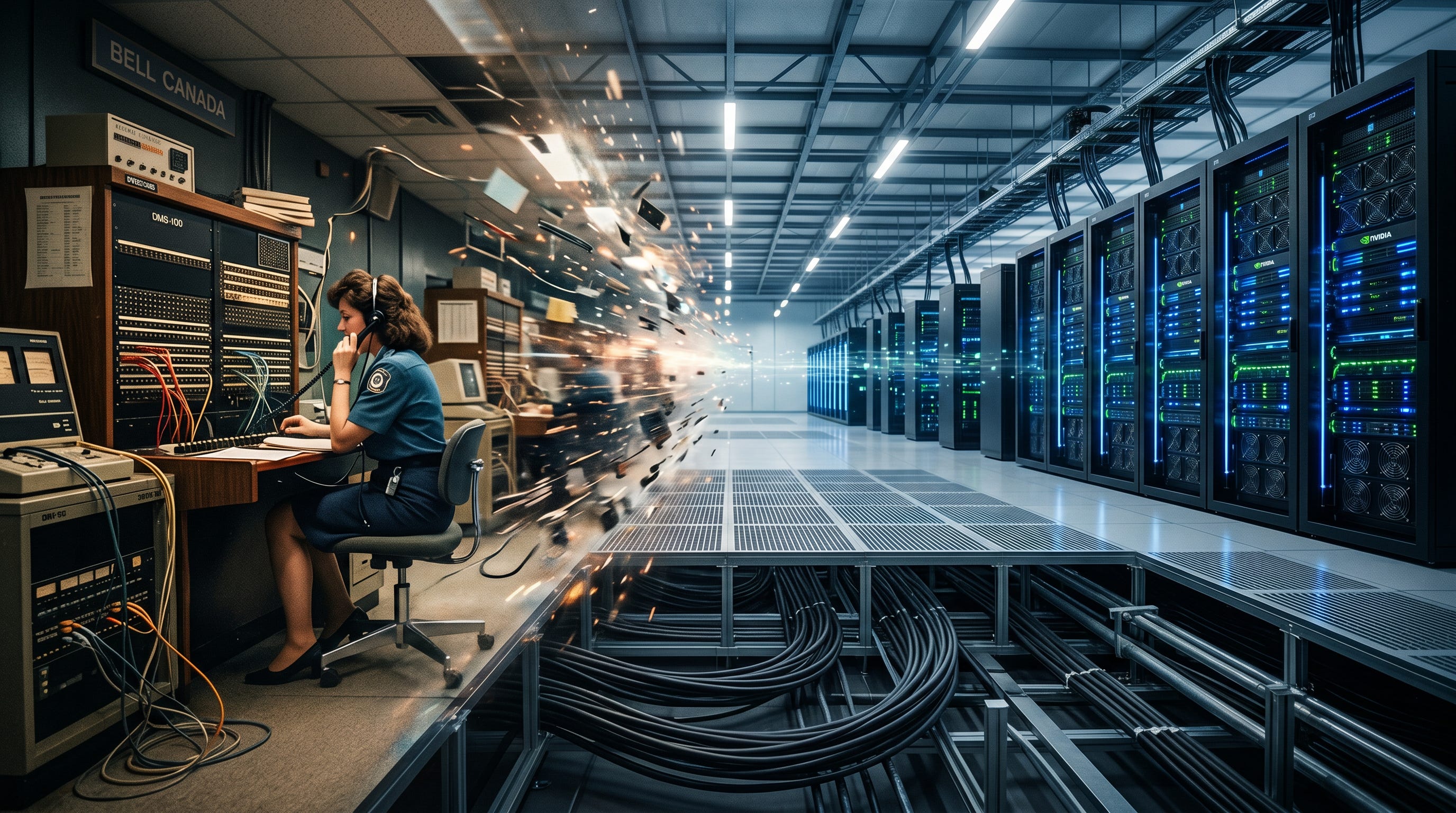
It is not new. We have a near-perfect dress rehearsal, and it played out about twenty-five years ago.
Rewind to the late 1990s. The hot technology wasn‘t AI; it was the internet itself, and specifically the fiber-optic cable that would carry it. The companies that made the gear — the routers, the switches, the network equipment — discovered a wonderful trick for booking explosive growth: instead of waiting for customers to save up and buy their products, they would simply lend the customers the money to buy them. It even has a clinical name. It‘s called vendor financing, and the venture investor Tomasz Tunguz has assembled the receipts from that era. As he documents, “equipment makers extended billions in vendor financing to telecom customers”: Lucent committed 8.1billion,Nortel3.1 billion, Cisco promised $2.4 billion in customer loans.
Read that and the AI loop should feel uncomfortably familiar. A supplier lends its customer the money; the customer spends it back on the supplier‘s product; the supplier books a sale. The cash makes a circle, and at every point on the circle it gets recorded as growth.
I‘m not the only one drawing the line. CNN‘s same Nightcap column flagged vendor financing as one of the “unflattering echoes” analysts now see between the AI frenzy and the late-90s dot-com bubble — recalling that back then, “telecom equipment giants like Cisco, Nortel and Lucent borrowed heavily to offer their customers financing deals.” Same move. Same names that everyone, at the time, was certain would own the future.
So how did the movie end? Not well — and the way it ended is the part I most want you to hold onto, because it‘s the part the AI debate keeps skipping.
The financing didn‘t just produce shaky loans. It produced a glut — a mountain of physical capacity that demand never showed up to use. The cable companies, convinced that “supply creates demand,“ carpeted the country with fiber. And then, as a meticulous post-mortem titled “Dark Fiber — an Archaeology of the Dot-Com Bubble” lays out, the bill came due: by 2004, wholesale long-haul prices had fallen roughly 55% in a single year, with analysts estimating that only about one-tenth of installed fiber was actually “lit”. One-tenth. Nine out of every ten strands of glass that the boom had buried in the ground sat there, dark and earning nothing — so much of it that the industry coined a term for the wreckage. The unused surplus became known as “dark fibre,” and as Wikipedia notes, it was the residue of “a great excess of fibre [that] was installed in the US during the telecom boom of the late 1990s and early 2000s.”
And the comparison isn't just vibes; the dollar figures rhyme too. Tunguz lays the eras side by side: against Lucent's, Nortel's, and Cisco's billions in vendor loans a generation ago, today's chip-led build-out involves Nvidia's own roughly $110 billion in investments plus more than $15 billion in GPU-backed debt swirling through the ecosystem. Different decade, different gear, same financial gravity — the supplier underwriting its own demand at a scale the public mistakes for organic growth.
Here is the twist that makes this history useful rather than merely cautionary: the internet really did change everything. The optimists about the technology were right. The fiber really did get used — eventually, years later, by the streaming and cloud era. It‘s the optimists about the financing and the timing who got destroyed. You could have been completely correct that the internet was world-changing and still have lost your shirt buying the companies that built it on borrowed money a decade too early.
Hold both of those truths at once, because the whole AI question lives in the gap between them.
Now play it forward
So let‘s not just diagnose 2025. Let‘s imagine, plausibly and without science fiction, how 2027 or 2028 could go — both ways, because honesty requires both.
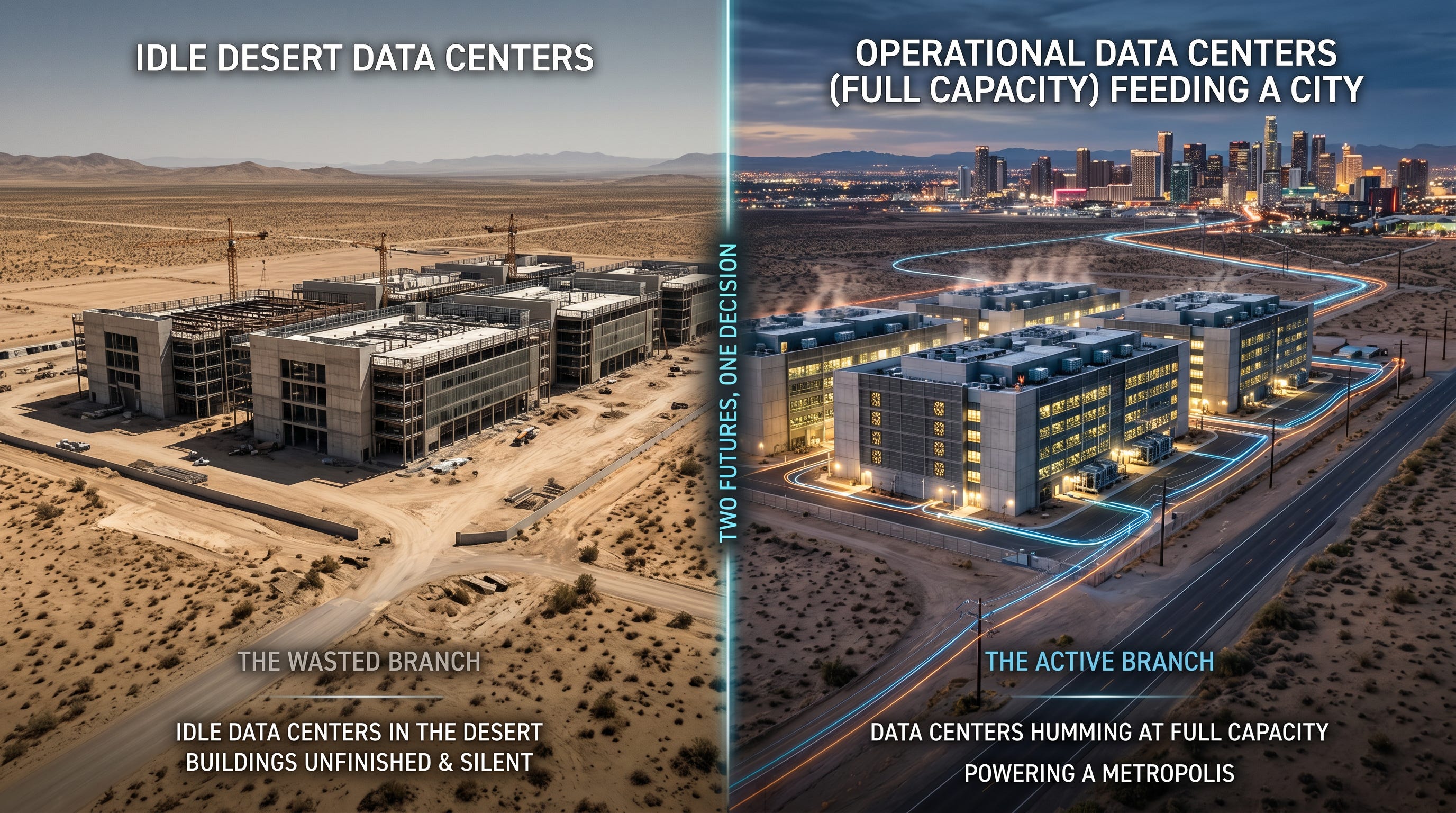
In the sour version, the loop runs in reverse. Credit gets more expensive (we‘ll see in a moment why 2026 is the year that starts). One large data-center developer can‘t refinance and misses a payment. Suddenly the “revenue“ that Nvidia booked from a chip-buyer who was spending Nvidia‘s own investment money looks less like a sale and more like a loan that won‘t be repaid. Lenders, spooked, demand proof of real outside revenue — paying customers, not circulating capital — and discover that a meaningful share of the demand was the industry buying from itself. The valuations that depended on each other unwind in the same circle they inflated, just spinning the other direction. The data centers half-built in the desert become our generation‘s dark fiber: real assets, genuinely useful someday, stranded a decade early.
In the sweet version — and this is the version the bulls believe — the real demand simply arrives in time. Hundreds of millions of people and companies fold AI into daily work, the paid subscriptions and enterprise contracts grow faster than the debt, and the loop stops being circular because enough money is now entering from outside the circle to make it a spiral that points up. The data centers fill. The chips earn their keep. The skeptics (me included) look like the people who said the internet was a fad.
I genuinely don‘t know which one we get. Neither does anyone else, and you should be suspicious of anyone who claims certainty in either direction. What I do know is that the structure makes the sour version possible in a way that a normal, money-comes-from-outside boom would not — and that the thing tipping us toward one branch or the other is the price of credit.
Why 2026 is the year the loop gets tested
For years, cheap money hid the question. When borrowing is nearly free, a circle of debt can spin indefinitely; nobody is forced to ask whether the cash at the center is real. That era is ending, and the financial press has noticed.
The markets analysts at FXEmpire wrote plainly that 2026 is set to test AI financing loops as credit tightens and lenders push for revenue proof from high-burn developers — and pointed to Goldman Sachs flagging five danger signals reminiscent of the 1990s: peaking investment, falling profits, rising debt, Fed rate cuts, and widening credit spreads. If that list reads like a description of the dot-com setup, that‘s because it is a description of the dot-com setup.
The strain is already showing up where you‘d least expect it. By early 2026, CNBC reported that AI exposure was rattling the $3 trillion private-credit sector — the vast, lightly regulated pool of non-bank lending that has quietly become a major funder of the build-out — with software firms selling off as AI-driven tools start to pressure software companies, a major borrower group for those private lenders. And this isn‘t only the bears talking: the ratings agency S&P Global Ratings — about as sober and centrist an institution as exists in finance — named private credit, tech issuance fuelled by AI, and increasing leverage as key forces shaping credit-market liquidity this year, with the Fed expected to make only measured rate cuts.
In other words: the cheap-money tide that let the circle spin without anyone checking the math is going out. And when the tide goes out, you find out which dollars were real.
What the smart people are saying — and they don’t agree
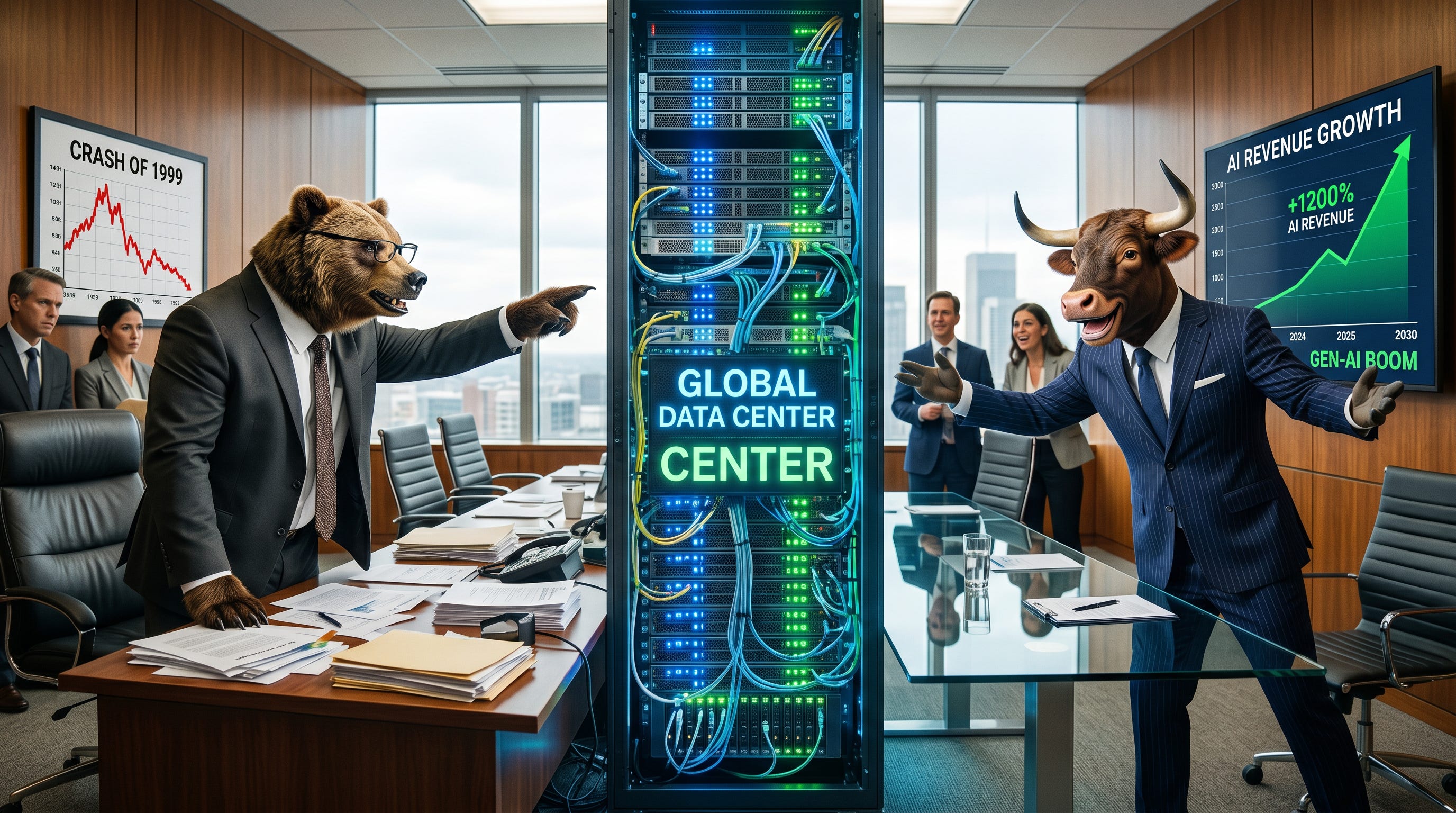
This is the part where I‘m obligated, and genuinely glad, to tell you that very serious people look at all of the above and reach opposite conclusions. If I only gave you the bears, I‘d be doing exactly the thing I criticized at the top — nodding along to a tidy story. So here is the actual spectrum.
On the bear side, the most famous voice is the “Big Short” investor Michael Burry — the man who shorted the 2008 housing bubble. His verdict on the comparison is characteristically blunt: “I am not claiming Nvidia is Enron. It is clearly Cisco.“ His argument, as CNBC summarized it, is that today‘s frenzy mirrors the late-1990s telecom buildout, and that markets are once again mistaking a supply boom for durable demand. Part of his critique is technical and worth understanding in plain terms: he contends the big AI firms are stretching out their “depreciation schedules“ — the accounting clock for how fast those expensive chips wear out and lose value — to make today‘s profits look fatter than they are. (I‘ll note carefully what Burry has not proven: that‘s a disputed accounting argument, not a finding of fraud, and the numbers are contested.)
On the bull side, the names are just as credentialed. CNN gathered them: Wedbush‘s Dan Ives called fears of an AI bubble “way overstated,” and JP Morgan‘s chief investment officer Bob Michele drew the sharpest possible distinction — “the lesson of the dot com era is there was a bubble, it burst. We don’t think we’re in one now for AI.” Their core argument is the one that matters most, and I think it deserves real weight: unlike many dot-com darlings that had traffic but no business, today‘s leading AI companies already have healthy business models or visible paths to profit. Real customers are paying real money — some of the demand is unquestionably coming from outside the circle.
And the company at the dead center of the loop didn‘t stay quiet. As CNBC reported, Nvidia pushed back by quietly circulating a private memo to analysts that explicitly name-checked Burry, defending its accounting and disputing his figures — arguing, line by line, that the build-out reflects genuine demand, not a financial illusion.
So where does that leave a non-markets person trying to be honest? Roughly here: the bulls are right that this isn‘t 1999 in one crucial way — there is real revenue, and the technology is genuinely useful, which the fiber-era darlings often weren‘t. The bears are right that the financing structure — the circle, the vendor-style loop, the funding gap — rhymes with 1999 closely enough that it would be reckless to ignore. Both can be true. The build-out can be world-changing and be financed in a way that destroys a lot of people who got the timing wrong. That, again, is the gap the internet‘s history lived in.
What does this mean for you?
You might be thinking: I don‘t own Nvidia stock and I don‘t run a data center, so why does the shape of someone else‘s money loop matter to me? More than you‘d think — and not in a sky-is-falling way. A few concrete things:
Check what you actually own. If you have a retirement account, a pension, or an index fund, you almost certainly own a slice of these companies whether you chose to or not — a handful of AI-linked giants now make up a startling share of the entire S&P 500. You don’t have to sell anything. But you should know your exposure, so a downturn in one corner of the market isn’t a surprise you only discover after the fact.
Learn to spot circular revenue. The next time a headline trumpets a company’s “record growth,” ask the dumb question I asked at the top: whose money is that? Growth funded by selling to genuine outside customers is durable. Growth funded by an investor who is also your customer is a circle — and circles can stop.
Separate the technology question from the money question. They are not the same, and conflating them is how people get hurt in both directions. AI can be the most important technology of your lifetime and a brutal place to have invested at the wrong moment. Be a bull on the tool and a skeptic on the timing; there’s no contradiction.
Don’t let “this time is different” do your thinking for you. It’s the most expensive sentence in finance. Sometimes it really is different — the internet really did change everything. But the people who say it loudest are usually the ones selling you the thing that’s different.
The lesson, as I see it
I opened by admitting I‘m not a markets person, that I once held a stock through a crash by refusing to look. The lesson I took from that — the one I‘d offer you — isn‘t get out or get in. It‘s keep looking. The danger was never the boom or the bust; it was the comfort of not asking.
The AI build-out may well be the real thing. The technology in front of us is not a fad, and the demand for it is not entirely imaginary — on that, I‘ll stand with the bulls. But a genuinely transformative technology can still be wrapped in a financial structure that counts the same hundred billion dollars three times and calls it growth each time. The fiber got used, eventually. The internet won. And a great many people who financed it a decade too early never got to enjoy the victory they correctly predicted.
So watch the circle. Watch whether the money entering from outside it ever grows faster than the money chasing its own tail inside it. That single ratio — outside money versus inside money — is the whole ballgame, and it‘s the one number the breathless coverage almost never gives you. When the tide of cheap credit finishes going out, we‘re all going to find out which dollars were ever really there. I‘d rather we find out with our eyes open.
The HAIA Foundation exists to translate the machinery behind the AI age into plain questions you can actually ask — like “whose money is this?” If this one made the circle visible, that’s the job. Subscribe at substack.haia.foundation, and learn more about what we’re watching at haia.foundation.