
Here is what the patchwork of 30 state laws, a deadlocked federal regulator, and a silent Congress actually means for the vote you’re about to cast — and what you can do about it.
Two weeks ago, my thumb was already on the share button. The clip was forty seconds long: a senator I do not much like, captured in what looked like an unguarded moment, saying something cruel and stupid and exactly in character. The lighting was right. The room tone was right. The little catch in his voice when he laughed at his own line was so right. I had the caption half-typed — something righteous about masks slipping — when a smaller voice in the back of my head asked the only question that matters anymore: and you know this is real because…?
I didn‘t. I couldn‘t. I deleted the caption, dug for twenty minutes, and found nothing — no source, no outlet, no original. To this day I don‘t know if that clip was genuine or synthetic, and that uncertainty is the story. Because here is the thing I keep coming back to: I was one tap from laundering something I could not verify to everyone who follows me. And I do this for a living. If I can be walked to the edge of that cliff, so can your aunt, your neighbor, the guy three seats down at the diner counter — and so, multiplied by millions of taps, can an electorate.
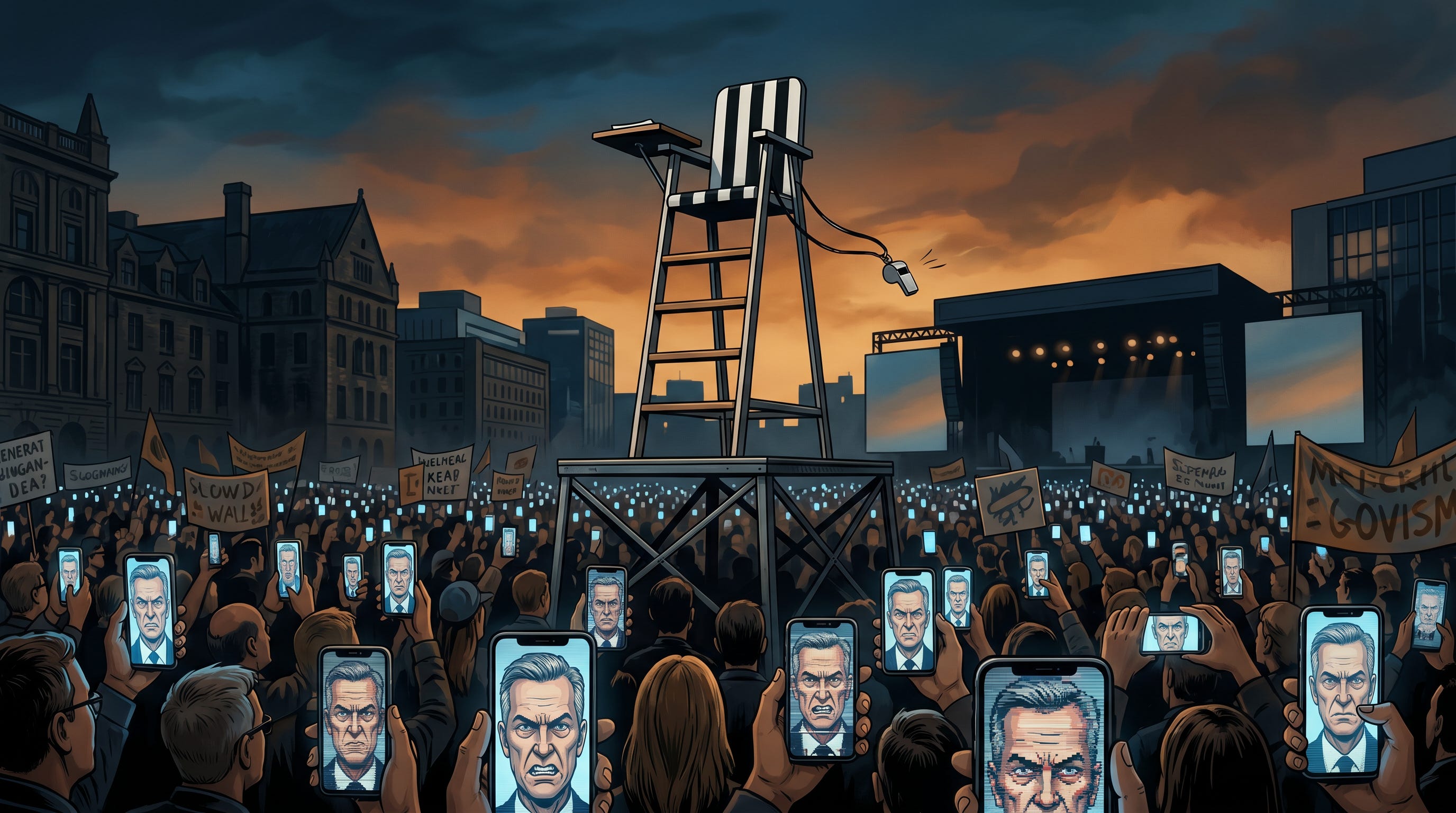
So let‘s talk about the year the fakes went mainstream, and the strange, conspicuous absence at the center of it: nobody, at the federal level, whose job it is to blow the whistle.
First, the part that isn’t up for argument
Let me lay down the facts cleanly before we argue about what they mean, because the facts are stranger than the panic.
Start with the most recent domino. In May 2026, Maryland signed its new election-deepfake law — SB 141, formally “Election Law – Election Misinformation, Election Disinformation, and Deepfakes,“ approved by the Governor as Chapter 444 — and it took effect June 1. With that signature, Maryland became the 30th state to pass one. Thirty states now have laws on the books aimed at synthetic political media, with dozens more bills still moving — and, as one industry tracker put it dryly, state legislatures “have moved faster than Congress“ to do it.
Hold that last clause, because it‘s the load-bearing one. Faster than Congress. Faster than a body that has not, as of this writing in June 2026, passed a single federal law governing deepfakes in elections.
And the federal referee that could have acted? It looked at the field and walked off it. In September 2024, the Federal Election Commission — the agency that polices what campaigns can and cannot do — formally voted not to open a rulemaking on artificial intelligence in campaign ads. Instead of writing new rules for a new technology, the federal election regulator declined to write new rules at all, adopting only an “Interpretive Rule“ gesturing at its decades-old fraudulent-misrepresentation regulation. Translation: we already have a rule about lying, sort of, so we’ll point at that. The whistle stayed in the drawer.
Now, you might assume that this is a problem of fringe actors — basement trolls, foreign bot farms, the usual cast. It is not. Here is the fact that reorganized my thinking about all of it.
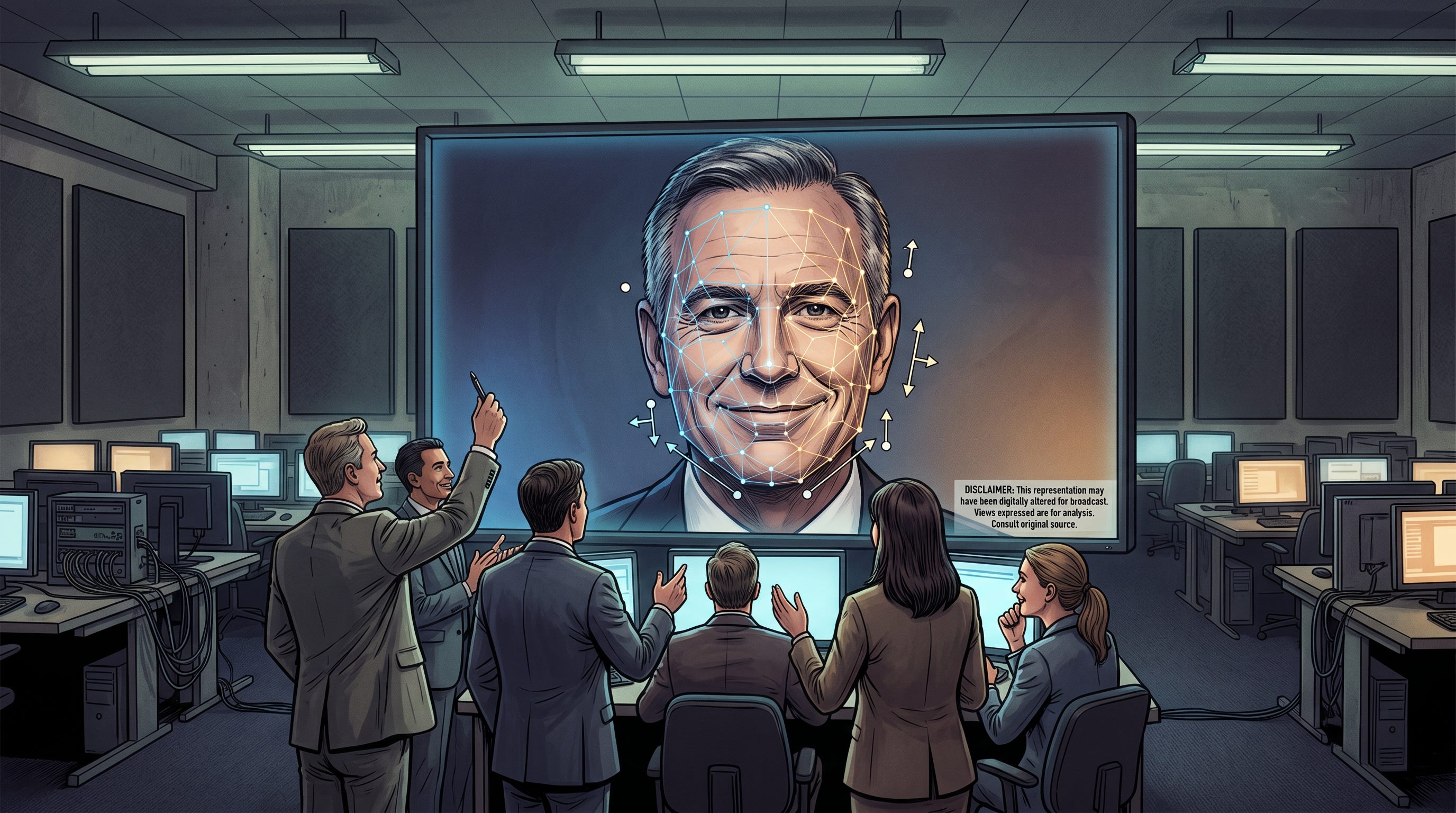
In early 2026, the Senate Republicans‘ official committee account posted an attack ad featuring a synthetic version of Texas Democrat James Talarico — an AI-generated rendering of a sitting state lawmaker, put out not by some anonymous account but by an arm of a major political party. (For the record, the spot did carry a small “AI generated“ disclosure — faint, easy to miss, but present; I‘m not going to overstate that part.) The point is the messenger. When a party committee runs an AI-altered video of an opponent, we have crossed from “this could happen“ to “this is how campaigns are run now.“
And it‘s not one stray clip. American politics, by mid-2026, is — in one reporter‘s phrase — already inundated with AI deepfakes: a White House account that posted a protester‘s photo altered to darken her skin; activists circulating AI-“unmasked“ images of federal officers; the Talarico spot; and a steady drip of smaller fakes that never make the news. As that same piece warned, these aren’t your 2024 deepfakes — the tools got better, cheaper, and faster, and the people using them got bolder.
So that‘s the field: synthetic political media is now normal, even respectable, even institutional — and the one federal official body positioned to referee it has formally declined the assignment.
“So just ban the fakes” — and here’s why that’s harder than it sounds
Now, the obvious response is the impatient one, and I felt it myself: fine, so write the rule already. Ban deceptive political deepfakes. What’s the holdup?
The holdup is the First Amendment, and I want to give that objection its strongest form, because it is not a dodge — it is a genuine, hard, two-sided problem, and the people raising it are not all bad-faith actors.
California tried the muscular version. It passed AB 2839, one of the toughest election-deepfake laws in the country — and in August 2025 a federal judge blocked one of the toughest laws on First Amendment grounds. (To be precise — and precision matters here — the law was preliminarily enjoined, put on pause, not finally struck down; the case, Kohls v. Bonta, is still unresolved.) U.S. District Judge John Mendez wrote that most of the statute acted as a hammer instead of a scalpel — a blunt tool that swept up humor and satire along with the genuine fraud, and so “unconstitutionally stifles the free and unfettered exchange of ideas.“ In the legal reasoning, the court found the law discriminates based on content, viewpoint, and speaker — the three things that trigger the most exacting level of constitutional scrutiny — and held that restricting speech should be the government’s tool of last resort, reachable only after gentler alternatives are exhausted.
And the objection runs deeper than one statute. Free-speech advocates argue the cure may be worse than the disease. The Institute for Free Speech warns that laws aimed at political deepfakes are likely to suppress political speech well beyond the intended target — that forcing every speaker to guess where parody ends and “manipulated media“ begins will chill exactly the rowdy, irreverent, exaggerated political speech the First Amendment exists to protect. A photoshopped meme of a candidate, a satirical voiceover, a deliberately absurd cartoon — police those too aggressively and you haven‘t protected democracy, you‘ve just handed incumbents a new tool to sue their critics into silence.
There‘s even an honest case that the alarm itself is overblown. The libertarian-leaning Cato Institute has argued that, cycle after cycle, the greatest fears of AI and elections have not materialized — the predicted apocalypse of a perfectly-timed fake swinging a national election keeps not happening — and that rushing to “curtail AI-powered speech“ silences legitimate satire right alongside the genuinely deceptive stuff. I don‘t fully buy it, but I won‘t pretend it‘s stupid. The absence of a federal referee isn‘t only neglect. Part of it is a deliberate constitutional choice — a society that has decided, again and again, that the government policing political speech is itself a danger worth fearing.
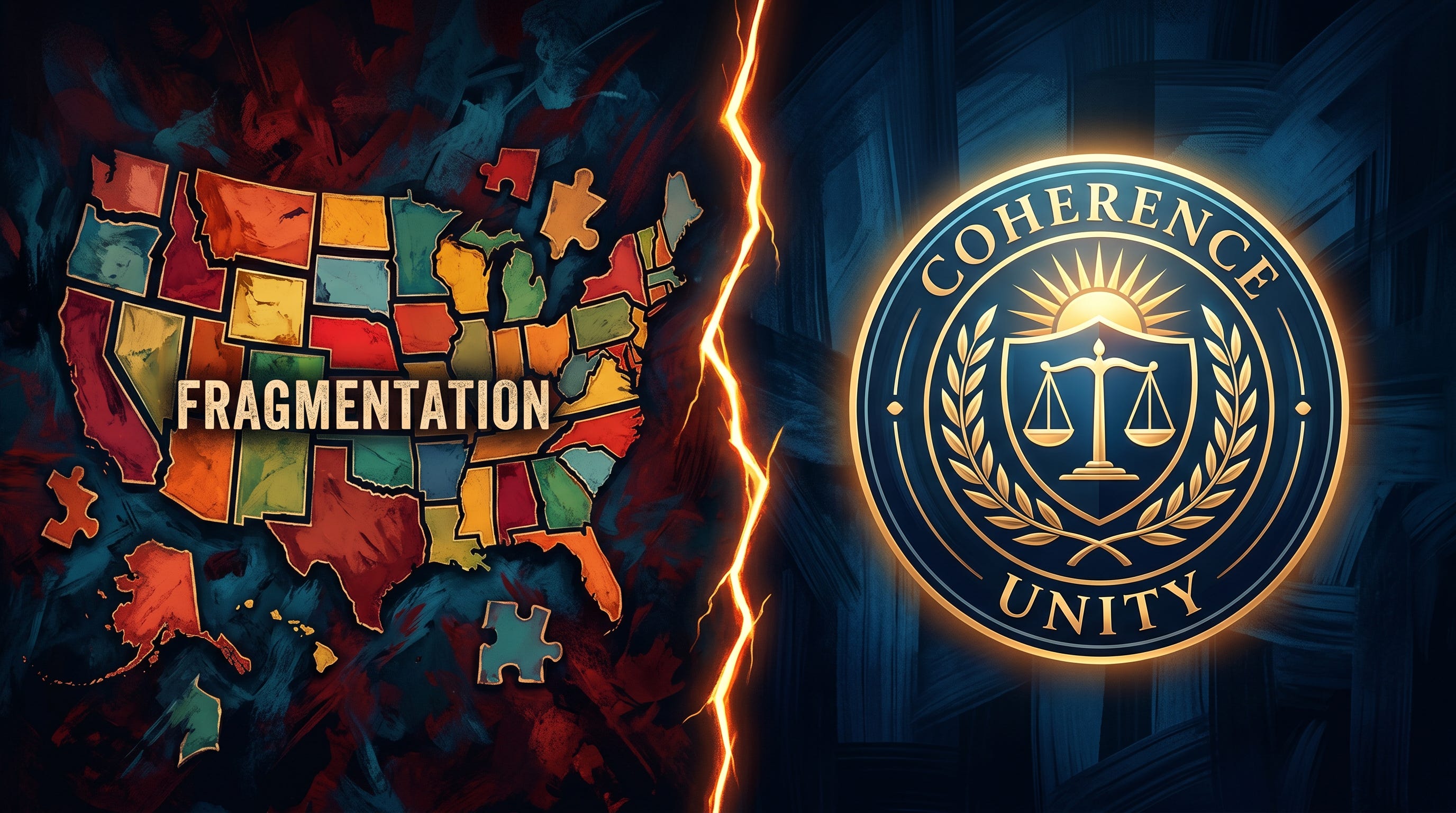
So here is the actual knot, and it is a real one: the single place in America that tried hardest to play referee at scale got reversed in court for overreach. The thesis of this piece is not “regulation is easy and the cowards in Congress just won‘t act.“ It‘s something thornier. We have a genuine collision between two things we care about — honest elections and free speech — and instead of resolving it, we‘ve left it to thirty state legislatures and a deadlocked commission to improvise in thirty different directions.
Meanwhile, on the other side of the world, somebody actually drew a line
When I want to know whether a problem is unsolvable or just unsolved, I look at who else has faced it — and here the most instructive examples aren‘t in Washington at all.
Take South Korea, which did something the United States has not dared. Ahead of its elections, the country enacted an outright ban on AI-generated deepfake campaign content within a defined window before voting — a hard, bright-line rule with criminal teeth, not a polite request for a disclosure label. You can argue about whether that‘s too aggressive (and South Korea‘s own free-speech advocates have), but you cannot argue that the country dodged the question. It picked an answer and lives with the consequences.
Or look at Slovakia in 2023, the nightmare scenario in miniature. Just days before a national election — inside the legally enforced quiet period when candidates and media are barred from campaigning — an audio clip surfaced of a party leader appearing to discuss rigging the vote. It was fake. But it dropped into precisely the window when, by law, no one could effectively rebut it, and the fact-checkers were muzzled by the very rules meant to keep elections calm. By the time it was debunked, the polls were closing. Nobody can prove it changed the outcome — I won‘t claim it did — but it proved something scarier: the fake doesn‘t have to win the argument. It just has to be unanswerable for forty-eight hours.
The contrast with the American setup is almost embarrassing. Where another democracy wrote one clear rule — even a rule you might dislike — the United States offers thirty different ones, a federal regulator that recused itself, and a constitutional tradition that (rightly) makes us nervous about the cure. Somebody, somewhere, drew a line. We‘re still arguing about whether we‘re allowed to own a pen.
Now run the tape forward to November — and then to the November after that
Let me get specific about where this goes, because the abstract version (”misinformation is bad“) lets everyone nod along without flinching. The concrete version is what should worry you.
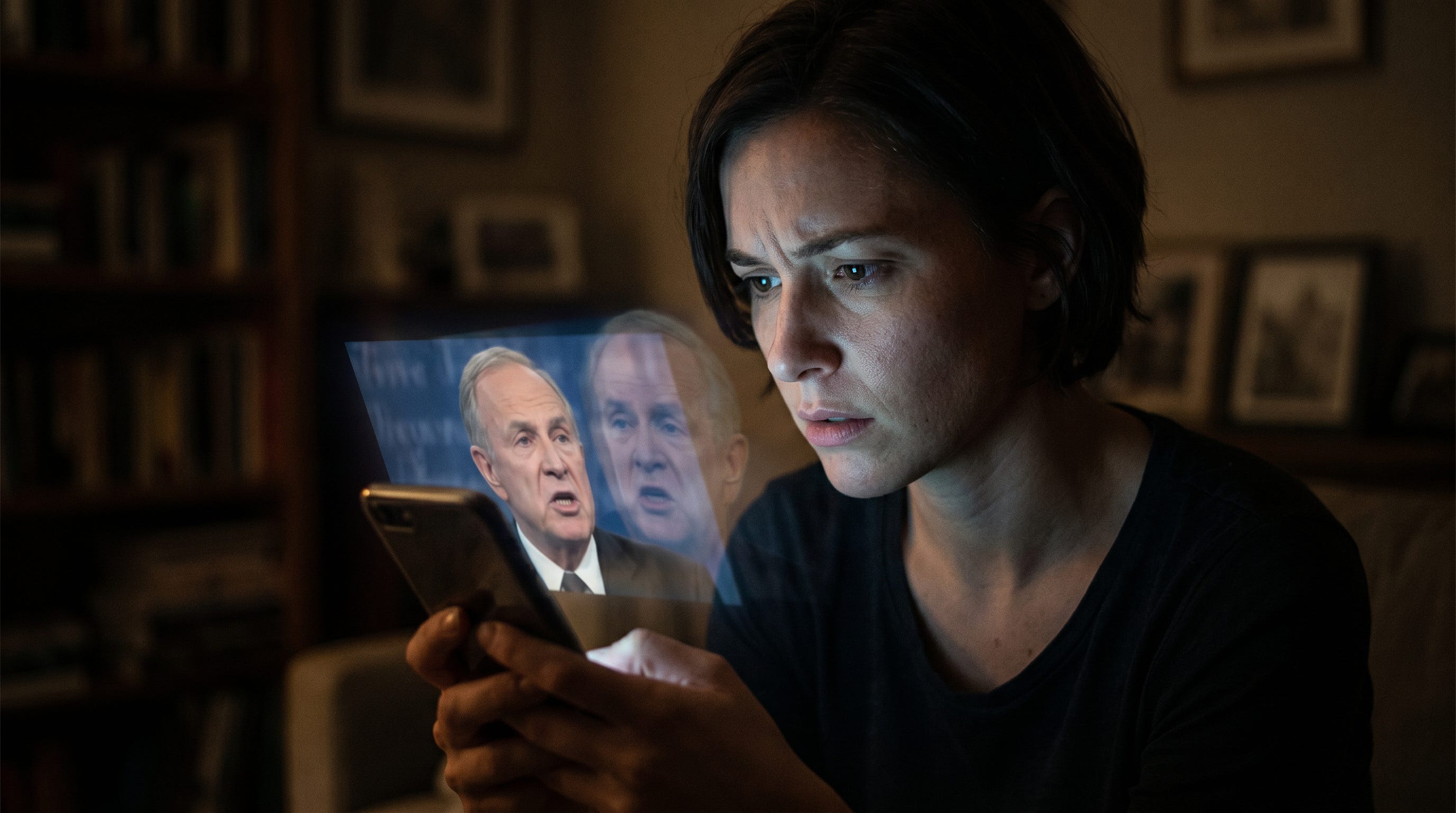
It‘s the Friday before the 2026 midterms. A clip lands at 7 p.m. Eastern: a Senate candidate in a tight race, on grainy “leaked“ footage, appearing to tell a closed-door donor meeting that she plans to gut a program her district depends on. It is synthetic. It is also seamless — voice, cadence, the nervous way she touches her collar. Her campaign denies it within the hour. But a denial is a paragraph, and the clip is a feeling, and the clip is winning. There is no FEC ruling to point to, because the FEC doesn‘t make those rulings. There is a state law — but she‘s in one of the twenty states without one, or one of the thirty with a law so freshly written nobody knows how it applies to a clip first posted by an account in another country and reshared by a million Americans who think it‘s real. By the time the platforms decide whether their policies even cover it, the polls have opened.
Now push two years past that, to 2028, and the danger inverts into something worse. The deepfakes get good enough that the real problem isn‘t the fake video — it‘s the liar’s dividend. A candidate is caught on genuine, authentic footage saying something disqualifying, and she simply says: that’s a deepfake. Why wouldn‘t she? It‘s the perfect alibi, and we built it for her. When every real thing can be dismissed as fake and every fake thing dressed as real, the casualty isn‘t any single election. It‘s the shared floor of reality that elections stand on. You don‘t need a fake to swing a vote anymore. You just need enough fakes in the water that no one trusts anything — and then the most shameless person in the room wins, because shame requires a public that still believes its own eyes.
That‘s the future the absence of a referee is quietly building. Not a single stolen election. A slow draining of the one thing democracy can‘t run without: the assumption that we can, at least roughly, agree on what happened.
What the smart people are saying — and they don’t break down the way you’d expect
Here‘s what makes this issue genuinely interesting: the experts don‘t split into tidy partisan teams. They split on a single hard question — should anyone be empowered to police political deepfakes at all? — and the answers cut across the usual lines.
On the “yes, and it‘s not even that hard“ side, the Brennan Center for Justice argues that a workable rule is not hard to draft — if you‘re modest about it. Don‘t ban satire. Don‘t try to police every meme. Instead, require manipulated audio and video to carry a clear label (transparency rules, the Center notes, are usually easiest to defend in court), and narrowly outlaw the genuinely indefensible category — lies about when, where, and how to vote. That‘s a scalpel, not a hammer, and it‘s the kind of rule that might actually survive the constitutional scrutiny that sank California‘s.
A named voice on that side puts the stakes plainly. Robert Weissman, co-president of the democracy watchdog Public Citizen, calls political deepfakes a profound threat to our democracy, “because there is no realistic way for voters to understand they are seeing fake representations rather than real video.“ His worry isn‘t about any one clip. It‘s about an electorate that can no longer tell.
But cross over to the right-of-center and free-market world and you don‘t find the opposite of concern — you find a different diagnosis of the same problem. The R Street Institute, watching 2026 closely, describes a patchwork that didn’t exist three years ago: the number of states regulating this kind of political speech climbed from just five in 2023 to dozens now, most favoring the lighter-touch disclosure model over outright bans — and most of those disclosure laws, notably, haven‘t drawn the constitutional challenges the bans have. And from the Institute for Free Speech and Cato, you get the honest brake I quoted earlier: be careful, the cure can poison the patient.
Notice what isn’t in dispute across that whole spectrum. Left and right, pro-rule and anti-rule, almost nobody is defending the actual status quo — thirty mismatched state regimes, a federal regulator that opted out, and no act of Congress. The fight isn‘t between “regulate“ and “leave it alone.“ It‘s between “regulate carefully“ and “be very, very careful about regulating.“ Both camps agree the field has no referee. They just disagree about whether one can be safely appointed.
What does this mean for you?
You‘re not going to draft the federal statute, and you can‘t un-deadlock the FEC by yourself. But the whole danger of a refereeless system is that it pushes the job of calling fouls down onto you — the voter, the sharer, the person with the thumb hovering over the button. So here is how to be a competent referee of your own feed.
Adopt the forty-eight-hour rule on anything explosive. The deepfakes engineered to move elections are timed to drop late, when there’s no time to verify and every incentive to react. If a clip makes you furious right before you’d vote, treat the timing itself as a red flag. The truly damning, genuinely-sourced story does not usually arrive as an anonymous clip with the clock running out.
Hunt for the original, not the repost. Before you share, ask the boring questions: Who first posted this? Does any established outlet have it? Is there a full video, or only the forty devastating seconds? A real event leaves a trail of corroboration; a manufactured one is usually one orphaned clip wearing a borrowed face.
Know your own state’s rules — and your own state’s gaps. Whether a deceptive political deepfake about your candidate is even illegal depends entirely on where you live. Some states require a disclosure label; some ban the worst categories; twenty have nothing at all. Look up where yours stands, because “there ought to be a law” sometimes means there is one, and sometimes means you’re on your own.
Refuse the liar’s dividend, in both directions. Just as you shouldn’t believe a fake, don’t reflexively accept “that was a deepfake” as a get-out-of-jail card when a politician is caught on credible footage. The same uncertainty that lets fakes spread lets the guilty cry fake. Demand evidence for the denial, too.
Ask your representatives the unglamorous question. Not “do you support free speech” (everyone does) but “do you support a narrow federal labeling rule for manipulated political media, and where do you stand on the FEC’s refusal to act?” The vague answer is the tell. The specific one is the start of an actual referee.
The lesson, as I see it
I keep returning to that clip I almost shared, and to how little stood between me and spreading it. Not a law. Not a platform safeguard. Not an official whose job it was to stamp it true or false. Just a small skeptical voice and twenty minutes I happened to have. That‘s not a system. That‘s luck wearing the costume of vigilance.
Here‘s the thing I‘ve made my peace with: the convincing fake was never going to be the part that broke us. We‘ve had forged photos for a century and doctored quotes for longer. What‘s different now is the combination — fakes this good, this cheap, this fast, arriving into a contest with thirty referees who can‘t agree on the rules, one federal referee who left the field, and a Congress that hasn‘t picked up the whistle. A great fake is a problem any healthy democracy can absorb. A great fake with no one empowered to call it is something else entirely.
The fix isn‘t to surrender free speech in a panic, and it isn‘t to pretend the danger is imaginary because last cycle‘s apocalypse didn‘t arrive. It‘s the narrow, boring, achievable middle: clear labels, a tight ban on the genuinely indefensible, a federal baseline so a fake doesn‘t change meaning the moment it crosses a state line — and an electorate that has learned to slow its own thumb. Other democracies decided this question was answerable. We can too. But until we do, the referee for the first deepfake election is the same person it‘s always quietly been: you, in the half-second before you hit share.
If this made you look twice at your own feed, that’s the point — now pass it to the one person you know who shares first and checks never.