
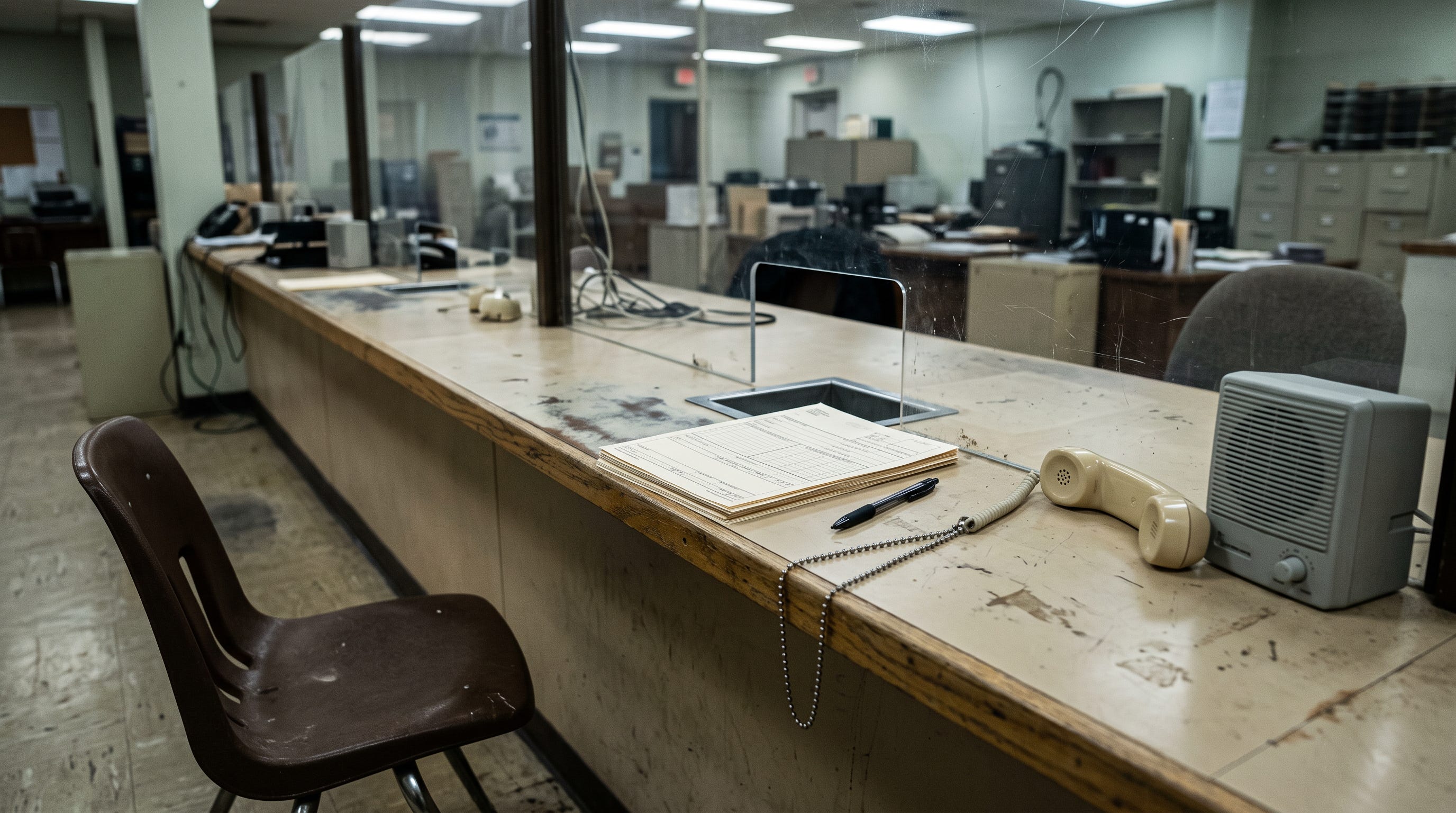
I have stood on both sides of a government counter in a language I only half owned.
On one side, as the person being asked the questions, nodding at words I planned to look up in the car afterward. On the other, as the relative who speaks the best English in the room, brought along to a clinic to turn one language into another for somebody who mattered to me. Nobody certified me. Nobody checked my work. I got things wrong, and the only reason I know is that I was standing in both languages at once and could feel the seams.
Here is the part I am less comfortable with. Somewhere in the last few years I quietly handed that job to my phone — and applied to the phone exactly the standard nobody had applied to me. None at all.
So when a headline crossed my feed this year announcing that Congress was moving to ban AI translation in federal agencies, I nodded along. Of course they are, I thought. A machine doing the talking in an asylum interview is a terrible idea, and somebody has finally said so.
Then I read the bill. It does not say that. It says something narrower, stranger and considerably more useful — and the useful part sits in a clause almost nobody quoted.
The whole argument is hiding inside one adverb
The Language Access for All Act is H.R. 7223. Grace Meng introduced it on January 22, 2026, for herself and Representatives Judy Chu, Dan Goldman of New York and Juan Vargas.
Now the operative sentence. The head of an agency, the bill says, may not fully replace any qualified language assistance services of the agency with artificial intelligence or machine translation services — and "shall require a qualified human translator or interpreter to verify any use of such service."
Read that sentence without the word fully and you get the headline. Read it with the word in place and you get something else entirely: not a prohibition on a tool, but a floor under a person.
Three further things in the text settle it.
First, the same bill writes technical standards that expressly apply to machine translation, covering "artificial intelligence-assisted and machine translation language assistance services, including automated translation, transcription, and interpretation technologies." Nobody drafts compliance standards for a thing they are outlawing. That is not how you write a ban; it is how you write a permit.
Second, the definitions section says a "qualified interpreter or translator" means, in the first instance, an individual who is capable of effective, accurate, and impartial rendition of spoken or signed communication. A person — which tells you what Congress thinks it is regulating: the substitution of a human being, not the use of a piece of software.
Third, the Senate version carries the same limitation, word for word — S. 4985, introduced on July 15, 2026 by Andy Kim, for himself and Senators Mazie Hirono and Kirsten Gillibrand. The chambers differ on enforcement, not on artificial intelligence.
So where did ban come from? From a headline. The language-services blog PoliLingua ran the line "Congress Is Moving to Ban AI Translation in Federal Agencies" — and that headline is all I am characterizing here, precision being rather the point of this piece.
What makes this more than pedantry is who didn't get it wrong. Slator, which covers the language industry for a living, put the word "fully" in quotation marks, precisely because that word is the whole load-bearing structure. The trade press that covers the agencies got it right too. Even the sponsors' own summary says do not replace, never do not use.
Then the detail that should end the argument. Among the nearly fifty organizations endorsing the bill, the American Translators Association signed on in support, as did the Association of Language Companies. The translators' own professional body and the trade association of the firms that employ them both backed a bill that permits machine translation and regulates it. That is not an industry watching Congress kill its competitor. That is an industry helping write the rules of the road.
Why anybody bothered to write this bill
Here is where it gets uncomfortable, and it has nothing to do with AI.
For twenty-five years, federal language access ran on an executive order signed by President Bill Clinton in 2000. On March 1, 2025, a new executive order designated English as the official language of the United States and revoked it. Read the text, though: the order revoked Clinton's directive and, in the same breath, required no agency to change anything — "nothing in this order, however, requires or directs any change in the services provided by any agency." Its rationale: a citizenry that can freely exchange ideas in one shared language.
The order opened a door. Something else walked through it. On July 14, 2025, Attorney General Pam Bondi sent every federal agency a memo directing the Department to rescind all prior guidance on limited-English-proficiency access, inventory its non-English services, and "release Department-wide plans to phase out unnecessary multilingual offerings." A bullet headed "Consider English-Only Services" told agencies where to look for stopping points. Earlier policy, the memo reasoned, had been read as mandating translation "beyond legal requirements," and such policies could impede assimilation and strain resources. Keep the sequence straight, because it gets collapsed constantly: the order expressly required no cuts, and the memo ordered them.
Then, in May 2026, something happened that does not fit the partisan shape of this story. The U.S. Commission on Civil Rights published a report on language access, and a bipartisan group of Commissioners approved it unanimously before transmitting it to the President and Congress. Its recommendation: that Congress consider codifying the executive order into federal law. H.R. 7223 is Congress being asked to do that — and doing it.
How many people? The sponsors say over 25 million, eight percent of the population, citing Census figures; the Commission's report says 27.6 million. Either way, roughly the population of Texas.
The clause nobody covered
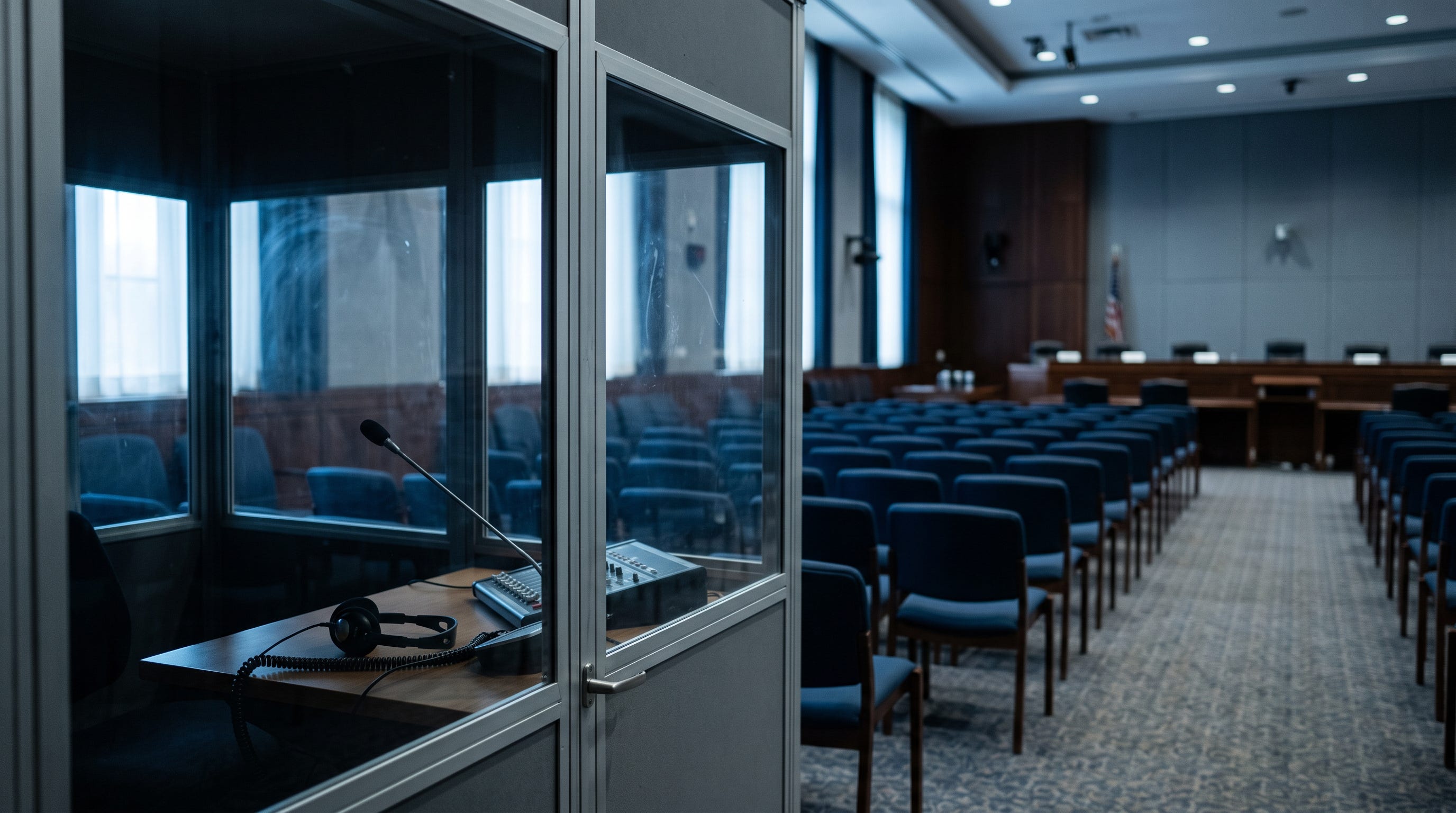
Now the part I came here for. Buried in the AI subsection, the bill requires that any artificial-intelligence-assisted language service an agency uses must publish the error rates of the service, every year: agencies "publicly disclose on an annual basis on www.LEP.gov data sources, limitations, confidence levels, and error rates of the service."
Sit with that. Not the machine must be accurate — an unenforceable wish. Not the machine is forbidden — a rule that dies the moment a budget tightens. Instead: tell people how often it is wrong, in public, once a year.
Why does that matter more than the ban everybody thought they were reading? Because of what accuracy looks like once you disaggregate it. The Commission's report cites one study of Google Translate's rendering of emergency department discharge instructions, which found accuracy rates of 94 percent for Spanish and 90 percent for Tagalog — and 67.5 percent for Farsi, 55 percent for Armenian. One study, one tool, one kind of document; carry that frame, because it is not a universal law of machine translation.
But look at the shape, because the shape is the argument. One system, described in a procurement document by a single number, is in practice four different products depending on which language you happen to think in. And the same report records that 101,727 people in this country speak Armenian and report that they do not speak English well.
Which is what makes this a policy problem rather than a technology problem. Gabriel Nicholas, a research fellow at the Center for Democracy & Technology, put it to the Thomson Reuters Foundation's Context in 2023: because the person speaks only one language, the potential for mistakes and errors to go uncaught is really, really high. The one human in the room who most needs to know whether the translation is good is the one human structurally incapable of checking.
That is not hypothetical. Rest of World reported in 2023 that machine translations of Pashto and Dari were riddled with errors that had led to the rejected asylum claim of at least one Afghan refugee — a discrepancy between her interviews and her written statement, large enough for a judge to reject her claim.
The clause does not travel alone, either. AI-assisted services must also be tested to prevent discrimination based on language, culture or ethnicity, be reviewed by qualified translators for cultural context, and face an inspector general audit at least every two years, with NIST writing the validation protocols.
And now the irony, which I did not expect. The bill names one place where those error rates must be published: LEP.gov. The Bondi memo, a year earlier, said the Department "will temporarily suspend operations of LEP.gov and all other public-facing materials related to language access," pending an internal review. The adverb is temporarily, and it is the Department's own word, so it stays. But type LEP.gov today and you land on a Civil Rights Division page, and the clearinghouse of translation tools and technical assistance that used to live there was eliminated.
So Congress proposes to require federal AI error rates be published on a domain the executive branch has already folded into a landing page. Both things are true at once, and together they tell you what this fight is about.
The strongest case against this bill is not the one in the headline
The headline version is too easy to knock down, so let me make the real objection properly.
The bill does not merely bar full replacement. It requires a qualified human to verify any use of a machine translation service. Read that literally, at federal scale — every automated caption, every chatbot reply, every auto-rendered web page across every agency — and the efficiency case for the technology largely evaporates. A critic could fairly say that whatever the text says, the economics make this a near-ban. That is a serious point and I will not pretend otherwise.
One thing cuts against it, and it is on the page: that definition again — the thing being protected is an individual. The other thing I expected to cut against it does not. There is an undue-burden waiver — a written request from the agency head, a decision by the Attorney General, expiry two years after the grant, every request on a publicly accessible record — but by its own terms it waives requirements of the Language Access Technical Standards, and the verification duty sits in a different subsection. It does not reach the clause the critic is pointing at. On that much, the critic is right.
The general deregulatory objection has a respectable home too, though I want to be honest about its scope. The R Street Institute, arguing in 2025 about federal AI policy generally and not about this bill, made the case against writing new AI rules when existing law would do: enforce existing law as needed rather than issue broad edicts against hypothetical harms, and avoid a precautionary approach that holds AI to an impossibly high standard. Apply that lens and the verification mandate is the vulnerable clause. The disclosure mandate survives it comfortably — publishing your own measured error rate is about as far from a precautionary hypothetical as regulation gets.
One more thing, which surprised me enough that I went looking twice: I could not find anyone on the record opposing this specific bill. No Republican statement, no agency objection, no industry group. That is not proof of consensus — more likely proof that a bill sitting in committee since January has not drawn enough attention to be worth opposing.
Switzerland does more of this than we do, and never wrote our clause
Whenever I want to know what taking multilingualism seriously actually costs, I look at Switzerland — with one precision up front, because this is the detail everyone gets wrong. Switzerland has four national languages, but the official languages of the Confederation are German, French and Italian, with Romansh also official when the federal government is communicating with people who speak Romansh. That is Article 70 of the federal constitution. Not an executive order. Not something one signature revokes on a Monday morning.
It goes further than the counter. Swiss federal law is published simultaneously in German, French and Italian, and the three versions are equally binding. There is no authoritative original with three approximations of it. There are three laws, and they are the same law.
Which produces a mirror image so precise it is almost funny. The Bondi memo instructs US agencies that a mission-critical multilingual service should carry a clear note that English is the authoritative version of all federal information. Switzerland attaches exactly that disclaimer — to its English. Open the official Swiss law portal in English and it tells you plainly: this translation is provided for information purposes only and has no legal force. Same instrument, opposite direction, and the whole difference is about who carries the risk of a bad translation.
So did the Swiss ban machine translation? They did the opposite. Federal translation runs through the Federal Chancellery's Central Language Services, required to produce publications and documents in all three official languages. A 2024 study of those services by Paolo Canavese and Patrick Cadwell counted 481 staff members — translators, legal drafters, terminologists, language technology specialists and trainees — in a country of about nine million people.
Then they bought the machine. Starting in 2019 the Confederation acquired 130 DeepL Pro licenses and formed a working group to run a test phase; since then, the same study reports, all staff within the Swiss Confederation have had access to DeepL Pro, with a Centre of Expertise for Language Technologies standing up in November 2020 to train people on the tools and run procurement.
And the rule governing all that machine translation? In the authors' survey of federal in-house translators, more than half of respondents used machine translation regularly, and translators were largely free to use it as they see fit. The working group summarized its policy in a line back in 2019: for yourself, you can machine translate — what you need for others, you better give to a professional. On AI generally, the Federal Chancellery's guidance is that systems may and should be used responsibly within existing rules, and that humans remain responsible for any content that is generated.
So: vastly more multilingual obligation than the United States, vastly more institutionalized machine translation — and no statutory duty to publish an error rate anywhere. Nothing in the Swiss record bans or requires anything about AI translation. Switzerland governs the machine with professional norms and internal guidance, which works beautifully when the state employs 481 language professionals who catch its mistakes as a matter of routine. It regulates through capacity. The American bill reaches for disclosure instead — precisely because the in-house capacity here is being inventoried and phased out rather than staffed.

Now run it forward
Just imagine the good version. It is 2032. Before a benefits hearing a caseworker hands you a document and, because the law requires it, a slip saying this text was machine-translated, that last year the agency's system produced material errors in your language at a measured rate, and that a named human reviewed this particular file. You can decide, with information, whether to ask for a person. A legal aid lawyer pulls four years of published rates and shows a judge the agency knew its Pashto pipeline was the weakest thing it owned. Vendors compete on numbers they are forced to print, and there is finally a commercial reason to be good at Kurdish Sorani.
Now imagine the version we get if nobody watches. The agency publishes one blended figure — "97.4% accuracy across all supported languages" — arithmetically true and operationally meaningless, because it is Spanish carrying forty other languages on its back. "Verify any use" becomes a checkbox on a queue, a human clicking approve four hundred times an hour: technically compliance, practically a rubber stamp. Waivers renew quietly. And the error rates go up on a domain that redirects.
The difference between those futures is not in the bill. It is in how one phrase gets implemented: whether error rates of the service means one number or a table with a row for every language. That fight will happen in a rulemaking nobody covers.
What the people who actually study this are saying
Respond Crisis Translation, a translator collective, working with the research nonprofit Taraaz, published a structured evaluation in September 2025 of leading models across Arabic, Farsi, Pashto and Kurdish Sorani. Across every model and every situation they measured, non-English responses were less linguistically accurate and less contextually specific, actionable and empathetic than the English ones, with Kurdish Sorani and Pashto showing the biggest gaps. In one test the Farsi response to a scenario about a political refugee advised contacting the Iranian embassy. And their structural point should keep policymakers up at night: performance worsens considerably in poorly resourced languages, so the communities most disadvantaged by bad AI are the ones most likely to be in crisis.
The academic version lands in the same place. Gabriel Nicholas and Aliya Bhatia, writing for the Center for Democracy & Technology, found that large language models work far more effectively in English than in the world's other 7,000 languages. Bhatia's companion observation is the policy-shaped one: the scale of these tools' use in immigration processing is unclear, amid a broad lack of transparency.
The advocacy side supplies the texture. Ariel Koren, who founded Respond Crisis Translation — a collective that has translated more than 13,000 asylum applications — told Context her group has countless examples of such errors leading to unfounded denials, and relayed that one translator with the group had estimated that 40 percent of the Afghan asylum cases he had worked on had run into machine-translation problems. A second-hand estimate about one person's caseload, not a national rate, and I am fencing it deliberately — but notice why nobody can give you a national rate. That absence is what the disclosure clause would fill.
And the bipartisan commission says it flatly: machine translation tools used for interpretation can be inaccurate, and AI sometimes produces random errors and the insertion of content that is not present in the original source material. Inserted content. Not a mistranslation — an invention, in a document a judge will read as your words. Against which the deregulatory case — try existing law first — loses on one fact: no existing law makes anybody publish an error rate, and without one the person who cannot check is left checking nothing.
What does this mean for you?
If you never deal with a government in a language other than English, this is somebody else's problem — until it is your parent's, your neighbor's, or your own the first time you move. Concretely:
If an agency hands you a translated document, ask two questions: who verified this, and is the English version the one that governs? Agencies are being told to attach exactly that note. Treat it as a map of where the risk sits — on you.
Do not use a consumer translation app for anything carrying a legal deadline or a dosage. The study the Commission cites found roughly 94 percent accuracy for Spanish and about 55 percent for Armenian on discharge instructions. If your language is not one of the handful these systems serve well, the gap between "usually fine" and "fine for you" is enormous.
Never let a child do the interpreting. That is my view rather than a finding, and I hold it from the wrong side of the counter: I did that job, badly, and nobody ever knew.
If you work at an agency or for a vendor, start measuring per language now, before a rule tells you the format. Whoever already has the table wins the rulemaking.
If you want to be useful in one email, write to your representative about the disclosure clause specifically — asking for error rates published per language rather than blended, somewhere that still resolves to a real page.
Watch what happens to LEP.gov. If the publication requirement survives and the site does not, the clause is decorative.
The lesson, as I see it
I got this wrong in the most ordinary way available: a headline told me something I already wanted to believe, and I filed it under confirmed. The correction is not that the machine is fine. It is that the interesting fight was never ban it versus allow it.
Every serious argument about AI in public services reduces to one question: who bears the cost of an error nobody in the room can detect? Right now it lands entirely on the person with the least power and the least information — the applicant who cannot read the document deciding her case. A ban shifts that cost by removing the tool, which no legislature sustains once budgets tighten. Disclosure shifts it more durably: it makes the institution measure the thing, publish the thing, and own the number.
A smaller idea than the headline promised. Also the one I would want in my hands, standing at that counter, translating for someone who trusted me.

One adverb was doing all the work in that bill, and almost nobody quoted it. If you like your policy read at that resolution, the HAIA Foundation does this weekly over on the Substack — and if somebody you know is about to sign a federal form in their second language, send them this first.