
On September 4, I wrote about New York's pause on big data centers and gave the skeptics a real hearing, among them Mike Elmendorf, president of the Associated General Contractors of New York State. He told ENR that halting permits for up to a year would not simply delay projects but "send them permanently to Virginia, Texas, Georgia" and other states.
On September 21, the middle name on that list froze its own permits.
Its governor called Texas the "epicenter of AI development" last November — and on paper its freeze reaches further than New York's. It also carries a condition that sounds written for you: data center projects must "result in lower residential electrical bills." I went looking for what "lower" means in the documents that created that condition and the ones now carrying it out. Lower than what? By how much? Checked by whom? None of them says. And so far, the audit meant to end the freeze doesn't ask about your bill at all.
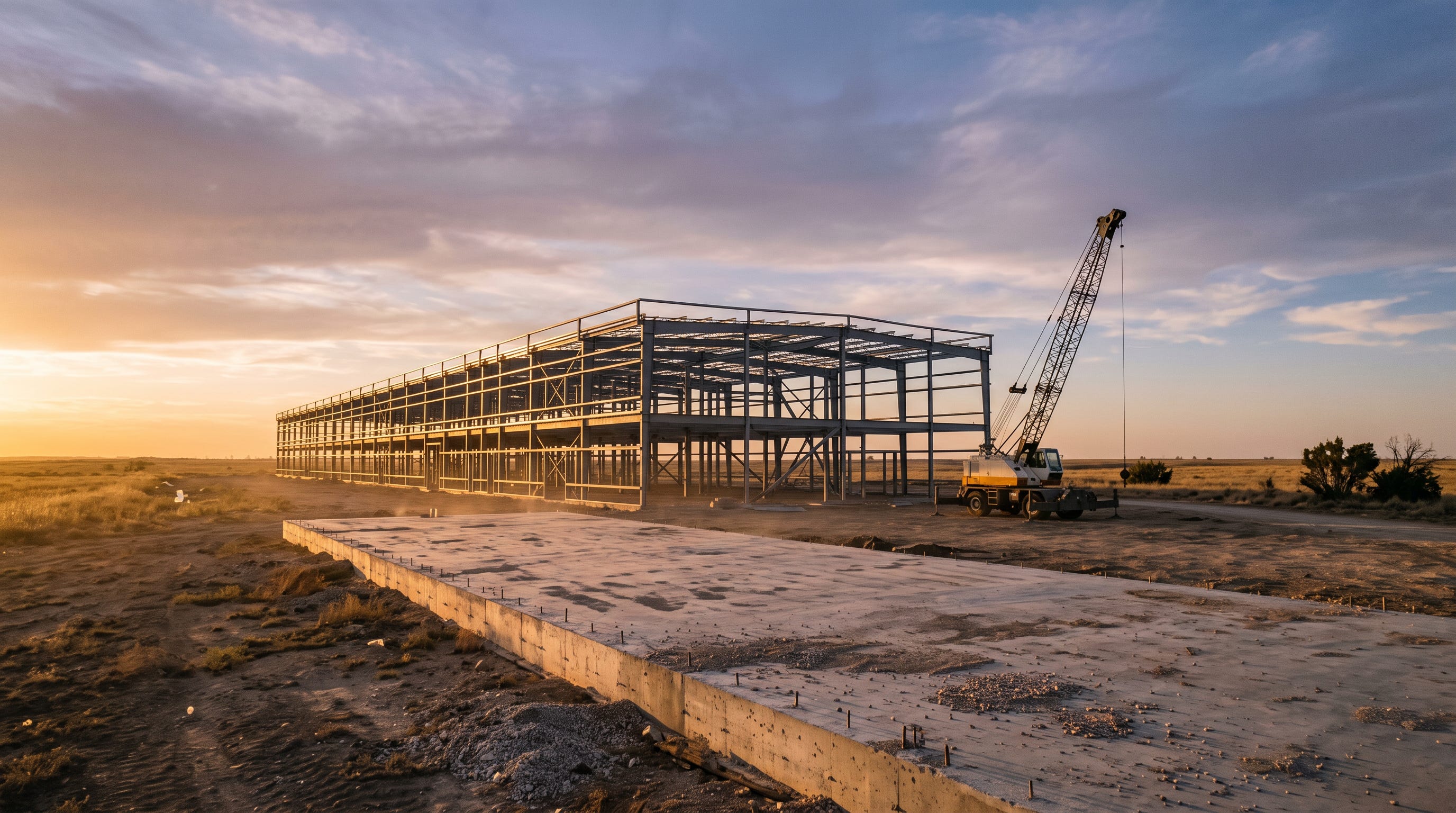
From a grid pause to a freeze with no size limit
On August 3, Texas Gov. Greg Abbott directed the Public Utility Commission of Texas (PUCT) and the Electric Reliability Council of Texas (ERCOT, which runs most of the state's grid) to conduct "a comprehensive verification and audit of all data centers advancing through ERCOT's interconnection process" before any project moved forward.
That pause had a hole. ERCOT said it only had the authority to stop grid connections for data centers of 75 megawatts or more, which left out smaller projects and those that would not need to connect to the ERCOT grid because they were building their own power plants.
The September 21 letter appears aimed at that hole. It is addressed to Kelly Keel, executive director of the Texas Commission on Environmental Quality (TCEQ, the state's environmental regulator), comes as Abbott seeks his fourth term in the November 3 election, and directs the agency to "halt all permits sought by data centers." (It is a letter, not an executive order, which matters later.) It says that until the audit information is in, "no other state agency shall move forward with regulatory approvals related to data centers," and tells TCEQ to pause permits "until ERCOT completes its review."
It sets no size threshold (there is no megawatt figure anywhere in it). And TCEQ issues the permits for backup and behind-the-meter power sources that self-powered campuses need; most permits issued to data centers are air permits for power generation units, says Kathryn Guerra of the consumer group Public Citizen. So a freeze at TCEQ may reach where a grid pause could not.
How far, exactly? A TCEQ spokesperson said by email that the agency "has paused the issuance of all air and water permits and authorizations related to the construction or development of infrastructure directly supporting data centers" while ERCOT's audit runs. The Texas Tribune wrote that the order "appears to address concerns" that developers who make their own power to bypass grid approval "would not be delayed by the ERCOT audit." Lawyers at Troutman Pepper Locke say the pause "may extend" to "non-grid-connected or island-mode generation," and that it "remains to be seen" whether TCEQ will narrow it. As of September 24, I could find no TCEQ guidance settling the question.
Then come the conditions: "Data center projects must cover all electrical infrastructure costs, result in lower residential electrical bills, and complete the ERCOT and TWDB audits." (TWDB is the Texas Water Development Board.) Requirements on water, reporting and setbacks follow. The governor writes that he is engaging TCEQ now, "before these additional safeguards are codified" — so, by his own account, they are not yet law.
One freeze, two ways out
So when does the freeze end? That depends on which sentence you read.
The letter, addressed to TCEQ, ties the pause to one event: "until ERCOT completes its review." So does the first line of the press release announcing it. Then the same release quotes the governor saying something else:
Data centers must pay their own way, protect our grid and water, and complete the ERCOT and TWDB audits. Until they do, TCEQ will issue no permits sought by data center projects.
(Even the conditions shift: the release's own list asks only that projects "complete the ERCOT audit.")
Two exits, then. One arrives on a date, for everyone at once. The other arrives project by project, whenever a data center meets conditions neither document defines. My reading is that the letter governs, and that it leaves unsaid what the conditions demand of each permit once the pause lifts.
And when is the review complete? ERCOT set a deadline of October 12, 2026, for grid-connecting data centers of 25 megawatts or more to answer its questionnaire, and says it intends to publish a report "on or before December 10, 2026." Its slides then show a Commission Open Meeting on December 17. TCEQ owes the governor a compliance update by October 19, but nothing in the letter makes that an end date. So if ERCOT's report counts as the end of the review, the freeze could lift in December, on a filing date rather than a finding.

Lower than what?
Here is where things get interesting. The phrase "result in lower residential electrical bills" has a paper trail — and it changes shape at every step.
On June 10, Abbott wrote to the PUCT and ERCOT that oversight was needed so "residential electric bills are not negatively affected," and directed the PUCT to ensure that data centers' interconnections "result in reduced residential electrical bills." Those read to me as two different promises — not raising your bill, and cutting it. On July 17, PUCT Chairman Thomas Gleeson replied that the agencies were working to ensure Texans "will not be negatively impacted" and that the commission had proposed rule revisions "intended to meaningfully reduce residential electric bills." A week later, the governor's office described the plan as requiring data centers to "contribute toward meaningfully reducing residential electric bills." By September 21, it read "result in lower residential electrical bills."
At least six phrasings in four documents, and not one says what counts as lower, lower than what, or how anyone will check.
The nearest thing to a measure is a pending PUCT rule that would adopt "a 12 coincident peak (12CP) methodology for assigning transmission costs," a change in how the cost of power lines is split among classes of customers. It is not final (Gleeson's letter says the PUCT "expects to make a final decision on the rulemaking in December 2026"), and it does not define "lower residential electrical bills." Even Ben Barkley, who heads the Office of Public Utility Counsel (the state's advocate for residential customers), acknowledged that residential customers will not see their bills go down under the proposed rules, only rise less, CBS Texas reported.
What about the audit that is supposed to end the freeze? The governor's August 3 letter gave it five subjects: public money, power, water and cooling, community impact, and ownership. Household bills are not among them. ERCOT turned those into a 31-page questionnaire, version 1.0, dated September 18. I read it. The words "bill," "residential" and "ratepayer" do not appear once. More requests may follow in October and November; this one doesn't ask.

Can a data center lower your bill? On average, maybe
Before this turns into a pile-on, the governor's side deserves its best case. (I think it is stronger than most of his critics allow.)
When PUCT staff surveyed data centers on water and power use, 28 submitted responses out of 377 companies notified, and the August 3 letter says that failure "makes this necessary." You can't write a number into a rule without data.
Nor is the condition absurd. A working paper by researchers at the Electric Power Research Institute and Watershed, which has not been peer reviewed, estimates that data centers "caused average retail electricity rates to fall modestly in the United States from 2015 to 2024," and that doubling data center capacity lowers residential prices by an estimated 3.5% for a fixed level of residential demand. The authors "caution that future supply constraints could reverse the effect." A peer-reviewed study from Lawrence Berkeley National Laboratory found that "states with the highest load growth experienced reductions in real prices" (growth in demand of every kind, not only data centers), but that the effect was "smaller and lost statistical significance when analyzing residential prices alone."
So the promise is plausible on average and untested for any single project. The research measures averages across whole states and years; a permit is for one building in one place. Whether that building lowers your bill depends on how you measure it — and Texas hasn't said how. Measuring it is hard: two Harvard energy-law researchers wrote that when utilities promise a Big Tech deal won't touch other customers' bills, "verifying this claim is all but impossible." (They studied regulated utilities, not ERCOT, so read it as a general warning about measurement.)
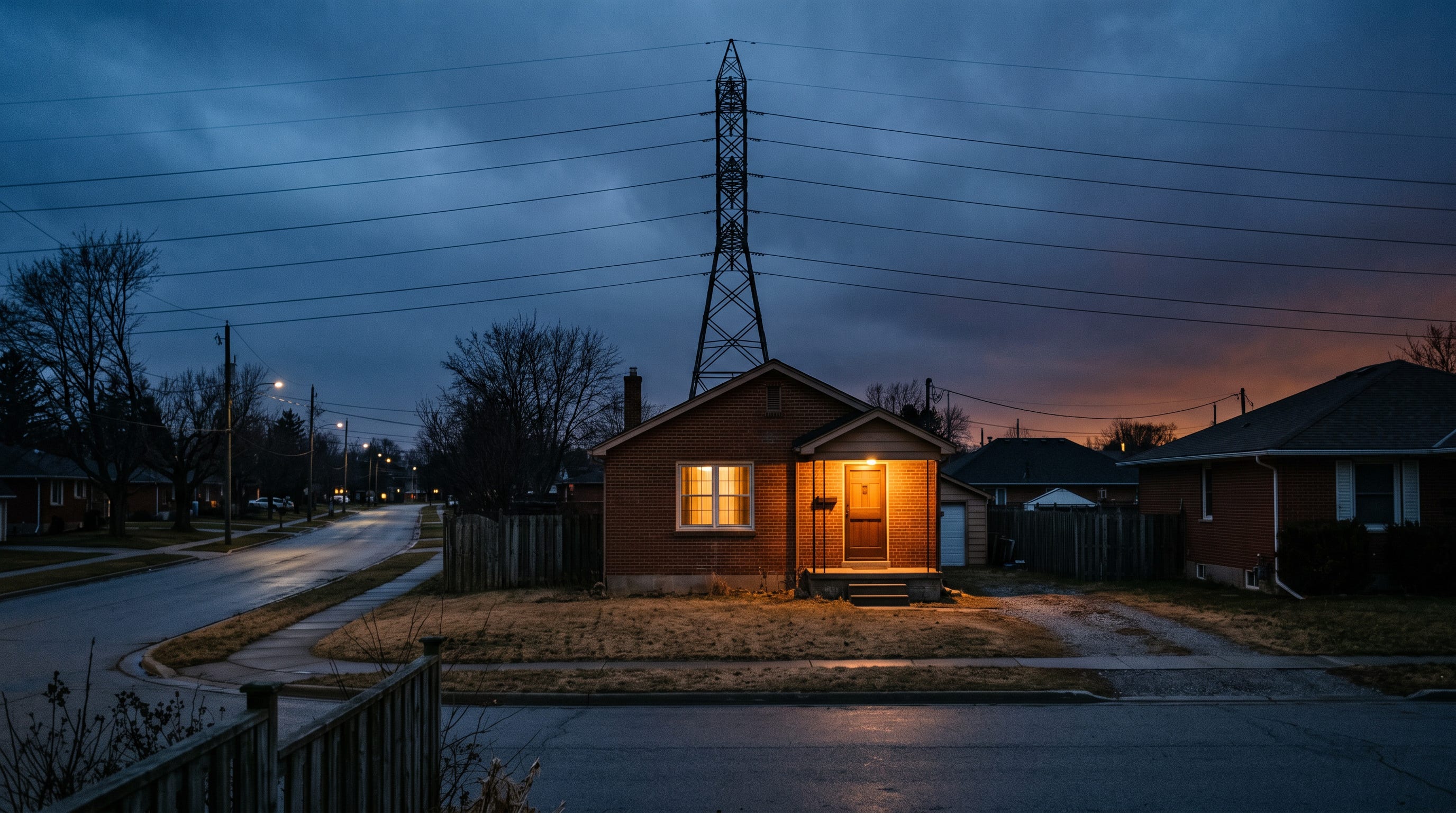
Ireland answered the same question with arithmetic
New York, the obvious comparison, doesn't help: its pause also ends when a study does ("up to a year"), and the one number it puts on community benefit, $1 million per megawatt, is "voluntary" and "recommended." For an exit condition with a definition and a number, look to Ireland.
Just before Christmas 2021, EirGrid — which runs Ireland's grid — began telling data center operators there would be no new Dublin-area connections "until at least 2028." It was never a formal ban. Ireland's energy regulator, the Commission for Regulation of Utilities (CRU), acting under a statute (Section 34 of the Electricity Regulation Act 1999), had found it "not currently appropriate to impose a moratorium" and set criteria instead; EirGrid applied them to a Dublin region already identified as constrained. The industry group Digital Infrastructure Ireland later called the result a "four-year de facto moratorium."
On December 12, 2025, the CRU published new rules that read like a formula:
At 10 MVA and up, a data center must bring dispatchable on-site or nearby generation or storage "which matches their MIC (subject to derating requirements)," MIC being its maximum import capacity from the grid, and it cannot operate or ramp up to that full draw until the generation is delivered.
It must meet "at least 80% of their annual demand with additional renewable electricity projects generating in the Republic of Ireland," within a six-year glide path, and report annually.
Miss the 80% after six years and EirGrid's rules say it "may reduce the data centre's MIC to the level that has been met and/or terminate the Connection Agreement."
Abbott's own June letter pledged to work with the Legislature to make data centers "add to Texas' electric capacity, not just its electric demand" — Ireland's generation rule minus the number (the parallel is my own).
To be clear, Ireland's version is no clean win. The regulator left it to the system operators to "develop a ruleset for how to assess" the 80% renewable requirement. Environmental lawyers were "given the go-ahead by the High Court" to challenge the policy, The Irish Times reported on April 28, 2026, and EirGrid tells applicants who proceed while the case is pending that they "do so at their own risk." ClientEarth argues that the 80% figure "excludes back-up generation." None of these numbers is about household bills; they target grid capacity and emissions. And Ireland took about four years to write them, while Texas's audit is scheduled to report less than five months after its August 3 pause.
What Ireland got right is the form: a condition a project can fail, with a stated consequence when it does. Texas's condition, as written, has no definition and no number, so no project can fail it — and none can pass it either.
Two ways this winter could end
None of this has happened; it is my guess, built from dates already on the calendar.
In the first version, ERCOT files its reports by December 10. A developer's lawyer points out that the review — the letter's trigger — is complete, and TCEQ's permit queue starts moving again. Every project ERCOT surveyed was asked about its public money, water, cooling and owners — and the off-grid ones never got the questionnaire. Not one was asked whether it would lower anyone's bill. The condition written for you ends on a filing date.
In the second version, the Legislature convenes in January 2027 and codifies the safeguards, as the letter anticipates. Everything then turns on one line of bill text. It can repeat "result in lower residential electrical bills" and stop. Or it can name a baseline, a number, who measures it, how often, and what happens to a project that misses. The first is a slogan with a section number. The second is a rule.
Either way, the warning travels. Two days after Texas, Chicago Mayor Brandon Johnson proposed to "pause the construction of any new data center for 12 months" (it went to the City Council's rules committee, so for now it is only a proposal), and the Data Center Coalition — the industry's trade group — warned that it would send investment "to neighboring areas and states." In July, New York's builders named Texas as one of those places. I'd bet the next warning names somewhere else.

Where a liberty think tank and a consumer watchdog agree
Texas Policy Research, a liberty-minded think tank, wrote of the June directive: "Policymakers should be precise about the problem they are trying to solve." Its president, Jeramy Kitchen, went further in a Houston Chronicle op-ed on September 23: "Whether one governor may effectively close Texas to an entire industry without clear legislative authorization is another question altogether." The libertarian magazine Reason called the August order "unnecessary, given that ERCOT was already taking steps to address the problem" and argued that off-grid power "could reduce costs for consumers," the very path the September freeze appears to block.
Guerra, of the consumer watchdog Public Citizen, said in a statement that "It's doubtful that TCEQ can legally pause permitting without legislative action," and that without real protections passed by the Legislature, "today's letter is just more words." As of September 24, no court had ruled, and I could find no lawsuit against the freeze.
Grid analysts are skeptical, too. Beth Garza, ERCOT's former independent market monitor, called major tech companies' pledges to minimize their impact on nearby communities "just a signaling thing," and the energy-data firm Enverus argued that half of the audit's items are "already covered by the interconnection study." Industry backed the audit anyway; the Tribune counted at least 43 companies saying so publicly.
Put them side by side and the common ground is plain: a liberty-minded think tank and a consumer watchdog both say rules like these are the Legislature's to write.
What does this mean for you?
If you live in Texas (or anywhere a pause like this is coming), here is what you can do before the freeze lifts:
Get on your county's list. TCEQ keeps a permanent mailing list for a specific county that covers all air, water and waste notices there. Send the chief clerk a request naming the list, with your name and address.
Comment on a specific permit. With its permit number, you can comment online, which also puts you on that application's mailing list.
Put your question on the PUCT's record. As a protestor, you can file comments that enter the official record for commissioners and staff to read (they are public, so leave out private details), or sign up in person, before it starts, to speak at an open meeting.
Know that neighbors are already doing this. In September, residents near a proposed 1,000-megawatt project in Wichita Falls asked the PUCT to apply the audit to it, in Project No. 59142.
Ask your legislators one question before January. Find who represents you and ask what number the bill will put on "lower residential electrical bills": lower than what, by how much, and measured by whom.
Check your registration. In Texas, October 5 is the last day to register for the November 3 election.
Outside Texas, ask the same two questions of any pause. What ends it, and is there a number?
The lesson, as I see it
Texas did something defensible in August and something much bigger in September. Asking data centers what they use and who owns them is reasonable. Freezing permits while the answers come in is a harder call — and whether a governor's letter can do it is a fair question.
But the promise aimed at you is the part I'd fix first, because it is the part most likely to outlive the freeze. Pauses end. Conditions get written into law, and laws get borrowed. A condition with no baseline, no number, no referee and no consequence will travel as easily as the builders' warning did — and protect you about as well.
My vote? When the Legislature sits down in January to codify these safeguards, it should put a number next to the word "lower," name who checks it, and say what happens to a project that misses. Otherwise the most consumer-friendly sentence in the whole order will be the one that binds no one.
Lower than what? It fits in a text message. Send it, with this piece, to one Texan before January; the HAIA Foundation would love to hear what comes back.