
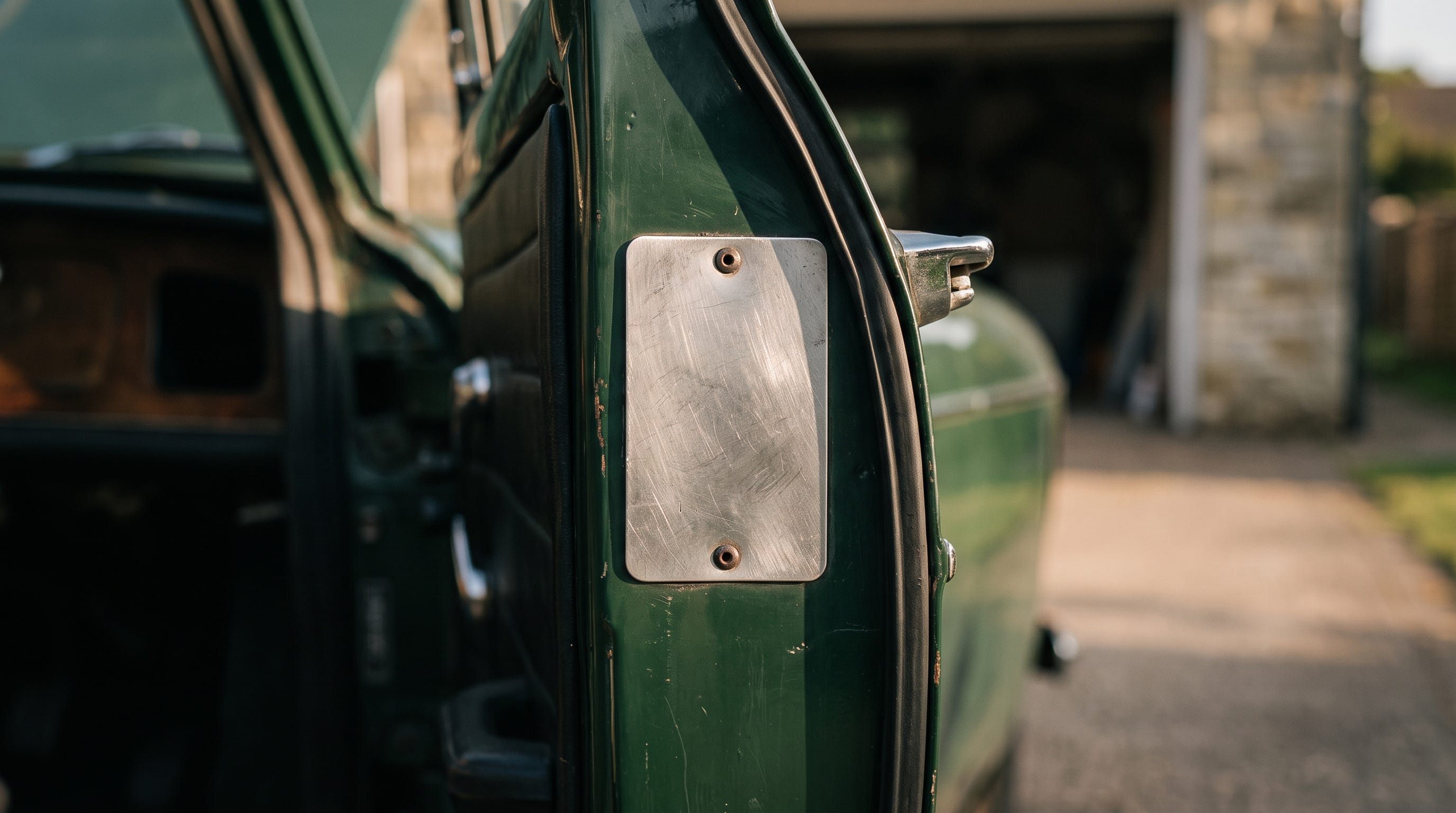
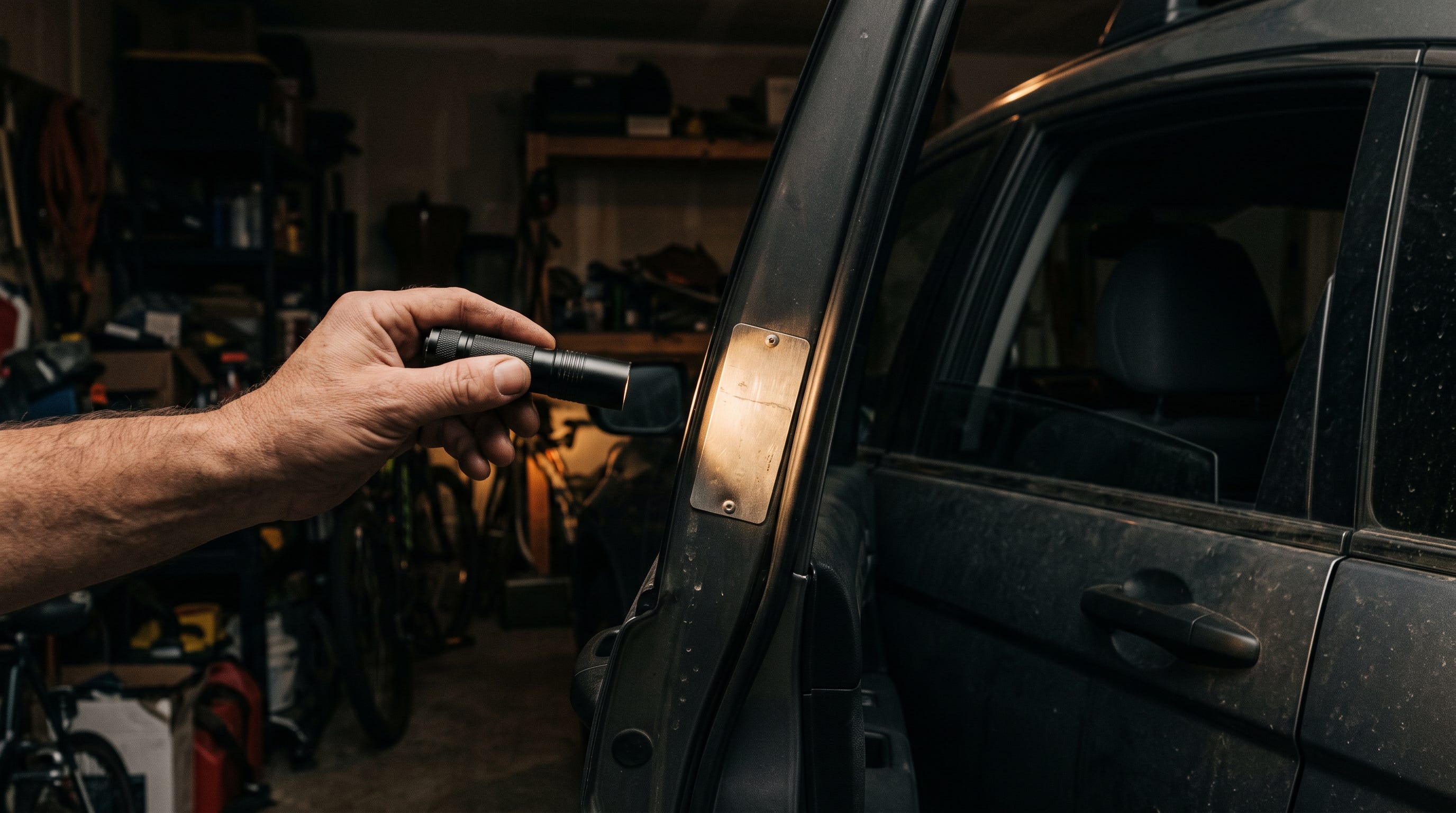
Open your driver's door and look along its edge, or at the pillar it closes against. On a passenger car, the label you'll find there says: "This vehicle conforms to all applicable Federal motor vehicle safety, bumper, and theft prevention standards in effect on the date of manufacture shown above." (Most SUVs, minivans and pickups carry shorter versions.) The label is riveted or permanently fixed in place, and it names the company that built your car.
You have probably never read it closely — and if you have, you likely took it for a government seal of approval. So I went looking for the step where someone other than that company checks the sentence before the car is sold. There isn't one. The law makes the maker the certifier and says its certification "must be shown by a label or tag permanently fixed to the vehicle." In the words of the National Highway Traffic Safety Administration, "NHTSA does not pre-approve vehicles, through testing or other means, before they can be sold or otherwise introduced into interstate commerce." It checks afterward, typically by buying certified cars and testing them. In most other countries, Reuters notes, new models need regulatory clearance ahead of launch.
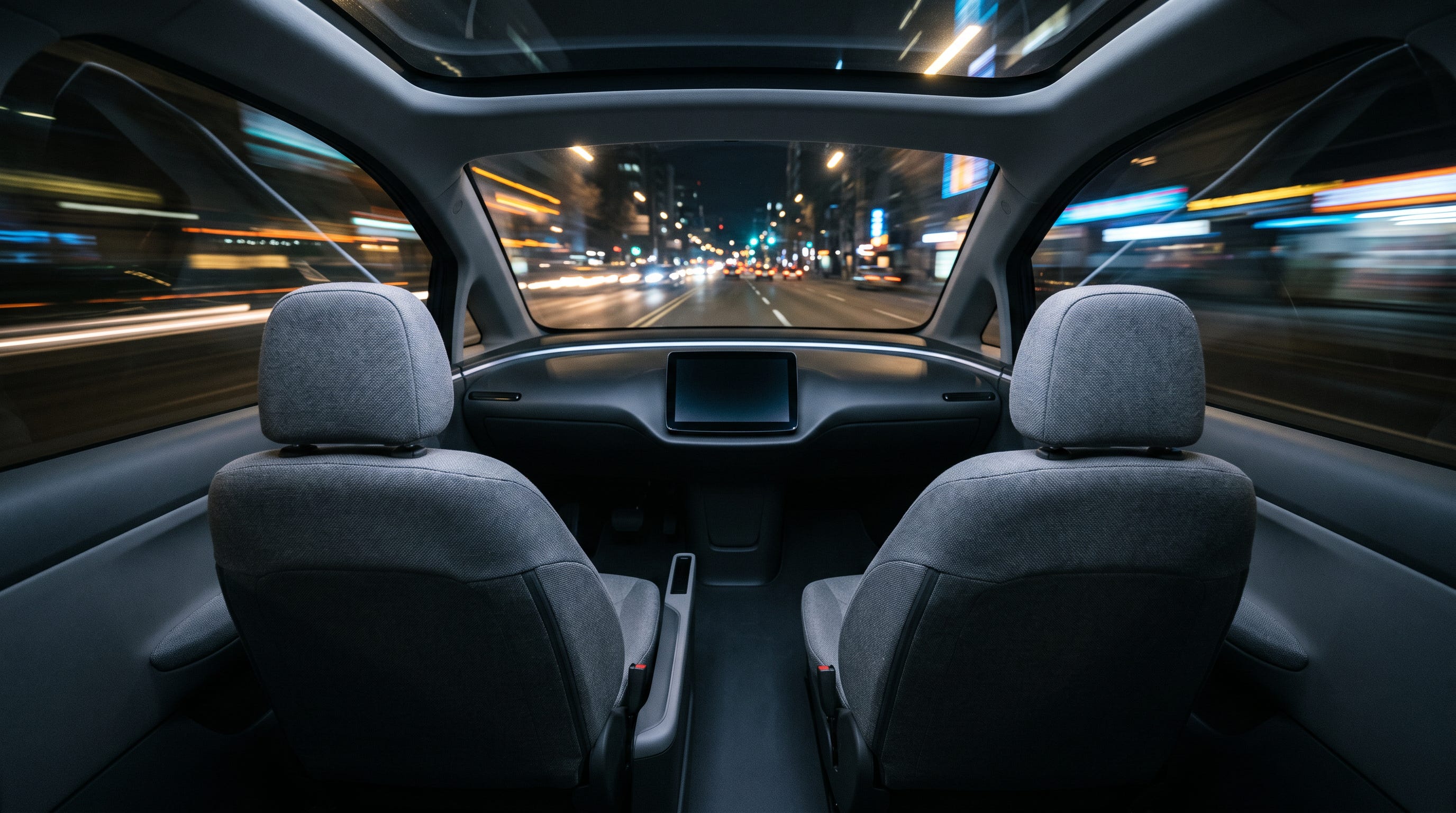
On September 3, 2026, Tesla began offering rides in Austin in its two-seat Cybercab, which Reuters called "a vehicle without a steering wheel or pedals." Tesla told NHTSA it had certified those Cybercab vehicles as compliant with all applicable federal safety standards. (The agency's own wording is more careful: the cars "lack permanently attached, conventional manual controls.") A car with no pedals, in other words, carries the same kind of promise as yours, from the same kind of author — and a week later, the first request in NHTSA's order to Tesla included "a representative photograph of the certification label."
Admire Tesla or not, the question is the one your own label raises — who checks the promise, and when?
Two files at NHTSA, and what each one asks
So what is NHTSA doing? Two separate things.
The first is an audit query, opened the day the rides began, that will weigh, among other things, "the extent to which Tesla's certification depended on determinations that certain FMVSS are inapplicable to the Cybercab" (FMVSS being the Federal Motor Vehicle Safety Standards your label refers to). On September 10 came a Special Order, a formal demand for information backed by penalties, with more than 20 requests to be answered under oath.
Among them: list any standard Tesla treats as inapplicable because it "did not when promulgated contemplate vehicles designed to perform the entire dynamic driving task" (rules written, in other words, for human drivers); say whether any touchscreen control lets an occupant move the car; and say whether temporarily attached controls were part of its basis for certifying. To be clear, those are questions. NHTSA has made no finding that the Cybercab breaks any standard.
One request goes straight at the missing pedal. The braking standard still reads: "The service brakes shall be activated by means of a foot control." In 2020, NHTSA said a car without a brake pedal couldn't be certified as meeting that line, and that until a rulemaking changes it, a maker "must seek an exemption." Another request asks Tesla to explain how its cars comply "without any exemption under 49 CFR Part 555."
As of October 24, 2026, the audit remains open, and the new due date for Tesla's response is October 30; Tesla had asked for eight more weeks and got 30 days. (Don't count on reading it all; the order lets Tesla ask for confidential treatment.)
The second file is about the driving. On September 23, a petitioner NHTSA doesn't name asked it to investigate Tesla's 2026 robotaxis, Model Y and Cybercab alike, alleging that with the automated system engaged they exceed posted speed limits in active school zones. The petition came with three video links; NHTSA counts four incidents and no crashes or injuries. On October 9, it opened a file "to evaluate the allegations and determine whether to grant or deny the petition." The law gives it not later than 120 days after the petition is filed, which lands around January 21, 2027. As of October 24, 2026, it hadn't decided.
A certificate for the car, but not for the driver
Now set the pedal aside. Suppose Tesla's certificate is flawless: what would it tell you about whether a robotaxi slows down near a school?
Very little — and NHTSA says so. The standards cover the machine (brakes, lights, mirrors, windshields, crash protection) and leave the driving to the person at the wheel. In its July decision to exempt Zoox's robotaxi, NHTSA wrote that "there are no performance requirements for an ADS that is replacing a human driver," ADS meaning automated driving system. Its proposal to drop the foot-pedal rule calls whether brakes are applied appropriately "an independent question relating to ADS performance." And its rulemaking to establish performance requirements for ADS only began on March 10, 2026.
By design, then, a school-zone allegation surfaces after the fact: as a petition, a crash report, an investigation, a recall.
Isn't this just a fight over pedals?
Fair question — and NHTSA half agrees. Its June proposal says manual driving controls are "not inherently necessary" in a car designed to be driven only by its automated system, and that an override a passenger could misuse "could pose a safety risk." It would drop the requirement for hand- or foot-operated brake controls in such cars, effective immediately if adopted; NHTSA does "not anticipate any safety disbenefits." As of October 24, 2026, that proposal and similar ones for other standards weren't final, and until they are, NHTSA said in September, "existing standards remain in force."
Nor is self-certification toothless. NHTSA's defect powers reach the software, even on fleets with conventional controls. In December 2025, Waymo, whose robotaxis have human controls but no human drivers, filed a software recall covering 3,067 vehicles that could pull away from a stopped school bus too soon. In January 2026, after a Waymo struck a child near a Santa Monica elementary school (minor injuries, Waymo reported), NHTSA opened an investigation into its school-zone behavior, "including but not limited to its adherence to posted speed limits." Tesla's own case is that the scrutiny is fierce. "If we injure even one person ... regulators will immediately clamp down on our activities," Elon Musk said on Tesla's July earnings call, as Automotive World reported.
Tesla isn't the first to try this, either. In 2022, Zoox certified its own purpose-built robotaxi, also designed without traditional controls, and NHTSA later opened an audit into whether that certificate rested on "determinations that certain standards were inapplicable," nearly the words it now uses about Tesla. Zoox's answer made the self-certifier's case: "not all FMVSS (or parts thereof) apply to all vehicle designs." By 2025, NHTSA was calling Zoox "an outlier in the industry, having self-certified these vehicles rather than seeking an available exemption." It cited "multiple apparent noncompliances" and closed the audit once Zoox applied for and received an exemption requiring it to "obscure or remove all existing statements" of full compliance.
This July, NHTSA granted Zoox a two-year commercial exemption, with conditions that include a label (or rider manual) listing the standards its robotaxi doesn't meet. NHTSA says exemptions let it "maintain enhanced oversight," but it drew no conclusion on whether Zoox's car otherwise complies, and this is the notice that says the software has no performance requirements. An exemption buys oversight — not a verdict on the driver.
Tesla chose the other road. As Axios describes it, Tesla argues the Cybercab already complies with vehicle safety rules and so "doesn't need a special exemption, which would require a limited production run." The law caps such exemptions at not more than 2,500 vehicles a year, for two years at most; a car its maker certifies as compliant faces no such ceiling. Tesla's engineering chief, Lars Moravy, has said of NHTSA: "I don't want to say we're in lockstep ... but I feel like we have a partner there, and we're working together on it." (Tesla's other robotaxi, the Model Y, "has the manual controls required by federal safety standards," Reuters notes.)
Britain asks first (and hasn't said yes yet)
Britain makes a driverless car ask first. Under its Automated Vehicles Act 2024, a car counts as self-driving only if it can drive itself "safely and legally," and "legally" means with "an acceptably low risk of committing a traffic infraction." Set that beside the school-zone petition: Britain's test asks, before a car is authorized, the question a petitioner had to bring to NHTSA after the cars were already carrying riders.
The rest follows. No car can be authorized until Parliament approves a statement of safety principles aimed at safety "equivalent to, or higher than, that of careful and competent human drivers." The draft principles open with complying with road traffic laws, speed limits, signage and road markings. An authorization takes effect only once it's entered in a public register naming the company responsible (Britain's version of your door-jamb label, written by the government), and that company can be fined when its car "committed a traffic infraction while the entity was responsible for it."
The catch: none of that is in force yet. Subject to the consultation's outcome, the government said in June, the safety statement will be "laid before Parliament next year for approval," meaning 2027. As of October 24, 2026, no car has been authorized under the Act, because none yet can be.
What is switched on, since May 15, 2026, is a permit scheme for automated passenger services — self-driving taxi- and bus-style rides. A taxi-style permit can't be granted "without the consent of each licensing authority" where it will run (Transport for London, in the capital), though consent is deemed given if, within six weeks of the government's written request, the authority hasn't answered or has refused without written reasons. A permit can be suspended or withdrawn if a vehicle "commits a traffic infraction that the Secretary of State considers is serious or repeated." The government says services must "meet stringent safety standards before they are permitted to operate."
And so far? Transport for London's understanding, in late August, was that "no operator has completed the first stage of the process." Uber and Wayve began paid rides in London on September 3 "with a licensed driver in every car," under ordinary private-hire rules, and Waymo says it is "ready to work with London to earn its consent." As of October 24, 2026, no permit had been reported granted.
So is Britain the model? Not cleanly. Its own consultation expects a higher safety bar to "delay the deployment of AVs on GB roads," and the safety benefits with them. Some respondents felt its "careful and competent" standard was "too low." And the civil sanctions for permit breaches aren't in force.
Picture the label in 2028
None of this has happened; it's my extrapolation from the documents above.
Start with the photograph NHTSA asked for. The rule puts the label "next to the driver's seating position," with fallbacks down to a spot the maker proposes and NHTSA approves. In a car built to have no driver, which seat is the driver's? (Where Tesla put its label hasn't been made public.)
Now suppose the brake proposal is finalized. The pedal question vanishes for new cars, and the certificate gets easier to stand behind while saying what it says today about school zones: nothing.
Then scale. Musk has said, Reuters reports, that the Cybercab will eventually be Tesla's largest-volume vehicle, with owners able to add their cars to a Tesla-managed ride-hailing fleet. On October 21, Lars Moravy said Tesla is "trying to get Cybercabs to customers by the end of this year," though Musk said the car will mainly be Tesla-owned. Picture a street of driveways — each holding a two-seater whose federal credential is its maker's label, each able to join a fleet while its owner sleeps.
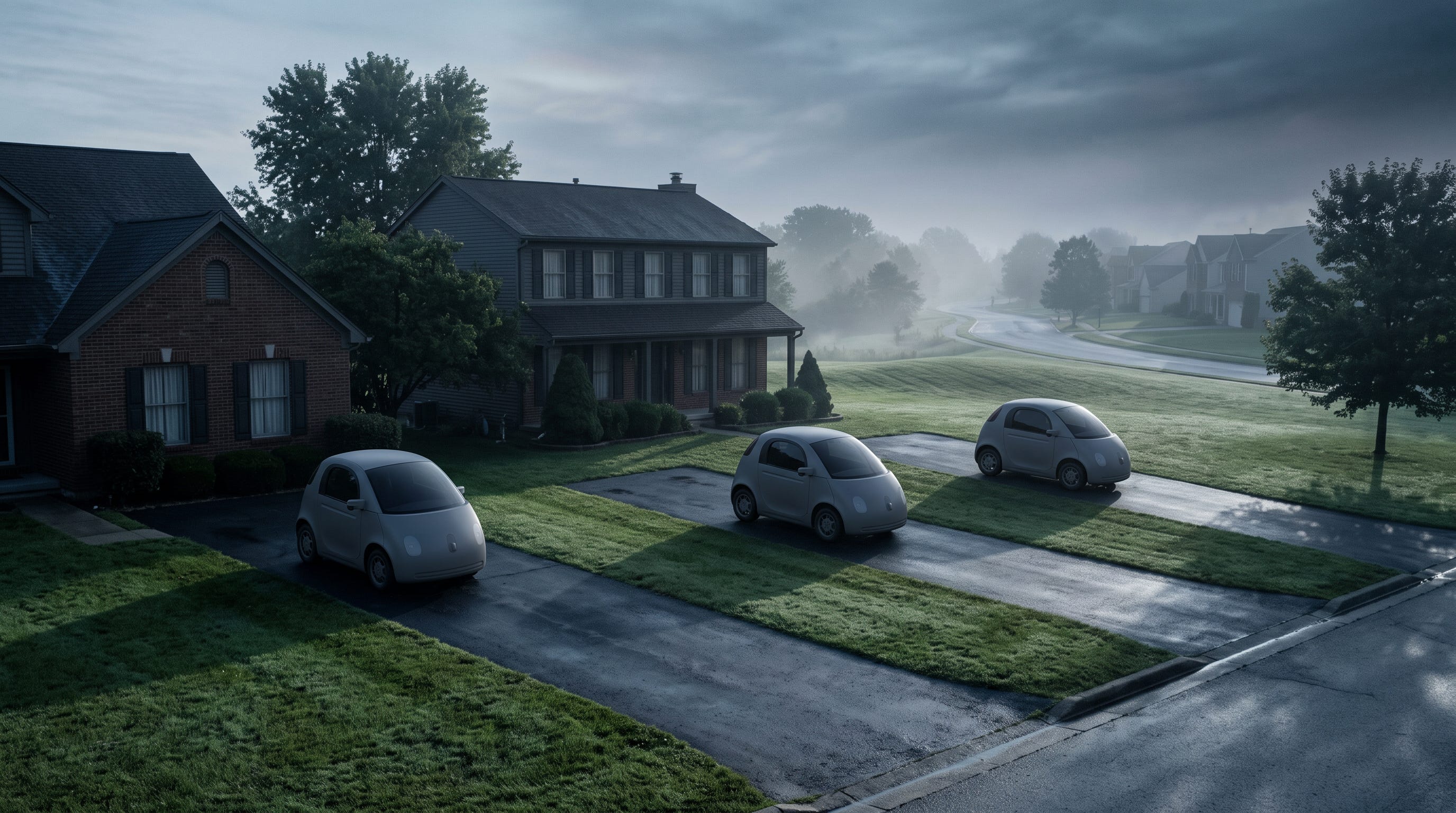
Now send the petition's three videos to London. Under Britain's permit rules, a permit can also be suspended when several vehicles "commit the same, or similar, traffic infractions," so the clips would land with someone who could act on them directly, rather than in a docket that may decline to investigate. (A minister would be free not to act, though, and there's no permit to act on yet.)
Every piece of that picture already exists on paper, except a standard for the driving.
Who's worried, and who wants the rules rewritten
What do the people who study this say? Less separates them than you might think.
The critics are blunt. "I don't think there is a reasonable interpretation that can be made to suggest that the Cybercab can comply with the Federal Motor Vehicle Safety Standards," Michael Brooks of the Center for Auto Safety, a consumer advocacy group, told Reuters. Philip Koopman, a Carnegie Mellon engineering professor: "I fully expect Tesla to test the limits." Bryant Walker Smith, a University of South Carolina law professor, said no public information about Tesla's capabilities suggests it is "anywhere close to being able to safely and reliably deploy an automated driving system" across the wide range of conditions a car without conventional controls would need to handle.
Tesla has said its Full Self-Driving software is up to 10 times safer than human drivers, a company figure Reuters reported. The modernizers want the rules rewritten rather than skipped: the Reason Foundation's Marc Scribner warned in 2020 that unchanged rules "may significantly delay the wide deployment of what are expected to be far safer automated vehicles," and Chamber of Progress, a tech industry association, argued in 2025 for an exemption process with "the vehicle cap lifted to promote innovation." NHTSA's administrator, Jonathan Morrison, stands between them: "NHTSA fully supports the safe development and deployment of automated vehicles. But as the federal regulator, we need to ensure that all of our laws are followed."
And on one point a safety advocate and the regulator agree. "There are no federal safety standards that apply to the software in these cars that are driving themselves, and that's a real concern," said Peter Kurdock of Advocates for Highway and Auto Safety. NHTSA's Zoox decision says the same, without the alarm. They differ on timing — a gap to close before more of these cars arrive, or a rule to write while they keep arriving. (In July, HAIA summed up Consumer Reports' ask as wanting "the homework marked by someone other than the student.")
What does this mean for you?
Read your own label for what it is. It names who built your car and promises conformity with the standards for your type of vehicle. The promise is the maker's; NHTSA checks after the fact.
Know what it leaves out. No federal performance standard covers the software that drives a robotaxi yet; NHTSA started writing one in March.
If a robotaxi breaks a traffic law in front of you, put it on the record. Federal rules say any interested person may file a petition asking NHTSA to open a defect proceeding. Write it in English, head it with the word "Petition," set out the facts and include your name and address. NHTSA has 120 days to grant or deny it.
In Texas, tell the state too. Since May 28, 2026, companies running automated vehicles commercially need an active TxDMV authorization, and you can look a company up and submit public safety complaints through TxDMV's Automated Motor Vehicle Lookup page. (That authorization, too, leans on the company's written statement acknowledging that each automated motor vehicle meets certain requirements.)
Weigh in. NHTSA's docket NHTSA-2026-1618, for its December 1–2 research meeting and automated-driving workshop, will remain open for comments until March 2, 2027; register for the meeting by November 24. NHTSA is also updating its voluntary guidance for automated driving systems, chapter by chapter, and docket NHTSA-2026-1520 takes comments until July 31, 2027. NHTSA's newest proposal, published October 26, would stop requiring turn signals that are self-canceling by steering wheel rotation in cars without manual controls (one of the questions its order put to Tesla); docket NHTSA-2026-1519 takes comments until November 25.
In an exempt robotaxi, look for the exemption. Its label, or for Zoox possibly its rider manual, has to list the standards it doesn't meet.
Mark two dates. October 30, 2026, when Tesla's sworn answers are due (they may not all be public), and about January 21, 2027, when the law expects NHTSA's decision on the school-zone petition.
The lesson, as I see it
The label on your door has always been the maker's promise, backed by a legal duty of care and checked, when it's checked, after the car is on sale. That worked because the standards described the car and a person did the driving. A car built to have no driver breaks that split. Its certificate can speak for its brakes and its glass, but not for the judgment that decides when to brake.
What Tesla tells NHTSA under oath, what NHTSA does with the petition, and whether its software standard arrives before these cars multiply will show where this goes. Britain, meanwhile, has to show that asking first can mean more than not yet.
My vote? Keep the maker's label — it's honest about who is making the promise. But before any car without driving controls (Tesla's, Zoox's or anyone's) carries paying passengers past a school, someone other than its maker should have checked how it drives, and the result should be as easy to find as the label on your door.
Every new car vouches for itself. A few of them now drive themselves, too.