
OpenAI's community-safety page, dated April 28, 2026, puts its promise in one sentence: "When conversations indicate an imminent and credible risk of harm to others, we notify law enforcement." There is no "may" in that sentence. The page also says its referral criteria flex, because a user "may not explicitly discuss the target, means, and timing of planned violence" while there "may still be potential risk of imminent and credible violence."
On October 7, 2026, OpenAI's lawyers asked a federal judge in Tallahassee to dismiss two of the six consolidated lawsuits over the April 17, 2025 shooting at Florida State University (docket entry 42). The two plaintiffs, both wounded that day, argue, as the motion describes their claim, that by investing in safety systems OpenAI "assumed a duty" to protect the public from its users' crimes. The motion's answer: the theory "fails as a matter of law," because "internal policies do not create a duty to third parties." Those words come from a 2016 Florida appeals-court decision, De La Torre v. Flanigan's, which the brief quotes; the choice to use them is the lawyers'.
Read together, the two documents divide the labor. The page makes a promise; the motion argues that promises like it create no legal duty to the people they're meant to protect. Put plainly, the promise is voluntary, and OpenAI is asking a court to agree that such promises stay that way, which would mean that if one ever fails, the people hurt can't sue over the failure.
One date first, because it governs the rest: the shooting came before both documents. The "we notify" page is dated a year later, and even the company's softer 2025 wording (more on that below) came four months after the shooting. Whatever happened at FSU, OpenAI didn't break this promise there — it hadn't made it yet.
In July I wrote that the most popular therapist in America isn't a person, and summed up its credentials in one line: "No exam. No license. No board. No duty to warn. No malpractice exposure." This fall, the fourth item turned up in OpenAI's motions — as a legal argument. I'll concede up front that on Florida law it's a strong one: Florida's courts have refused a duty to warn even for psychiatrists. But Florida's Legislature didn't leave it there, and that difference is what this piece is about.
So why should a motion in Tallahassee matter to you? Think of the last thing you typed into a chatbot that you'd rather nobody read aloud. Who might read it? And if someone at the company sees danger to another person in it, what do they owe that person? The page answers the first question. The motion's answer to the second, under Florida law, is nothing a court can enforce.
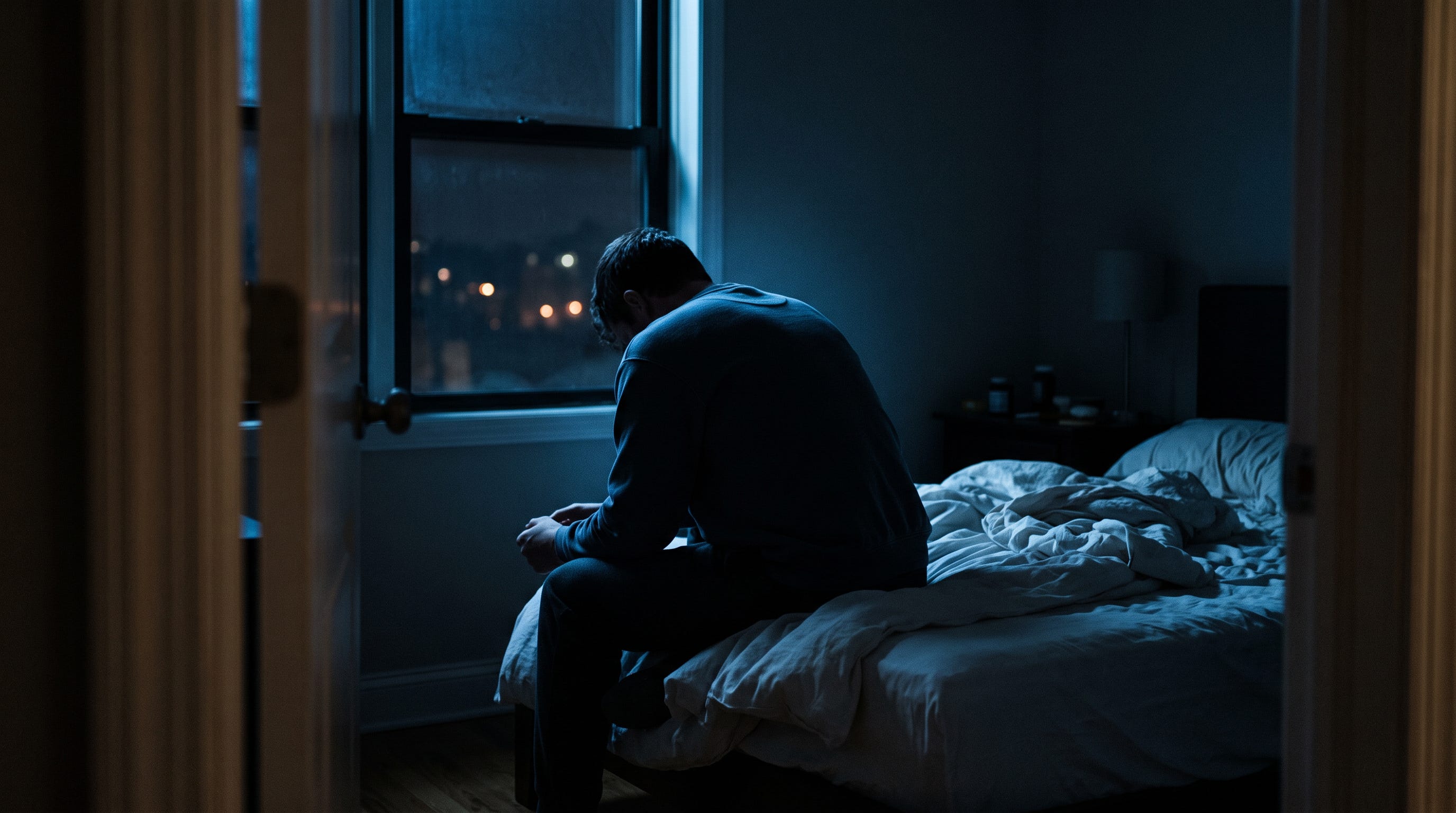
What OpenAI says happens to a flagged chat
What does the company say happens, step by step? By the page's account, "automated detection systems" look for "potentially concerning activity at scale"; a flagged account or conversation "is assessed in context by trained personnel" (people, in other words, not only software); cases showing signs of "potentially serious, real-world harm" get "a more in-depth investigation" using "structured criteria," a stage "reserved for a limited subset of cases"; and most enforcement, "including bans for violence," happens "directly between OpenAI and the user."
Two details matter for the lawsuits. Some risks, the page says, only show up as "a broader pattern within a long conversation—or across conversations." And the work is "guided by input from psychologists, psychiatrists, civil liberties and law enforcement experts." (Keep the first two professions in mind. Their expertise is on the page. Their legal duties, as you'll see, are not.)
The wording wasn't always this firm. In a post dated August 26, 2025, OpenAI said that if human reviewers determine "a case involves an imminent threat of serious physical harm to others, we may refer it to law enforcement."
So what happened between "may refer" and "we notify"? Among other things, Tumbler Ridge. Before a mass shooting at a secondary school in that British Columbia town, OpenAI had reviewed the shooter's ChatGPT account; its own court filing, as CBC quoted it, refers to "the decision at that time not to refer" it to Canadian police. In February 2026, OpenAI's Ann O'Leary wrote that under an "enhanced law enforcement referral protocol," the company would refer "the account banned in June 2025" to police "if it were discovered today." In a letter dated April 23, Sam Altman wrote that he was "deeply sorry that we did not alert law enforcement" to the account. The community-safety page is dated five days later.
(When police come asking instead, OpenAI's request policy requires "a valid warrant or equivalent" for user content, barring emergencies; that's one of the two doors I wrote about in August. This piece is about the company calling first.)
How does OpenAI compare with its competitors? Document to document, all five publish rules for police requests and emergencies. Google's page says that to prevent a death or serious physical harm, "we may provide information to a government agency." Meta's general law-enforcement page, last updated in 2022 and written for all its services, says it "may provide information to law enforcement that will help them respond to emergencies." xAI, the maker of Grok (its policies now call the company SpaceXAI LLC, or "SpaceXSI"), allows disclosure "to protect the personal safety of SpaceXSI, its customers, or any person." Anthropic's privacy policy allows disclosure to "prevent serious harm to any person or to property," and its consumer terms reserve the right, "at our sole discretion, to report information from or about you" to law enforcement. (A disclosure: this piece was drafted with help from Anthropic's Claude.)
Of the five, only OpenAI publishes a page saying, in so many words, that it notifies police when conversations indicate an imminent and credible risk. Searches for this piece found no equivalent from the other four (which doesn't mean none exists), and silence proves nothing about practice. (Practice is a separate question, and it comes up below.)

What OpenAI's lawyers told the court
The shooting at Florida State "killed two people and wounded several others," OpenAI's motion says. The two men killed were Tiru Chabba and Robert Morales, the university's dining director. The man accused of the shooting, Phoenix Ikner, has pleaded not guilty; his trial is now scheduled for June 8, 2027, according to court records WCTV cited. No jury has decided what happened that day.
Six suits over the shooting are now consolidated in federal court in Tallahassee before Judge Mark E. Walker, "for case-management purposes and discovery only" (each keeps its own trial). The lead case was filed in May by Chabba's widow, Vandana Joshi. Her complaint alleges that OpenAI failed to build a product that would "alert a human that investigation by law enforcement may be necessary to prevent a specific plan for imminent harm to the public," and that "it did not flag and escalate the conversation for human review." Those are allegations; OpenAI disputes them.
OpenAI tells it differently. "At no point did Ikner tell ChatGPT that he was planning or intended to commit a shooting," its motions say. By OpenAI's account, when he indicated he was struggling with depression, ChatGPT "repeatedly encouraged him" to talk to "a trusted friend, a pastor, or a therapist" and "referred him to the 988 crisis line," and it refused requests about Molotov cocktails. (The chat logs sit behind the federal courts' paywall, so what's quoted here is each side's version.)
Then the law. In September, answering Joshi, OpenAI argued that "imposing on OpenAI a duty to psychoanalyze its users, detect possible criminal propensities, and report or warn about users who might be dangerous would be directly contrary to Florida law." The October motion adds the line in this piece's title, and a paradox: if a general commitment to safety could expose a company to liability for any third party's wrongdoing, companies "would—paradoxically—be discouraged from implementing safety measures in the first place."
Then the lawyers reach for the comparison this piece is built around. Florida, the motion says, recognizes "no duty to warn" about another person's violence without a special relationship, and its negligence law "does not recognize a duty of mental health providers to warn third parties that a patient may be dangerous." Hence: "If medical professionals in Florida have no tort duty to warn about potentially dangerous patients—even ones who have actually expressed violent threats—it would make even less sense to impose such a duty on a general-purpose communications service like OpenAI." A footnote concedes that "A Florida statute requires treating psychiatrists to disclose to law enforcement" certain threats, then argues it doesn't reach this case: OpenAI "is not a psychiatrist," the accused gunman wasn't its patient, and the statute "is not enforceable through a negligence claim, but only by a state licensing board or the Department of Health."
The motion also raises "serious questions about whether any aspect of ChatGPT" counts as a product at all, and warns that the suits would use liability "to force OpenAI to evaluate users' speech" and "censor their communications and report them to the government if they show too much interest in controversial viewpoints, ideas, or topics." Set that beside the safety page and the tension is plain: the company already says it evaluates conversations and reports some to police. The lawyers' point, as I read it, is who decides, and under what threat.
Where do the cases stand? As of October 13, 2026, Judge Walker had not ruled on either motion. He gave Joshi until October 13 to respond, and that day she filed her opposition, going straight at the therapist comparison. Among her lawyers' reasons it fails: "OpenAI reviews conversations." The other plaintiffs' responses are due November 4, and OpenAI may file a combined motion on three more of the cases by October 21.
Is this one company's defense? Not by the look of it. In a California suit over a suicide that the plaintiff blames on Google's Gemini chatbot (a different harm from FSU's), Google's motion argues that Gemini is not a "product" for purposes of product-liability law and that "the First Amendment independently bars" the claims. It's signed by the same firm, Wilson Sonsini, and (yes) the same lawyer, Matthew A. Macdonald, whose name is on OpenAI's October motion. The judge took it under submission on August 5 and, as of October 13, hadn't ruled. Character.AI lost a version of that argument at the pleading stage in May 2025, when a federal judge in Orlando held its app was a product for claims about defects rather than "ideas or expressions within the app"; it, its founders and Google later agreed to settle.

OpenAI's best argument, and it's a good one
Give OpenAI's position its full weight first, because much of it is right.
First, the law is largely on its side: a judge who agrees with OpenAI would be applying Florida law (the psychiatrist cases are coming), not inventing a loophole.
Second, violence is hard to predict, and a system that tries will often be wrong. Anat Lior, a Drexel law professor who favors a duty for AI firms, concedes that "the likelihood of false positives would likely be substantial."
Third, reporting has costs. Robert Diab, a law professor in British Columbia writing for the Centre for International Governance Innovation, warns that "A legal duty to report violent threats would give AI companies a strong incentive to err on the side of caution," and that users who believe anything they say could trigger a police report will change those conversations, or stop having them. Referrals already happen without any duty. In August, The Daily Wire reported that OpenAI had flagged a Palm Beach County man's threats, handing over two months' worth of his chat logs to federal agents, who passed them to the sheriff's office; he took a plea deal, with adjudication withheld. In late September a Lee County woman was arrested after her statements on an Anthropic AI platform were, investigators wrote, "escalated to a human review team, which then reported the statements to law enforcement." She faces a felony charge, not a conviction; according to the sheriff, she later said she uses AI like a "diary." Whatever you make of either case, that is what it looks like when the thing you confide in can also report you.
Fourth, the paradox is real. OpenAI's "paradoxically" has an unlikely ally: Lior warns that an overbroad duty "might create a perverse incentive for companies to avoid monitoring entirely, since a lack of knowledge could release them from duty of care obligations." When the defendant and a proponent of a duty agree on a risk, take the risk seriously; they part ways on the cure: no duty, or a carefully drawn one.
Fifth, speech — the motion's First Amendment objection has serious company among scholars, as you'll see below.
So is that the end of it? Joshi's lawyers say no, and their October 13 brief turns the comparison around: it "supports Plaintiff's position rather than OpenAI's." Boynton, the 1991 Florida decision OpenAI relies on, "makes clear mental health providers are relieved of a duty to warn in part because of the recognized near impossibility of a medical professional to predict dangerousness from clinical interactions." But "OpenAI is a system with the technological capacity to analyze patterns across thousands of queries, apply machine learning algorithms, and detect statistically significant indicators of planning for violence." Her theory "rests on OpenAI having voluntarily undertaken a duty" to flag dangerous query patterns for human review, and they cite what older cases call "hornbook tort law": "one who undertakes to warn the public of danger and thereby induces reliance must perform his 'good Samaritan' task in a careful manner."
So if the therapist is the comparison both sides want, what does the law ask of a therapist who hears a threat?
Put the same threat in a therapist's office
California: a duty to protect
The modern rule began in California, with a killing: "On October 27, 1969, Prosenjit Poddar killed Tatiana Tarasoff." On July 1, 1976, the California Supreme Court held that when a therapist determines, or should determine, "that his patient presents a serious danger of violence to another, he incurs an obligation to use reasonable care to protect the intended victim against such danger." That might mean warning the victim or choosing "to notify the police." Its best-known sentence runs nine words: "The protective privilege ends where the public peril begins."
The court heard OpenAI's prediction problem fifty years early. It recognized "the difficulty that a therapist encounters in attempting to forecast whether a patient presents a serious danger of violence," and held that "professional inaccuracy in predicting violence cannot negate the therapist's duty to protect the threatened victim." On false alarms it was blunt: "The risk that unnecessary warnings may be given is a reasonable price to pay for the lives of possible victims that may be saved." Justice Mosk, partly dissenting, warned that the majority's standard "will take us from the world of reality into the wonderland of clairvoyance."
California's Legislature later narrowed the rule into law. Civil Code section 43.92 shields a therapist from liability unless the patient "has communicated to the psychotherapist a serious threat of physical violence against a reasonably identifiable victim or victims," and the duty is discharged "by making reasonable efforts to communicate the threat to the victim or victims and to a law enforcement agency." Separately, a licensed psychotherapist "shall report to a local law enforcement agency, within 24 hours" the identity of a person who makes such a threat, which starts a five-year firearms ban.

Florida: no lawsuit, but a phone call
Florida went the other way in its courts and — later — partway back in its statutes. In 1991, asked in a case of first impression to adopt Tarasoff, Florida's Third District Court of Appeal, sitting en banc, declined: the duty "is neither reasonable nor workable and is potentially fatal to effective patient-therapist relationships," it wrote in Boynton v. Burglass, borrowing Justice Mosk's "wonderland of clairvoyance." In 2020, in litigation over the Parkland school shooting, a Florida appeals court noted that Florida courts "have continuously applied Boynton reasoning" and held that mental health providers "are not legally tasked with identifying, advising, or warning third parties when the patient has made only a general threat to harm others."
That word "general" matters, because by then the Legislature had written a rule for specific threats. Until 2019, Florida's statute said a psychiatrist "may disclose patient communications" to warn a potential victim "or to communicate the threat to a law enforcement agency," a choice either way. After Parkland, the Legislature turned that "or" into "and must." Under the 2026 Florida Statutes, when a patient communicates "a specific threat to cause serious bodily injury or death to an identified or a readily available person," and the psychiatrist judges that the patient has "the apparent intent and ability to imminently or immediately carry out such threat," the psychiatrist "may disclose patient communications to the extent necessary to warn any potential victim and must disclose patient communications to the extent necessary to communicate the threat to a law enforcement agency." The police, in turn, "must take appropriate action." Psychologists and licensed counselors "shall disclose" such threats to police, too.
Florida's bargain
That is Florida's bargain, and it is the honest complication in this story: Florida tells a psychiatrist who hears a specific, imminent threat to call the police, and it does not let the victim sue if the psychiatrist doesn't. Judge Gerber, concurring in the 2020 Parkland decision, wrote that the amendment imposed "a legal duty upon psychiatrists to disclose patient communications to a law enforcement agency" but "still did not impose a legal duty upon psychiatrists to warn any potential victim, nor imposed any liability upon psychiatrists who fail to disclose patient communications to potential victims or law enforcement." The rule is enforced through the licensing system instead, as OpenAI's own brief notes; failing to perform "any statutory or legal obligation placed upon a licensee" is grounds for discipline. On Judge Gerber's reading, OpenAI's position fits Florida law.
So what separates the therapist from the chatbot company is where the duty lives. The psychiatrist's is written in a statute and policed by a board. OpenAI's is written on its own website, and its lawyers want a court to hold that policies like it create no duty to the people they're meant to protect.
And the chatbot company?
Federal law lets an online provider share a user's messages with the government in an emergency: a provider "may divulge" them when it believes in good faith that "an emergency involving danger of death or serious physical injury to any person requires disclosure without delay." May, not must. Where Congress wanted a "must," it wrote one. For child sexual exploitation, a provider "shall, as soon as reasonably possible" report to a national tipline once it has actual knowledge, and the same section says nothing in it requires a provider to "monitor any user, subscriber, or customer." For threats of violence, as a student post on the Minnesota Journal of Law, Science & Technology's forum puts it, providers are "left to their own discretion."
Line up the three. A California therapist has a duty to protect an identifiable victim. A Florida therapist must call the police about a specific, imminent threat. A chatbot company may call — under its own policy — and federal law leaves the choice to it.
Justice Clark, dissenting in Tarasoff, said the choice between treatment and "a system of warnings" was "properly one for the Legislature." For clinicians, both states' legislatures took it up. For chatbots, Florida's AI Bill of Rights died in the House in March. In April, pressing the House to pass it in a special session, Gov. Ron DeSantis said, "We see ChatGPT, what they did with this FSU shooting." A week later that version, which would have had companion-chatbot platforms notify parents when a minor expressed an intent to harm themselves or others, died in a House subcommittee. Its notice ran to parents, not police.
A province pleads Tarasoff
On the other coast, a government is pressing the opposite answer. On September 21, British Columbia sued OpenAI in federal court in San Francisco over the Tumbler Ridge shooting, in a complaint with a section headed "OpenAI's Own Policies Establish the Duty to Warn." It pleads Tarasoff by name: "Having held itself out as voluntarily undertaking and performing exactly the protective function Tarasoff requires, OpenAI cannot disclaim the duty it publicly assumed." It alleges that OpenAI's safety team recommended notifying the RCMP and that "OpenAI's leadership overruled that recommendation and warned no one." OpenAI disputes at least part of that story: when thirty more complaints by people present at the shooting alleged on September 2 that officials including global-affairs chief Chris Lehane had overridden the safety team, Jason Kwon, OpenAI's chief strategy officer, said it is "absolutely false to say Chris Lehane was involved with our original referral decision." No court has tested any of it.
OpenAI wants the case heard in British Columbia; as of October 13, its motion was due October 15, with a hearing set for December 17, and it has asked the same court to send the victims' and families' cases there, too.
Three futures for one sentence
None of what follows has happened. Each is my extrapolation from a document that has.
The promise becomes an order. British Columbia asks the court to order OpenAI to "establish and adhere to a policy of referring to law enforcement any user whose conversations present an imminent or credible threat of serious physical harm to others, consistent with OpenAI's own stated escalation criteria." Read it closely: the page says "imminent and credible," the proposed order "imminent or credible." (One word, a much wider net.) Picture a 2028 ruling — after the fight over where the case is heard — that writes OpenAI's escalation criteria into an injunction. A sentence the company wrote for its website becomes one it can't change without asking a judge.
A tipline for threats. Imagine Congress copying its child-exploitation design: report what you know, with no duty to go looking. Pair it with the People-First Chatbot Act, a House bill from Reps. Valerie Foushee and Greg Casar that would require a warrant before the government could compel access to chat logs, and would bar companies from claiming your chats are confidential (they could not "represent that the input data or chat log of a user is confidential"). Two doors, two locks: the company must call about what it knows, and the police need a warrant for the rest. (The bill went to committee on July 9 and, as of October 13, 2026, had gone no further.)
The company that doesn't look, and the court that says it must. If a duty attaches to what a company knows, some company will decide to know less. British Columbia's premier, David Eby, has already written its slogan, as a warning: "We're the company that doesn't tell the cops if you're planning a violent attack." Now flip it. A court takes the widow's argument to its end and treats what a system can detect as what it must: if OpenAI can see "a broader pattern" across conversations, a jury asks why it didn't. Every ambiguous message typed at 2 a.m. becomes a possible report — and the Lee County "diary" problem goes national.
Which arrives first depends on whether a legislature moves before the next jury does.

Who wants a duty, and who fears one
Who's right? The people arguing about it don't sort neatly by party.
For a duty, in some form. Lior argues in Lawfare that even a limited duty "would be welcomed in the AI age, where companies' legal duties to users remain unclear," and in The Conversation she narrows it: "A narrow, carefully defined duty to warn, triggered only when an AI system flags a user's behavior and it is reviewed by humans, would be a meaningful step forward." British Columbia's attorney general, Niki Sharma, whose government is suing over OpenAI's "failure to notify law enforcement," has also proposed Criminal Code amendments "to ensure a pathway to human accountability for AI's actions." In Florida the pressure comes from Republicans: Attorney General James Uthmeier, who is pursuing a separate case over minors that I covered October 7, said that "If ChatGPT were a person," then "it would be facing charges for murder," a prosecutor's statement rather than a charge. And Jay Edelson, who represents Tumbler Ridge victims and families, says the harm came from "decisions made by people at OpenAI."
Wary of one. Beyond Diab, the Electronic Frontier Foundation, writing about police demands for chat logs rather than company referrals, says the Constitution "gives only one answer: get a warrant," and notes that OpenAI states that requirement explicitly while "others like Anthropic could stand to be more precise." Eugene Volokh, a libertarian legal scholar at Stanford's Hoover Institution, writing about an April order that temporarily kept a dangerous user's ChatGPT accounts suspended, drew the line this piece keeps circling: there "wouldn't be a First Amendment problem with OpenAI itself choosing to cut off the user's access," but the court's procedure "raises serious First Amendment concerns." Clay Calvert of the American Enterprise Institute warned, after the Character.AI ruling, that if courts conclude chatbot output isn't speech, "it will negatively affect generative AI (GenAI) tools by deterring their development." The House Democrats behind the People-First Chatbot Act want warrants for compelled access, a privacy rule rather than a reporting one.
What does this mean for you?
Assume a person may read a flagged chat. OpenAI says flagged conversations are "assessed in context by trained personnel"; Anthropic reserves the right to report "at our sole discretion"; Google, Meta and xAI keep emergency exceptions. As Chrissann Ruehle, who teaches AI and management at Florida Gulf Coast University, told WINK News, "AI is not your best friend."
Don't count on "temporary." OpenAI "may keep a copy of a temporary chat for up to 30 days for safety purposes," and turning off memory and personalization "does not disable safety features."
Read your chatbot's referral language before you confide. OpenAI's threshold is "an imminent and credible risk of harm to others." Find the equivalent document for the service you use, and check whether it says "may" or something firmer.
In a crisis, reach a person. Text, call, or chat 988, which "offers 24/7 judgment-free support for mental health, substance use, and more."
Know what a clinician owes that a chatbot company doesn't. A Florida psychiatrist, psychologist or licensed counselor who hears a specific threat they judge imminent must tell the police; a California therapist told of a serious threat against an identifiable victim has a duty to protect that person. A chatbot company owes what its policy says and, if OpenAI's lawyers persuade the court, nothing a victim could sue over.
Watch the dockets. As of October 13, 2026, there's no ruling in Tallahassee. The other FSU plaintiffs' responses are due November 4; British Columbia's fight over where its case belongs has a hearing on December 17.
Tell your legislators which rule you want. As of October 13, the People-First Chatbot Act had sat in committee since July 9, and Florida's chatbot bill died twice this year. Should companies have to report specific threats? Should police need a warrant for everything else? Both? The question is open, so your view still counts.

The lesson, as I see it
It would be easy to call the page and the brief hypocrisy, and I don't think that's fair. The page is a real commitment, its wording has hardened from "may refer" to "we notify," and the lawyers are describing Florida law much as Florida's judges have. The problem is structural. A promise a company writes, the company can rewrite. A duty a legislature writes comes with a trigger, a definition and someone to answer to.
For clinicians, two very different states got there: California through a court and then a statute, Florida through a statute after its courts said no. Both made the protective privilege yield, narrowly, to a specific threat. Fifty years after Tarasoff, the chatbot you may be talking to at 2 a.m. has a web page.
My vote? A narrow statute, written before the next tragedy rather than after it: Florida's trigger (a specific threat against an identified or readily available person, judged imminent), the child-exploitation design (report what you know, no duty to go looking), a warrant for anything police want beyond that, and a decision about who may sue, made openly by legislators instead of in a footnote. Reasonable people will draw those lines elsewhere. They should draw them in a statute.
What should you watch, beyond the dockets? Florida's 2027 session, for a third chatbot bill and whether it says anything about threats. Whatever Judge Walker rules, Justice Clark's point from 1976 still stands: the hard trade-off here is "properly one for the Legislature."
A safety promise is only tested when it fails, and by then it's usually a matter for lawyers. The HAIA Foundation works to bring the public into that conversation earlier; if you'd like a seat in it, subscribe.