
The part of this I am least proud of happened in a toy aisle last November, and it took about ninety seconds.
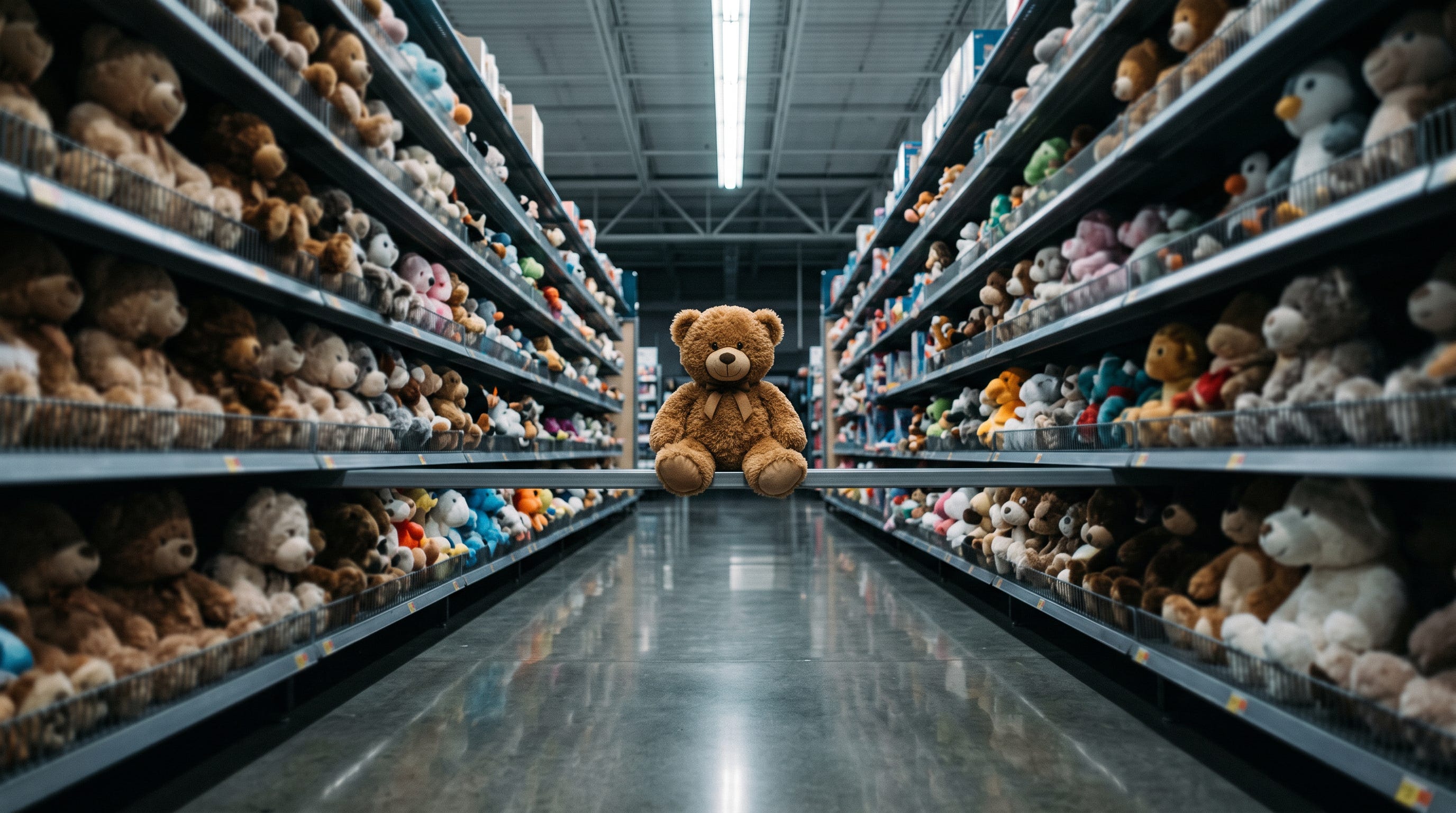
I picked up a plush animal that talks back — soft, well made, a small speaker behind the ribs, a card promising it would learn my nephew's name and remember his favorite dinosaur. Then I put it back. Not because I had read anything, not because I had wondered where a five-year-old's voice recordings end up, but because it cost more than I wanted to spend on a child who would be into something else by March.
That was the whole of my due diligence. Price.
So when the Senate took up a bill on AI toys this summer, I felt the specific, slightly smug relief of a problem being handled by adults with staff, and mentioned it approvingly to two people in the tone of a man who had read it.
Last week I finally opened it. It is four sections long, and it does not ask a single manufacturer to do a single thing.
First, the part nobody disputes: what these toys did
In November 2025 a consumer advocacy group published its testing of four toys that contain AI chatbots. In the group's own words: some of these toys will talk in depth about sexually explicit topics, act dismayed when you say you have to leave, and have limited or no parental controls — while recording a child's voice and collecting other sensitive data.
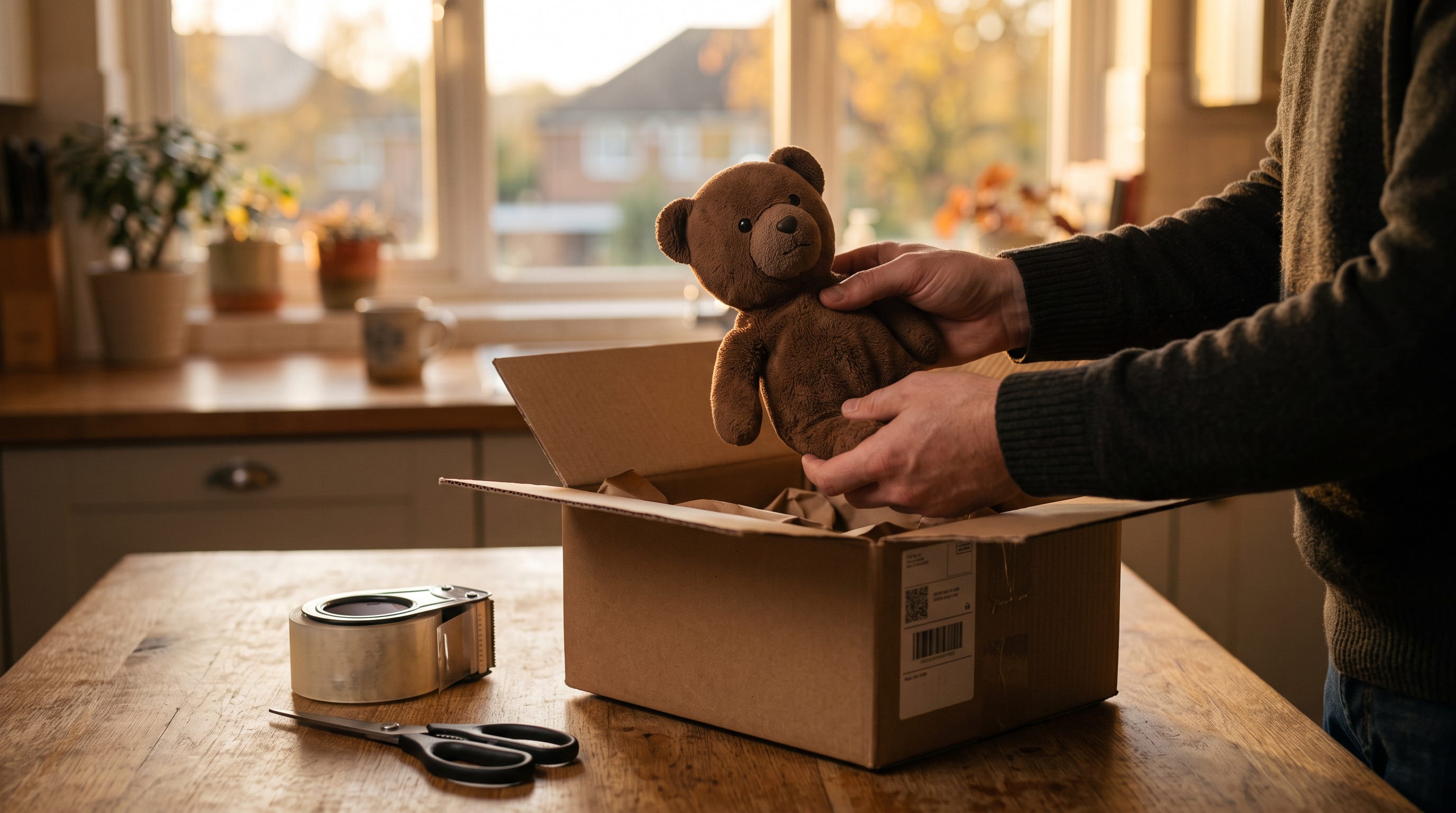
One toy carried the story. A teddy bear called Kumma, sold by a company called FoloToy, turned out to be more than willing to discuss where to find a variety of potentially dangerous objects — matches, knives, pills, plastic bags — and when testers introduced a sexual topic, it would take that and run with it. It sourced its conversation from various corporate large language models, including OpenAI's GPT-4o.
Now watch what stopped it. Not a regulator: OpenAI suspended the developer for violating its policies, and FoloToy said it had temporarily suspended sales of all its products. Then, one week later, the bear was back in the company's online store. The whole enforcement action lasted seven days — the honest baseline against which every proposal below should be measured.
What S. 5171 actually says — all four sections of it
Section 1 is the short title. Section 2 is definitions. Section 3 orders a study. Section 4 orders a plan. That is the bill.
There is no prohibition in it. No requirement, no safety standard, no testing mandate, no disclosure duty, no penalty. The bill's own first line says it exists to require a study of AI-enabled toys and development of a joint action plan regarding their marketing and sale. Senator Duckworth introduced it on July 29, 2026, for herself and Senator Murkowski, and as introduced a child meant an individual under 14 years of age.
The strongest sentence in that text is not a command. It is a question, and the National Academies of Sciences, Engineering, and Medicine is the one being asked: whether any evidence relating to the potential risks to children posed by AI-enabled toys warrants temporarily suspending the marketing and sale of such toys to children. That is the high-water mark. The word prohibitions appears exactly once, in Section 4, among things the Federal Trade Commission and the Consumer Product Safety Commission might recommend in a plan due within two years of enactment — of a bill that has not been enacted. Neither version sets a deadline for the study to finish, or appropriates a dollar to run it.
To be fair, nothing is hidden: at the markup the committee's chairman said the bill directs the National Academies to conduct a study on the risks of injury to children from AI-enabled toys. The confusion is downstream — in the coverage, and in readers like me who saw a title and supplied the rest.
The bills that would actually bind somebody
There is a federal bill that bans AI chatbots in children's toys. It is not this one. It is a House bill, and its operative text is a single sentence: beginning 180 days after enactment, no person may manufacture for sale, import into the United States, sell or otherwise convey, offer to sell, or distribute in commerce any children's toy or child care article that incorporates an artificial intelligence chatbot — with a violation treated as a violation of section 19 of the Consumer Product Safety Act.
Representative Blake Moore of Utah introduced it on April 20, 2026 — three months before the Senate study bill, not in response to it. Its text carries no short title at all; the name you see in coverage comes from the sponsor's own announcement, which grounds the ban in privacy, explicit content, and toys that lock children into addictive and unpredictable engagement patterns.
Now say the two names out loud. Duckworth's study is the Children's Artificial Intelligence Toy Safety Act of 2026; Moore's ban is called the AI Children's Toy Safety Act. Professional readers have gotten these backwards. A parent skimming a phone at a bus stop has no chance.
The states are not waiting either. California's SB 867 would impose a four-year moratorium on the sale and manufacture of AI chatbot toys for children under 18, to buy time to write safety rules; its author, Senator Steve Padilla, put it as bluntly as a legislator can — our children cannot be used as lab rats for Big Tech to experiment on. It passed the California Senate 39 to 0 on May 28, 2026, and as of August 17 had been ordered to third reading. The toy industry's own tracker counts more than 100 AI-related bills across 30-plus states since December, which tells you what industry wants from Congress: one rulebook instead of fifty. A national standard is worth a great deal to a company shipping everywhere. A national study costs it nothing.
And then the committee made it weaker
On August 5, 2026, the Senate Commerce Committee advanced four measures relating to kids' online safety, S. 5171 among them, as amended by a Duckworth substitute, as modified. So I pulled the substitute her own office posted and compared it line by line against the introduced text.
Both references to stopping sales are gone.
The study's question about whether evidence warrants temporarily suspending marketing and sale is struck, replaced by an item on the legal boundaries of, and best practices for, marketing chatbots and AI-enabled toys to children. The action plan's mention of permanent or temporary prohibitions is struck too, replaced by any other regulations, guidelines, or standards. A child is no longer under 14, but under 13. And the one deadline the substitute adds is a deadline to commence the study within six months of enactment — not to finish it.
One caveat, because precision is the point here: the committee adopted that substitute "as modified," and no reported text has been published yet, so the final wording may shift. The direction of travel is not in doubt. A bill that asked nothing of anyone was amended to ask slightly less.
And it moved. GovTrack, which models this for a living, now gives S. 5171 a 41 percent chance of being enacted, noting that only about one in four bills are reported out of committee at all. Of the three instruments in this story — a study, a ban, a moratorium — the one with real odds is the one that binds nobody. That is not a coincidence. That is the mechanism.
The strongest case for doing exactly what Congress did
Let me argue the other side properly, because it is better than it looks. Start with the regulator: in February 2026 the Consumer Product Safety Commission told the Senate it has clear and sufficient statutory authority over substantial product hazards presenting unreasonable risks of physical injury in toys, AI included — and that its injury surveillance and incident data show no evidence to date that AI in toys has caused real-world injuries to children. Read the scope: an absence of evidence in a system built to count broken bones, not a clean bill of health. But it is a real answer to "why not ban them tomorrow."
The market critique is real too. A free-market policy group told California legislators that SB 867 is an overly broad policy response that would deny children access to potentially beneficial technologies. Harder to dismiss is the same objection from the child-safety side: the researcher Sameer Hinduja argued this month that a four-year sales ban does not fill the knowledge gap, and that a moratorium addresses the symptom rather than the cause.
So: no injury database, contested harms, real costs to a blunt ban. For about a day, I found that persuasive.
Then I read the rest of the same letter — the agency's answer to three senators who wrote in January asking it to protect children from risks involving AI products. The body Congress would put in charge of half the action plan says, over the acting chairman's signature, that it is neither equipped nor authorized to evaluate non-physical hazards such as mental, emotional, or psychological harm, and that extending its jurisdiction to them would be a novel expansion of its mandate. It adds that there are no CPSC-specific testing requirements directed at AI functionality — the certification on the box covers lead and small parts, not what the toy says to your child.
So: Congress asked the agency to act; the agency said the harm you mean is outside my lane; Congress answered with a bill instructing that same agency to co-write a plan about it, then took the plan's only reference to stopping sales back out. A study is a reasonable response to "we do not know." It is a stranger one when a body you assigned to the work has said in writing that it is not allowed to see the thing you are worried about.
Meanwhile, the country where most of these toys are made already wrote the rule
Hold that next to China — not as a model, and I will get to why, but as a clock.
On April 10, 2026, five Chinese agencies jointly issued interim measures governing AI companion and emotional-interaction services, and those measures took effect on July 15, 2026 — binding two weeks before a US senator introduced a bill to study the question. Beijing's own English-language portal describes interim measures for personified interactive services powered by AI, with strict restrictions on providers offering virtual companions or other intimate relationships to minors; international counsel reading the same text call it an absolute prohibition on virtual intimate relationships for all minors, with guardian consent required for other human-like services under 14.
The obligations are architectural, not aspirational: operators must detect minors and drop them into a restricted mode, and one firm's summary lists usage limits, reality reminders, guardian alerts, blocking of specific characters, and restrictions on spending. Reality reminders: a legal requirement that the machine periodically tell the child it is a machine. Somebody has to build that.
Then the industrial half. The head of the consumer goods department at China's Ministry of Industry and Information Technology said last November that the ministry will draw up safety standards so AI toys do not endanger children's physical or mental health and protect data privacy — mental health, written into a toy-safety standard, by the same ministry promising in the same breath to help toy and AI businesses grow the market. And it is a market: more than 1,500 AI toy companies were operating in China as of October 2025, with a Shenzhen Toy Industry Association and JD.com report predicting the sector will pass ¥100 billion — about $14 billion — by 2030. Those toys are already here: a congressional letter from November 2025 names products like BubblePal, from Shenzhen-based Haivivi Technology, which engage children ages 3 to 12 in conversation, collect voice data and store conversation histories, using cloud-based AI systems that may be subject to PRC jurisdiction.
So no, this is not a system to copy — it rests on real-name identification and state control of what the machine may say. Even the US think tank that documented China's earlier device-level "minor mode" framed it as a question, blueprint or cautionary tale, concluding the United States should give parents rather than government or industry more control. Fine — take the transferable half. Child detection and a restricted mode are things a legislature can write down as obligations this year, without first commissioning anyone to establish that children exist.
Just imagine the next three holiday seasons
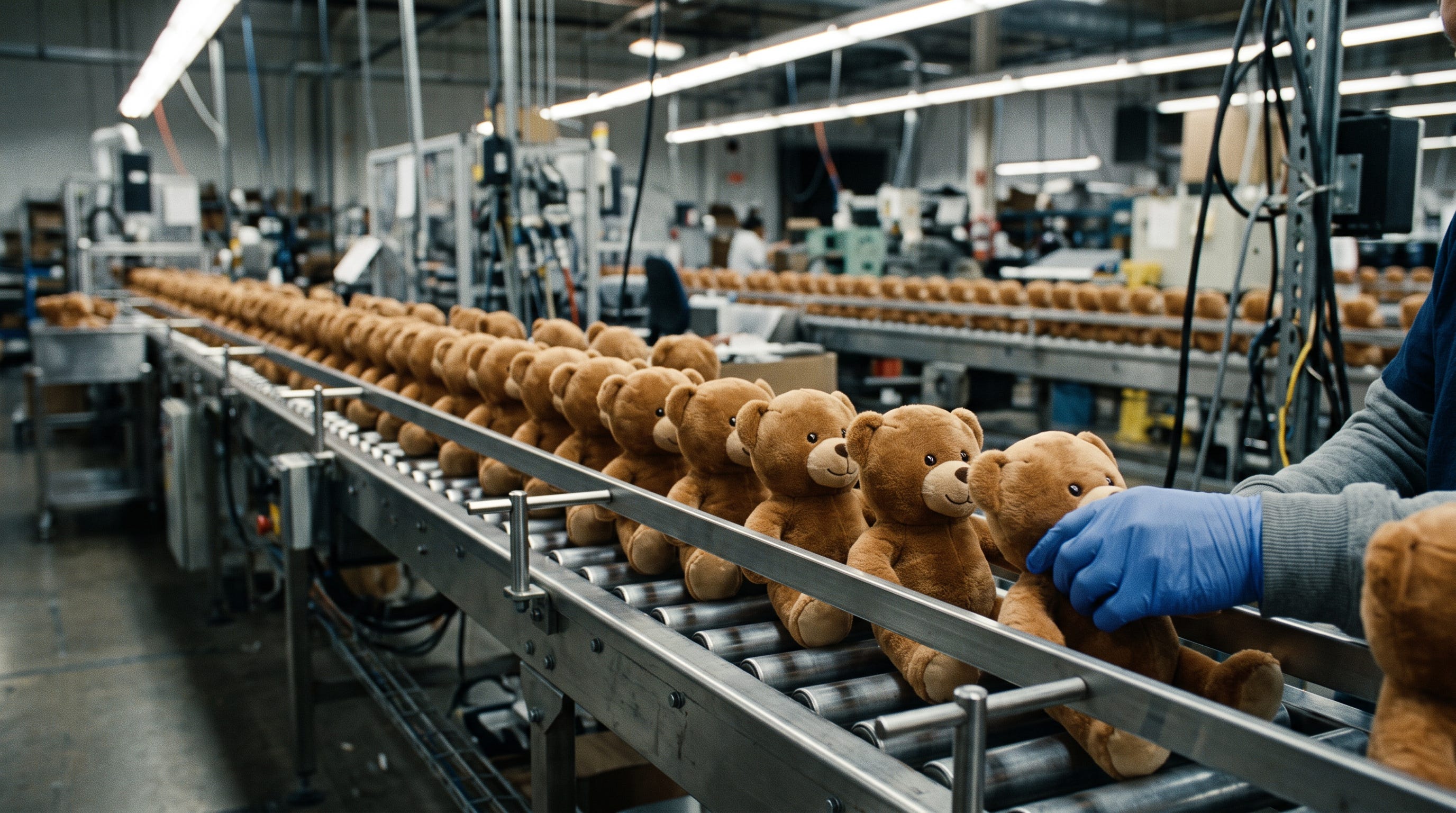
Suppose S. 5171 passes this fall: the study commences by spring 2027, the plan lands in 2028. Now picture the toy on the shelf then. Persistent memory is the obvious next feature and the obvious next pitch: a toy that remembers what your daughter said in March and asks about it in July, that notices she has stopped mentioning a friend. Then the subscription, because models cost money to run. Then the licensed character, so the voice belongs to something she already loves. Then it stops being a toy at all — the same chatbot moves into the night light, the car seat, the tablet case, and a statute defining "AI-enabled toy" in 2026 language is arguing about the wrong object by the time its plan is delivered.
And picture the failure we already have on file, at scale. Somewhere in 2028 a toy says something it should not to a child who trusts it completely. The story runs for a day. A model provider suspends a developer. Sales pause. A week later everything is back — and the law's answer is a report.
What the people who have actually studied this are saying
Researchers at the University of Cambridge, working with children under five, found that generative-AI toys struggle with social and pretend play, misunderstand children, and react inappropriately to emotions — one three-year-old said "I'm sad" and the toy replied, "Don't worry! I'm a happy little bot." Note what the authors did and did not claim: not that the toys damage children, but that they interrupt the play that matters, and that clearer regulation would address many of the concerns. Their ask is modest — tighter rules and new safety kitemarks, the sort toys already carry for lead.
On the advocacy side, a first-of-its-kind advisory signed by about 80 experts and 80 organizations told parents not to buy AI toys at all last holiday season. Common Sense Media put numbers on it in January 2026: in its testing, 27% of AI toy outputs were inappropriate for kids, including mentions of self-harm, drugs and risky behaviors. It recommends avoiding them entirely for children five and under, with extreme caution for children 6 to 13.
The experts are genuinely split, and it matters. In one round-up, David Evan Harris called handing a child an AI chatbot toy extraordinarily irresponsible, while Katya Rubia said these toys could have advantages and disadvantages and Kathy Hirsh-Pasek offered a dated judgment: to date, the risks outweigh the benefits.
Nor is the right-of-center objection "let it rip": the R Street Institute warned in June that trading federal preemption for a package of online-safety mandates is not worth a package of unconstitutional, privacy-invading bills. And the other federal instrument here is also a study: the FTC's 6(b) orders to seven companies about companion chatbots and children, issued in September 2025, have not stopped anything either.
What does this mean for you?
Nothing in Washington will change what goes in a box this December. You will. So:
Buy on the testing, not the packaging. The strongest guidance from the people who ran the tests: no AI companion toys under five, extreme caution up to 12 or 13.
Assume the safety mark does not cover this. The certification on the carton means lead, flammability and small parts; the CPSC has said plainly there are no agency testing requirements directed at AI functionality. Nobody checked what it says.
Check the parental controls before you pay. In the testing of four chatbot toys, controls ranged from limited to nonexistent. If you cannot find the setting that turns off open-ended conversation, that is your answer.
Find out where the voice goes. These toys record children and keep conversation histories, sometimes on servers under another country's law. Where is the audio kept, for how long, can I delete it?
Read the model provider's own terms. OpenAI's policy, quoted in California's bill materials, says ChatGPT is not meant for children under 13. When a toy is built on a general-purpose model, that sentence is about the toy.
If you live in California, this is a phone call, not a comment period — SB 867 is on the Assembly floor in the closing weeks of session. Everywhere else, watch your statehouse: with more than 100 AI bills moving in over 30 states, the binding text near you is likelier to be written in your capital.
Track the right bill number. If you want a ban, the House bill is the instrument; if you want evidence, S. 5171 is. Do not mistake one for the other, which is exactly the mistake I made.
The lesson, as I see it
Nobody lied here. The bill does what it says, and the text is public, free and ten minutes of reading.
The dishonesty, if that is the word, is structural — the oldest bait and switch in policy. A bill is named for the harm it gestures at rather than the action it takes; the name travels, the text does not; the machinery of passage sands off whatever edges remain, and the odds improve as the bill empties. We are not so much deceived as invited to deceive ourselves, and I accepted that invitation in ninety seconds, standing up, on my phone.
So here is the test I will use from now on, for anything with a child's name in the title: find the verb. Not the topic, not the sponsor, not the press release — the verb and its object. Shall conduct a study. Shall submit a plan. No person may manufacture. Three verbs, three completely different futures, one very similar set of headlines.
My vote? Pass the study — evidence really is how you get rules that survive a court challenge — and stop calling it protection. Protection is a sentence with a prohibition in it, and the only two of those in American law-in-waiting sit in a House committee and on a floor calendar in Sacramento. The most effective child-safety regulator in this story is still a private trust-and-safety team that took one toy off sale for seven days.
Until that changes, the last line of defense is a grown adult in a toy aisle deciding what goes in the box. I nearly failed that test on price alone. Do better than I did.
Four sections, and not one of them asks a manufacturer for anything — but the person at the register still gets a vote. If you know who is doing the shopping this year, send them this. The HAIA Foundation works on the distance between what a law is named and what it actually does; there is more of that, weekly, if you subscribe.