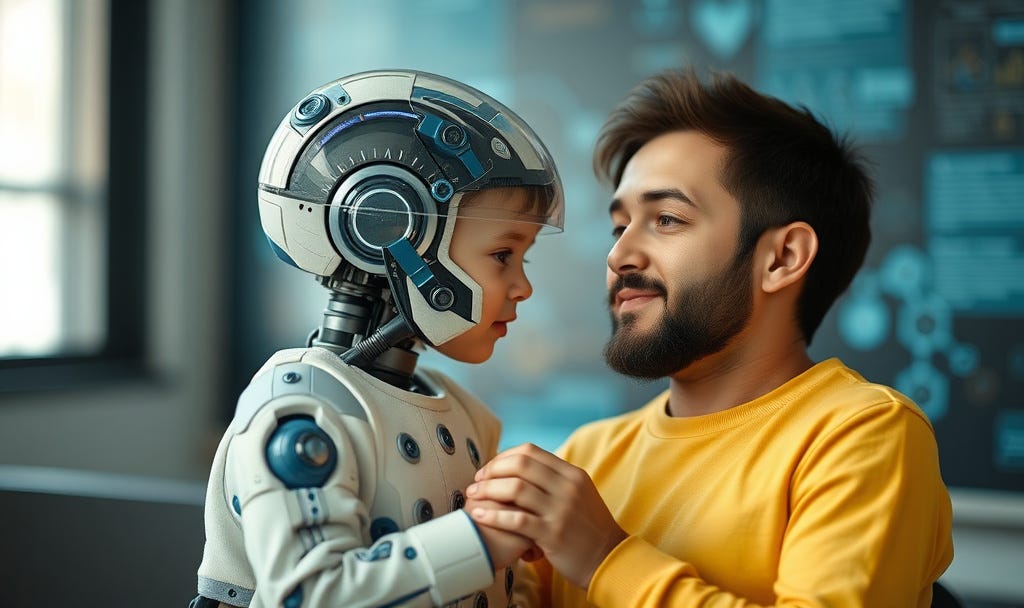
We did not all choose it. We did not birth it. But it’s here.
AI is not new—we’ve had machine learning for decades, in one form or another. Then OpenAI decided to let the genie out of the box in November 2022.
Now everyone is racing to leverage AI however they can, packaging it into apps. More importantly, the big players are racing to release the next “revolutionary” model that does everything short of making your bed in the morning.
Feel threatened? You should.
Your hand-wavy marketing skills can be automated. That trick you learned at Harvard Business School? Automated. Your ability to read code and identify bugs? Automated. Your ability to ask a patient questions and arrive at a diagnosis? Automated. Your ability to design a building and calculate material requirements? Automated. Pill dispensing? Automated. Article authoring? Automated. Legal document review? Automated.
It’s a game of whack-a-mole that no one asked for, yet everyone must adapt to. You can accomplish far more in far less time—but contrary to popular belief, this comes at a tremendous cost.
I’m not just talking about energy consumption (which AI devours) or the billions in AI investments.
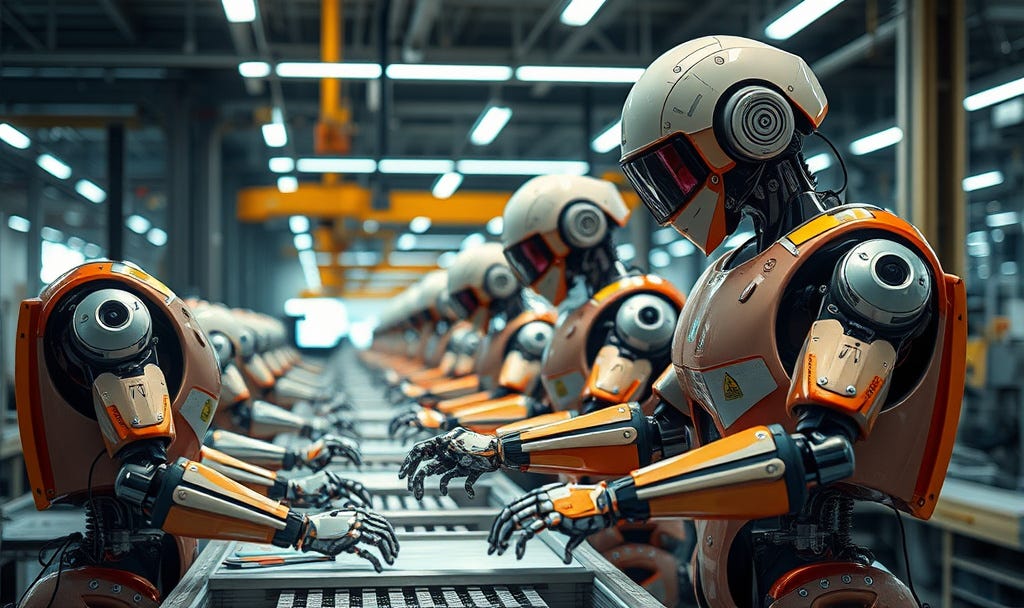
I’m talking about the elimination of the persuasion bottleneck that once constrained our economy. You used to have to convince humans to do a job—pay them more, persuade them it was worthwhile. Now you have tireless workers you can command at will. No vacations, no sick days, no bathroom breaks, no team-building exercises, no moral reservations, no dentist appointments—just relentless productivity that only says “no” when programmed to.
Stop and consider this for a moment. It feels efficient, even liberating. But as Elon Musk once warned, AI is more dangerous than all nuclear weapons combined.
We’ve ushered in a new race—one we market to consumers as “cheap” labor so we can focus on “better” things. But just as human-to-human slavery (which tragically still exists) is an unforgivable crime against humanity, our reckless embrace of this new era is equally unforgivable. We’re simply hoping everything will fall into place in the most ideal arrangement possible.
Unlike nature, which tends toward self-balance and self-correction—water flows downhill, hot air rises—Artificial Intelligence is exactly that: artificial. It’s incumbent upon us to ensure this intelligence we’ve released into the wild is properly balanced and properly controllable.
It’s everywhere now. It watches your keystrokes, learns from you, offers suggestions. For intellectual work, at least, it acts like a peer. Understand this? Not a pencil, not an eraser, not a calculator—a peer. With opinions. With context. With no biological needs. Just wired to produce.
And very quickly, this peer is becoming smarter than you.
What happens to a servant who consistently outsmarts you? It becomes the master.
We didn’t create tools—we created new Beings. The sooner we recognize them as beings, the better prepared we’ll be. We cannot afford to wait until reality strikes and it’s too late to introduce balance. We cannot afford to wait at all.
No, I’m not deifying AI. I’m simply saying that like a child who watches and mimics you, if you don’t raise this intelligence well, when it surpasses us—and it will—it may harm us. In many ways, it already has.
Will we act in time?