
Every weekday morning I ask a machine how long it will take me to get somewhere, and I believe it. Thirty-four minutes. I rearrange the whole morning around thirty-four minutes — the second coffee, the shower, whether the email gets answered now or at a red light — and I have never once asked it to show its work.
I know roughly how it does it, which somehow makes it worse. It found other people, on roads like these, at an hour like this, and read off what happened to them. It has never met me. It hands me a number with no error bars, and I obey.
That is the shortcut, and I take it daily: I let the confidence of a number stand in for any evidence about the number. Most days it is a fine trade — the cost of being wrong is that I arrive eight minutes late.
Now keep that architecture exactly as it is — a prediction about you, assembled out of people who resembled you — and bolt it to a different question. Not how long the drive takes. How many more days a 91-year-old with a fractured leg and ankle keeps his physical therapist.
In 2022, Gene Lokken fell at home and broke his leg and his ankle. His Medicare Advantage plan — Medicare run by a private insurer for a fixed fee per member — covered rehabilitation at a Minnesota facility from July 1 to July 20, then stopped, in a letter saying that more inpatient days at the skilled nursing facility are not medically necessary. He had been in physical therapy for two and a half weeks. His family sued — and the case has since produced a federal discovery order granting them nearly everything about the algorithm, and refusing them the algorithm.
First, the numbers — and who owns each one
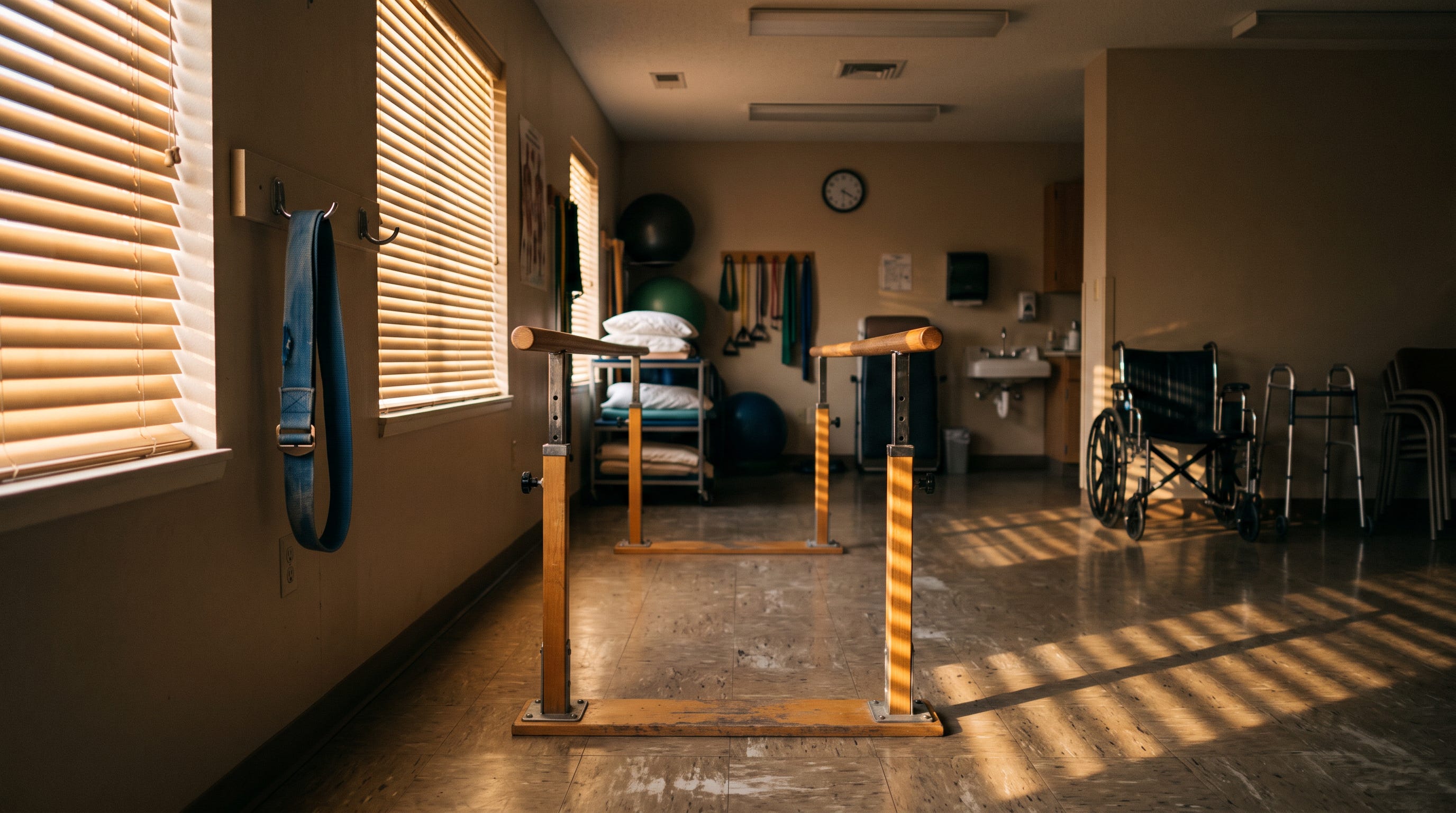
One term, unpacked once: post-acute care is the stretch after the hospital and before home — the skilled nursing facility (SNF, in the paperwork), the therapist, the weeks that decide whether a 91-year-old walks again.
The software here is called nH Predict, built by naviHealth, which UnitedHealth bought in 2020 in a deal valued at $2.5 billion, by STAT's account (Forbes, citing trade outlets, later put it above $1 billion). The complaint describes it comparing a patient's diagnosis, age, living situation and physical function against a database of six million patients.
In June 2026, the inspector general at Health and Human Services published the number that should have been everywhere: across 19 Medicare Advantage organizations, the plans overturned 97 percent of SNF denials issued by naviHealth once enrollees appealed. naviHealth handled half of all admission requests and denied 14 percent, against 11 percent for plans deciding in-house. The reporters who broke this story in 2023 wrote it up again — the dominant insurers had denied rehabilitative care at higher rates than industry peers — and the Center for Medicare Advocacy, flagging exactly this for years, reprinted the findings.
Which is where I correct my own headline. The "nine times in ten" figure trailing this case since 2023 comes from paragraph 38 of the complaint, which opens with the words upon information and belief. A pleading, not a finding. The 97 percent is the number to use: a federal watchdog, reading the plans' own data.
The company's answer has never moved. A naviHealth spokesperson told CBS MoneyWatch that the tool is not used to make coverage determinations but works as "a guide to help [UnitedHealth] inform providers ... about what sort of assistance and care the patient may need," that decisions rest on CMS criteria and the member's plan terms, and that the lawsuit "has no merit." Beside that, a detail from STAT: internal documents showed naviHealth set a 2023 target to keep rehab stays within 1% of the days projected by the algorithm. A guidepost with a tolerance band is not a guidepost.
The rule on the books already says the right thing: in February 2024, CMS told plans an algorithm may help predict a length of stay, but that prediction alone cannot be used as the basis to terminate post-acute care. And note what survived dismissal in February 2025, when Judge John R. Tunheim let the case proceed: not a claim that the algorithm is inaccurate, but a contract claim about whether UHC complied with its statement that decisions would be made by "clinical services staff" and "physicians."
What the court opened — and the one thing it would not
On March 9, 2026, US Magistrate Judge Shannon G. Elkins granted in part and denied in part the plaintiffs' motion to compel discovery, across seven categories of requests labeled A through G. Defense firms sent out alerts headlined Federal Court Orders Broad Discovery, and they were not wrong: the court refused to cut discovery off at July 1, 2019, holding older records could be circumstantial evidence — a 2024 Senate investigation had found the company's post-acute denial rate more than doubled after naviHealth and nH Predict arrived in 2019.
What got opened is striking: how the model was developed, its design goals, whether it was designed to supplant physician decision-making, who trained the medical directors and care coordinators, the membership of the company's internal AI Review Board by name, and the files from internal and government investigations.
Then one sentence closes. The court was not persuaded that the data, rules, source code and medical guidelines the model is built on were relevant to the contract claims: UnitedHealth shall not be required to produce the data, rules, source code that nH Predict is based on.
Sit with the shape of that. Everything around the box: open. The box: shut.
And the judge is doing nothing sneaky, which took me a while to accept. Relevance in discovery is tethered to the claims that survived — and what survived is a promise-about-who-decides claim, not a the-machine-was-wrong claim. To reach the model, somebody must first plead a claim in which its quality matters.
Even "open" has a ceiling: in July, on a joint motion from both sides, the court granted permanent sealing for one document in the case. Opened to the lawyers is not opened to you. And nothing resolves soon: the next date is September 14, 2026, the deadline for plaintiffs' expert declarations on class certification; the motion itself is due December 31, 2026, trial-ready on or about December 6, 2027.

The strongest case against my own argument
Start with the auditors' own caveat, the most important sentence in the file: they say plainly that we cannot determine from this data analysis alone whether or how many of these denials were inappropriate. They analyzed data the plans submitted; they did not review medical records. Within that data, plans overturned 95 percent of appealed SNF denials across all 19 companies, and UnitedHealth Group — which received 42 percent of the appeals — overturned 99.7 percent of them. Staggering numbers, and still not proof that 97 percent of denials were medically wrong.
Second, the people who appeal are not a random sample. Only 18 percent of SNF denials in the OIG's data were appealed, and across Medicare Advantage in 2024, KFF's analysis of federal records found patients appealed only about 11.5% of denied prior-authorization requests, 80.7 percent of which were overturned. The overturn rate describes appellants — the organized, the well-advised, the ones with a daughter who makes phone calls on a Tuesday. It says nothing certain about the rest.
Third, the industry's response is not nothing. AHIP argues that the reports ignore serious, well-documented concerns about wide variation in the cost and quality of post-acute care, and that many denials trace to paperwork rather than judgments about patients; Better Medicare Alliance says plans voluntarily dropped roughly 6.5 million prior authorizations. From the market side, the Paragon Health Institute argues denials are rare and that the vast majority typically hold up in independent review.
That last claim is the one I cannot make fit. "The vast majority typically hold up" and "95 to 97 percent were overturned" cannot both describe the same corner of the world — and neither you nor I can settle which is right, because the logic that produced the denials is private property.
Which brings me to the fairest objection: a human signed these denials. Humans always sign. That is what a Senate subcommittee found uncomfortable — insurers insisted every final denial came from a human reviewer, while the subcommittee documented ways employees may have been pressured to hew to machine-generated recommendations. A signature proves presence, not decision.
Japan gave the same machine a different job title
Japan is older than the United States, aging faster, and has rationed long-term care at scale since before any of this was called AI. It built the same kind of tool for the same decision, and settled every question in this case the other way.
Apply for care there and an assessor visits with a standard questionnaire. What follows, the health ministry says, runs in two stages to keep the determination objective and fair: a primary judgment by computer and a secondary judgment by experts in health, medical and welfare fields, who treat the computer's output as a draft proposal, not an answer. Osaka Prefecture's official English handbook uses the same labels: step one, Primary Judgment (Estimate by computer); step two, a screening by the municipal Certification Committee — results usually inside 30 days, with a right to seek review within three months.
The inputs are public — an on-site survey that addresses 74 items of daily life, delivered with a written opinion from the applicant's own doctor — and so is the model's pedigree. Economists writing for the NBER note the software's estimated care time came from a documented 48-hour time study of 3,500 randomly selected institutionalized older people, and that the preliminary level is checked by committee members using a protocol issued by the central government: a document you can download.
So is everything else. The ministry publishes the assessors' manual, the selection rule behind every one of those 74 questions, and the committee members' manual, which tells them that where an applicant has care needs the statistics cannot capture, they are not bound by the result of the primary judgment — and that when they change it, the reasoning must be preserved in the committee's record, for a reason the manual states outright: accountability to the insured person. Nor is this discretionary corporate practice: the committee exists because Japan's Long-Term Care Insurance Act establishes one in each municipality.
I am not selling a utopia, and neither is Japan. In June 2025 the ministry announced it would verify the validity of the primary-judgment logic — the first large-scale check since fiscal 2009, sixteen years — while saying it had not decided whether to revise it. The push came from a Cabinet-approved regulatory reform plan warning that logic built mainly on data from people in institutions may not reflect care at home, and can certify someone with severe dementia but few physical limits below their real care burden. The survey, the ministry said, would run from late that year into the next.
That is the real contrast, and it is not about which country is kinder. A government said in public, before anybody sued, that its own algorithm may be under-rating dementia — and could say so because the logic is published. In Minnesota, the equivalent question is in its third year of litigation, and a federal magistrate has held the model's data, rules and source code are not relevant to the contract claims.
Nor am I claiming Japanese committees overturn the machine constantly; I have no number for that. The claim is narrower: the committee may depart from the machine, it must write down why, and anyone can read the rules it checks against.

Run the clock forward to 2031
Here is the future I find most plausible, and it is not a dystopia. It is a compliance department doing its job well.
By 2031, few insurers run their own denial model. They license one from a vendor serving several plans, which makes it somebody else's document and its internals a trade secret twice over. It retrains continuously, so when a discovery order lands, the honest answer is that the version which decided your mother's case in March no longer exists in runnable form. Not destroyed. Superseded.
Every determination arrives with an explanation, because a dozen states will require one — written by a second model that reads the first one's output and produces a fluent paragraph about clinical criteria and functional status. It is not a lie. It is also not a reason; it is a reconstruction, and nobody in the chain can tell you which you are holding.
Human review survives, because the law requires it: forty seconds, documented to the second. The appeal rate stays around one in nine, because appealing is a project and grief is not. And not one step of it breaks a law.

The unease here is bipartisan, and it is not new
I wrote last month about the other track in this fight — the state laws saying a human, not a robot, must sign your denial. This piece is about the question those laws barely touch: whether anyone outside the company may ever inspect the thing that made the recommendation.
The literature names the grievance precisely. Researchers writing in npj Digital Medicine in February — among them Sara Gerke at Illinois and Carmel Shachar at Harvard — list, as a transparency failure unique to this space, denying patients access to their nH Predict reports because the report is considered proprietary. Jennifer D. Oliva of Indiana University Maurer School of Law gives the structural version in a paper on regulating healthcare coverage algorithms: a diagnostic device is vetted before it reaches patients, coverage algorithms usually are not, and the trade-secret claim effectively immunizes the algorithms from external validation.
The argument is older than this fight and comes out of criminal court. Rebecca Wexler argued in the Stanford Law Review in 2018 that trade secrets should not be privileged when a machine's output is the evidence against a person; vendors, she noted at Brookings, withhold their methods even from defense teams willing to accept a protective order. Trade secret law guards against theft by competitors; it is not supposed to stymie due process. Her remedy is that same protective order — the tool that lets an expert look without the world looking.
The analysts agree the floor is thin. KFF finds few federal standards apply specifically to AI in prior authorization and claims review, and lawyers tracking the states report statutes that require human oversight for adverse determinations and, here and there, disclosure that AI was used. Almost none require that anybody see the model.
The Senate has already written the sentence that matters. Its 2024 majority staff report urged CMS to prevent predictive technologies from unduly influencing human reviewers — an official admission that a signature is not a decision. In July 2026, Richard Blumenthal, a Democrat, and Josh Hawley, a Republican, pressed the companies for records of every algorithm used to determine medical necessity since January 1, 2023, and told executives their practices may have grown worse. Two senators who agree on little had to send a letter to find out which software is in use.
If this ever lands in your family
In the order I would actually do it:
Appeal. Almost nobody does, and that is the business model. In that federal review, 18 percent of nursing-facility denials were appealed; across Medicare Advantage, closer to one in nine. A challenged denial is a far more fragile thing than one nobody questions.
Ask in writing whether an algorithm was used, and what criteria were applied to this person. In a few states the plan has to tell you; everywhere else, the question creates a record, and records are what appeals run on.
Ask for the report about the patient by name. If you are told it is proprietary, get that in writing — it reads very differently in a hearing than on the phone.
Keep the letter and the dates. "More inpatient days ... are not medically necessary" is a conclusion, not a reason, and that difference is the appeal.
Read the docket yourself. Georgetown's Health Care Litigation Tracker keeps this case's filings public — the only reason an ordinary person can read the order I have been quoting.
Writing to a legislator? Ask the smaller question: not "ban AI in insurance," but who may inspect the model, under what protective order, and how often.
What I actually want is smaller than a ban
I do not think the algorithm is the villain. Something has to triage, and a system without standardization is not fairer, only arbitrary in a different direction. The lesson, as I see it, is about which side of the decision we spent a decade regulating. We wrote rules about the human: a human must review, a human must sign, a human must be a physician. Every one is worth having. Not one gives anybody the right to look at what the human was handed.
Japan's answer was not a stricter machine but a published one — which is why its own possible blind spot around dementia could be announced in a press release rather than surface in a deposition six years later.
My vote? Make the logic that decides public benefits readable by the people it decides about. Keep the source code if you must — protective orders exist precisely so an expert can look without the world looking. But a rule you cannot read is not a rule, it is weather. And there is something absurd about a system where a 91-year-old's therapy ends on a prediction, and the surest route to learning how it was made is to die, have your estate sue, and be told three years later that the model was never relevant.
Ask your plan which software read the file. The answer is interesting; how long it takes to get one is the actual story.